

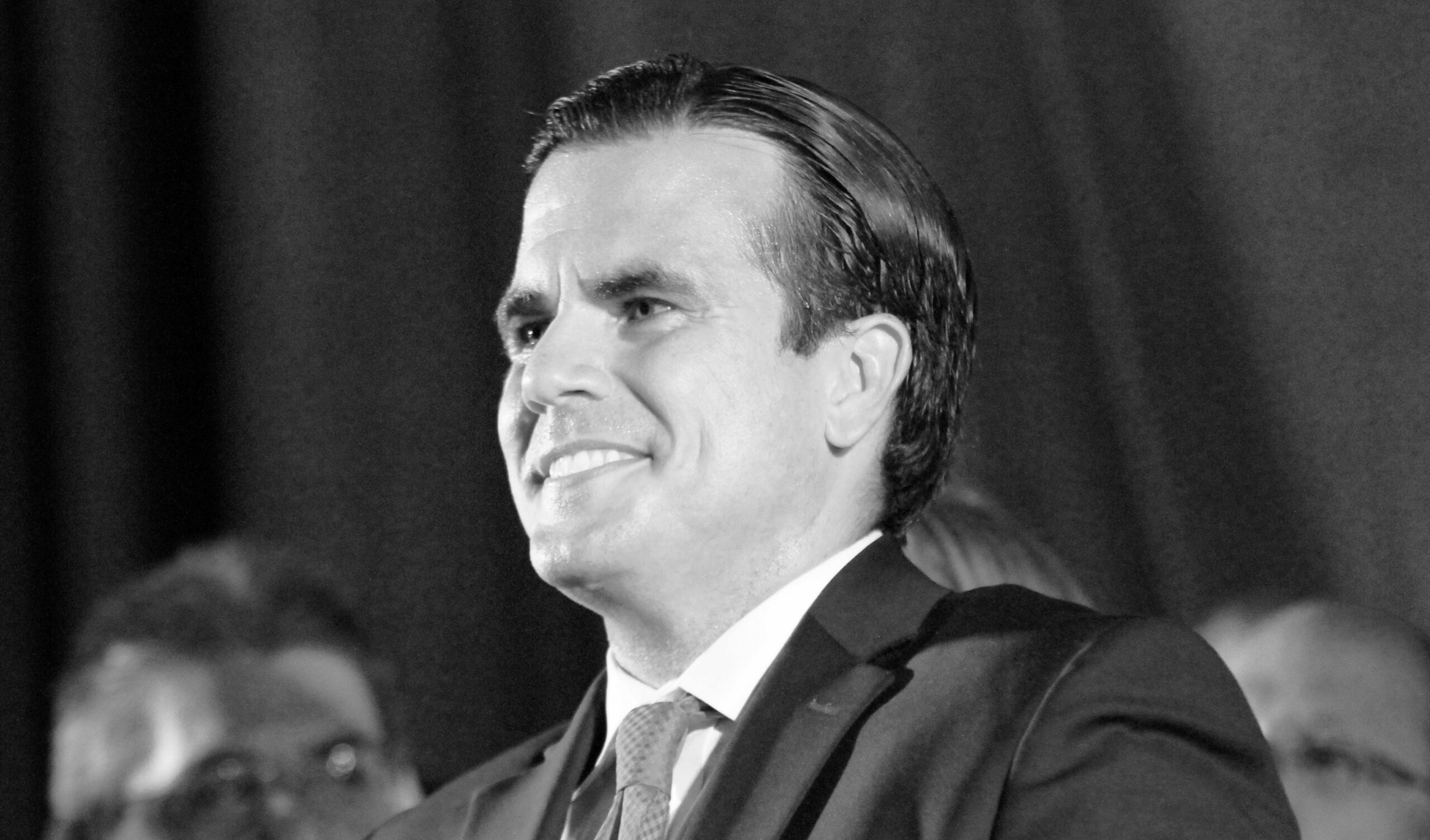
Dr. Ricardo Rosselló has built a career that spans clinical science, quantitative reasoning, public policy, and executive leadership, operating at an elite level in each. Trained in medicine and deeply grounded in mathematics and systems thinking, he approaches biology as a problem of structure, feedback loops, and optimization. At the same time, his experience as Governor of Puerto Rico forced him to translate theory into decisions under heavy pressure, often with imperfect information and irreversible consequences. That combination has shaped a worldview in which aging, governance, and crisis response are not abstract debates, but engineering problems with human costs. In this interview, Rosselló speaks candidly about longevity science, Puerto Rico’s political status, and leadership during catastrophe.
_____________________
Q: Longevity science increasingly relies on the concept of “hallmarks of aging.” How useful is that framework in moving the field from theory to intervention?
RICARDO ROSSELLÓ: The value of the hallmarks framework is that it converts aging from an abstract inevitability into a set of clear markers that denote failure modes. Genomic instability (increasing rate of mutations and changes in genes), cellular senescence (cell damage across time – some call them zombie cells), stem cell depletion (the lowering of our regenerative capacity), and immune dysregulation (malfunction of our immune response, causing more susceptibility to foreign attacks or our own immune system attacking our body). are measurable breakdowns in biological systems. Once you define aging in those terms, you can design interventions that are directional rather than symptomatic. The key point is that if you accelerate these 9 hallmarks, you accelerate aging; but if you descelerate them, you can reduce the rate or stop aging altogether. While this is just the tip of the iceberg, it is a potent lever that denotes that aging can be treated.
Q: The World Health Organization’s classification of aging as a disease marked a turning point. Why was that designation scientifically and strategically significant?
RICARDO ROSSELLÓ: Because classification determines legitimacy. And there is a lot that went into this. In order for this classification to proceed, it had to have overwhelming scientific support. This was not the case in the early 2000s; it is today. Why is it powerful? Once aging is recognized as a disease process, it becomes subject to the same standards of investigation, regulation, and therapeutic development as any other condition. I recall having to protest in the NIH because they spent 70% of the budget on heart disease and Cancer, when they were responsible for about 30% of deaths. I remember telling them that if you cured both, you would add about 7-10 years on average. Yet there was plenty of research in aging that showed we could extend life much beyond 20 years. How much was going into that bucket? Less than 1%.
Q: Much of the current work focuses on cellular and systemic interventions rather than pharmaceuticals alone. Why is that direction gaining traction?
RICARDO ROSSELLÓ: Because aging is not driven by a single molecular target. It is a systems failure. And we live in a particularly powerful time where hyperconvergence is occurring. The progress in AI has been a powerful ally to biology – and vice versa. Meta’s alpha fold – for example, can now give you accurate protein targets that would take scientists years to identify, in minutes. But this is only the beginning. Next will be the cellular level and interactions. Then the body as a whole.
In this spirit, our body has a potent natural regenerative prowess. We just lose it as a function of time. What if we could create intelligent cells? What if they could become intelligent living medicines? This is precisely what we are tackling in ThnkHat with the direction of Ravi Lam and Dr. Sam Perli. By combining the nobel prize winning techniques of induced pluripotent stem cells and CRISPR, we are working on an AI-native design to create eCells™ (engineered cells with logic, learning, and sensing) that can change the course of age-related and complex diseases.
The long-term objective is not perpetual intervention, but biological stability.
Q: As the Governor of Puerto Rico, you were an outspoken advocate for statehood. Why do you feel that issue remains unresolved?
RICARDO ROSSELLÓ: Puerto Rico is the oldest and most populous colonial territory in the world. Think about that for a second. I call Puerto Rico a political black hole in my book, The Reformers’ Dilemma. The reason is that, as with black holes, what you would think are the rules of geopolitics tend to break down in the territory. In a world where the US is talking about annexation of Greenland, Candada and even Venezuela, there are 3 million US citizens who WANT to become a state, have solicited it 4 times in the past 12 years, and still can’t make the change happen. In my view, it is the black eye of American democracy. What’s the outcome? The territory lacks voting representation in Congress, yet is subject to federal authority. That asymmetry allows decision-makers to defer resolution without bearing full accountability. This needs to change.
Q: You governed Puerto Rico during Hurricane Maria and interacted directly with President Trump during that crisis. What did that experience reveal about federal crisis management?
RICARDO ROSSELLÓ: It revealed a lot of structural fragility masked by bureaucracy. Disaster response at the federal level is optimized for predictability, not scale-breaking events. Hurricane Maria was not simply a storm; it was a systemic collapse of infrastructure, logistics, and communications. Existing frameworks were not designed for that reality. My interactions with President Trump were evidence of the gap between political optics and operational execution. Crisis leadership requires fluency in data, logistics, and human psychology simultaneously. When those elements are misaligned, response slows, narratives replace facts, and human suffering expands. That lesson applies far beyond Puerto Rico.