

New York Tech Media
  • News
  • FinTech
  • AI & Robotics
  • Cybersecurity
  • Startups & Leaders
  • Venture Capital
No Result
View All Result
  • News
  • FinTech
  • AI & Robotics
  • Cybersecurity
  • Startups & Leaders
  • Venture Capital
No Result
View All Result
New York Tech Media
No Result
View All Result
Home News

James Webb Space Telescope’s fuel expected to last more than 10 years

New York Tech Editorial Team by New York Tech Editorial Team
December 29, 2021
in News
0
James Webb Space Telescope’s fuel expected to last more than 10 years
Share on FacebookShare on Twitter

Following the revolutionary and successful launch of the James Webb Space Telescope, or JWST, into space on Christmas day, NASA announced some unexpected news about the telescope’s future: its science mission is likely to last “significantly more” than 10 years — more than double the minimum time for the mission.

Initially, JWST was projected to be operational for 5 to 10 years, but NASA’s latest analysis released today found that the telescope will likely have enough propellant to support scientific operations for even longer. According to NASA, the extra propellant is thanks to the precision of the Ariane 5 rocket that the JWST was on when it was launched into space. It is also due to the precision of the first and second mid-course correction maneuvers — small trajectory tweaks that the spacecraft has completed in the days since launching, setting it on a path toward its destination a million miles from Earth.

According to NASA, the precision of these maneuvers leaves the spacecraft with more propellant it can use to maintain its final position for observing the cosmos. The space agency warns, however, that “many factors” could ultimately affect JWST’s lifespan.

The potential extension of scientific research is reminiscent of the Hubble telescope, which is widely considered JWST’s predecessor. NASA initially projected the Hubble telescope would last about 15 years, but it’s still operating today, more than 30 years later. A key difference between the two is that the Hubble Space Telescope was able to serviced by astronauts while JWST is not. JWST, which collects infrared light, is capable of imaging objects 10 to 100 times fainter than what Hubble can see.

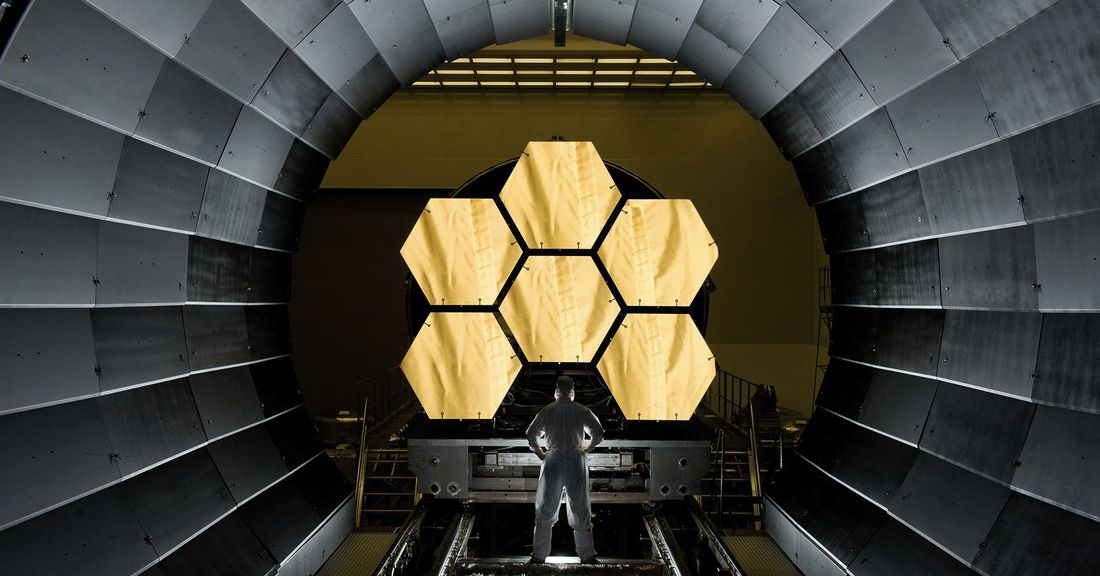
The launch trajectory’s accuracy also allowed JWST to deploy its solar array a bit early. Following separation from the Ariane 5 rocket, deployment of JWST’s solar array was set to begin about 33 minutes after launch. But it actually happened about 29 minutes after launch because JWST was at the correct position after the separation, NASA said in its press release. However, unlike the solar array deployment which was automatic, future deployments—including the spacecraft’s sunshield and segments of its primary mirror—are going to be human controlled, NASA says.

Credit: Source link

Previous Post

The top 5 medtech news stories of 2021

Next Post

Nord Stream 2 startup waiting on German regulatory approval

New York Tech Editorial Team

New York Tech Editorial Team

New York Tech Media is a leading news publication that aims to provide the latest tech news, fintech, AI & robotics, cybersecurity, startups & leaders, venture capital, and much more!

Next Post
Nord Stream 2 startup waiting on German regulatory approval

Nord Stream 2 startup waiting on German regulatory approval

  • Trending
  • Comments
  • Latest
Meet the Top 10 K-Pop Artists Taking Over 2024

Meet the Top 10 K-Pop Artists Taking Over 2024

March 17, 2024
Panther for AWS allows security teams to monitor their AWS infrastructure in real-time

Many businesses lack a formal ransomware plan

March 29, 2022
Zach Mulcahey, 25 | Cover Story | Style Weekly

Zach Mulcahey, 25 | Cover Story | Style Weekly

March 29, 2022
How To Pitch The Investor: Ronen Menipaz, Founder of M51

How To Pitch The Investor: Ronen Menipaz, Founder of M51

March 29, 2022
10 Raunchy Movies on Netflix You Won’t Regret Watching

10 Raunchy Movies on Netflix You Won’t Regret Watching

May 20, 2024
Japanese Space Industry Startup “Synspective” Raises US $100 Million in Funding

Japanese Space Industry Startup “Synspective” Raises US $100 Million in Funding

March 29, 2022
Startups On Demand: renovai is the Netflix of Online Shopping

Startups On Demand: renovai is the Netflix of Online Shopping

2
Robot Company Offers $200K for Right to Use One Applicant’s Face and Voice ‘Forever’

Robot Company Offers $200K for Right to Use One Applicant’s Face and Voice ‘Forever’

1
Menashe Shani Accessibility High Tech on the low

Revolutionizing Accessibility: The Story of Purple Lens

1

Netgear announces a $1,500 Wi-Fi 6E mesh router

0
These apps let you customize Windows 11 to bring the taskbar back to life

These apps let you customize Windows 11 to bring the taskbar back to life

0
This bipedal robot uses propeller arms to slackline and skateboard

This bipedal robot uses propeller arms to slackline and skateboard

0
laptop on glass table

Automat-it Cuts Deployment Friction as Monce Scales AI Order Processing on AWS

April 13, 2026
Lee's Famous Recipe Chicken

Why Lee’s Famous Recipe Chicken Is Betting on Hi Auto to Quietly Rewire the Drive-Thru

April 9, 2026
computer generated image of letters

San Francisco Tribune Lists 11 HumanX Startups Moving AI Closer to the Operating Core

April 8, 2026
Impala CEO and Highrise AI CEO

The Industrialization of AI Infrastructure: What Impala and Highrise AI Reveal About the Next Scaling Frontier

April 7, 2026
Employee Time Tracking

What is an Employee Time Tracking Solution? A Definite Guide for 2026

March 31, 2026
Voltify founders

Voltify Raises $30 Million Seed Round as It Challenges $1 Trillion Rail Electrification Model

March 31, 2026

Recommended

laptop on glass table

Automat-it Cuts Deployment Friction as Monce Scales AI Order Processing on AWS

April 13, 2026
Lee's Famous Recipe Chicken

Why Lee’s Famous Recipe Chicken Is Betting on Hi Auto to Quietly Rewire the Drive-Thru

April 9, 2026
computer generated image of letters

San Francisco Tribune Lists 11 HumanX Startups Moving AI Closer to the Operating Core

April 8, 2026
Impala CEO and Highrise AI CEO

The Industrialization of AI Infrastructure: What Impala and Highrise AI Reveal About the Next Scaling Frontier

April 7, 2026

Categories

  • AI & Robotics
  • Benzinga
  • Cybersecurity
  • FinTech
  • New York Tech
  • News
  • Startups & Leaders
  • Venture Capital

Tags

AI AI QSRs Allseated Automat-it AWS B2B marketing Business CISO CISO Whisperer Collaborations Companies To Watch cryptocurrency Cybersecurity Entrepreneur Fetcherr Finance FINQ Fintech Funding Announcement hi-tech Hi Auto Impala Investing Investors investorsummit Israel israelitech Leaders LinkedIn Leaders Metaverse Mindset Minnesota omri hurwitz PointFive PR QSR Real Estate start- up startupnation Startups Startups On Demand Tech Tech leaders Unlimited Robotics VC
  • Contact Us
  • Privacy Policy
  • Terms and conditions

© 2024 All Rights Reserved - New York Tech Media

No Result
View All Result
  • News
  • FinTech
  • AI & Robotics
  • Cybersecurity
  • Startups & Leaders
  • Venture Capital

© 2024 All Rights Reserved - New York Tech Media