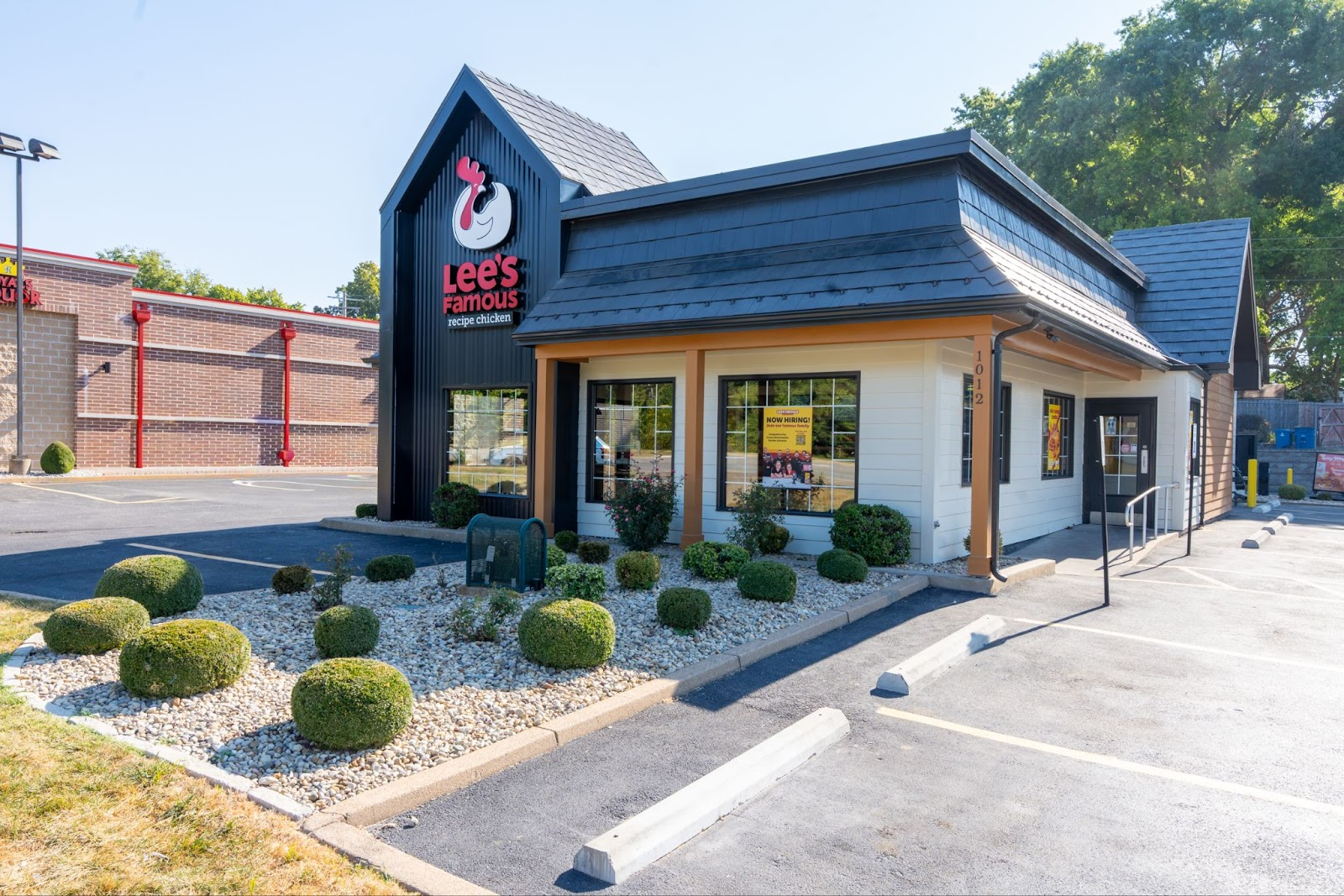
The modern drive-thru is no longer just a convenience channel; it has become one of the most operationally intense pressure points in quick-service restaurants. Speed expectations are rising, labor is harder to retain, and order complexity continues to increase. In response, Lee’s Famous Recipe Chicken is rolling out Hi Auto’s AI Order Taker across its franchise system, signaling a shift in how mid-sized QSR brands approach automation.
But unlike many technology rollouts that emphasize disruption, Lee’s strategy is built on optionality, infrastructure readiness, and gradual adoption.
The groundwork behind the rollout
Before expanding AI ordering system-wide, Lee’s spent time on foundational operational alignment. The brand unified its POS system and menu database, a step that often determines whether AI systems can scale effectively across franchises.
This effort created a consistent digital backbone for ordering logic, ensuring that Hi Auto’s system could interpret menus uniformly across locations rather than adapting to fragmented store-level setups.
Alongside this infrastructure work, Lee’s tested the AI Order Taker in 30 locations, including company-owned and franchise stores, to validate performance in live environments.
Optional technology, not enforced change
One of the defining aspects of the rollout is what it is not: a mandate.
Franchisees are not required to adopt Hi Auto’s system. Instead, they are given access to the technology and can decide whether it fits their operational strategy.
This reflects a broader philosophy within the brand, one that prioritizes franchisee control while still investing centrally in tools that can improve system-wide performance.
CEO Ryan Weaver framed this approach clearly: “Our operators are the backbone of Lee’s, and it’s our job to give them every advantage we can.”
He added that early results across 30 stores showed improvements in labor efficiency, shorter lines, better team morale, and more accurate orders delivered to guests.
What the performance data shows
The most persuasive argument for adoption comes from store-level results rather than theoretical projections.
Across participating locations, Hi Auto’s AI Order Taker has achieved over 95% order completion and 97% accuracy. These metrics matter in drive-thru environments where even small error rates can create bottlenecks during peak hours.
Operational benefits extend further. Restaurants using the system report saving between three and eight labor hours per day, a meaningful reduction in staffing pressure. At the same time, employee turnover has decreased by approximately 17%, suggesting that reducing repetitive order-taking responsibilities improves job satisfaction.
Average ticket sizes have also increased by 1.5%, indicating that AI-assisted ordering can support upselling in a consistent, low-friction way.
Reallocating human effort, not replacing it
A key outcome of the system is how it reshapes labor rather than eliminates it. By removing order-taking from staff responsibilities, employees can focus more on food preparation and guest interaction.
This shift becomes particularly important during rush periods, when the combination of high volume and multitasking often leads to stress and inconsistencies.
Instead of acting as a replacement for staff, the AI functions as a stabilizing layer within the drive-thru workflow.
Hi Auto’s scale adds operational credibility
Hi Auto’s footprint reinforces why brands like Lee’s are willing to adopt the platform at scale. The company powers nearly 1,000 drive-thru locations worldwide and processes more than 100 million orders annually, with adoption across roughly 200 franchisees globally.
CEO Roy Baharav emphasized that the partnership aligns with a broader philosophy in franchise technology: empowering operators rather than constraining them.
A strategic shift that happens quietly
What makes Lee’s rollout notable is its restraint. There is no dramatic reinvention of the drive-thru experience, no abrupt system overhaul, and no forced adoption curve.
Instead, the brand is introducing AI as an available capability within a newly standardized operational framework. Franchisees can adopt it when ready, supported by real performance data and a unified backend system that ensures consistency.
In that sense, the change is less about visible transformation and more about quiet infrastructure evolution, where AI becomes part of the operational baseline rather than an experimental add-on.