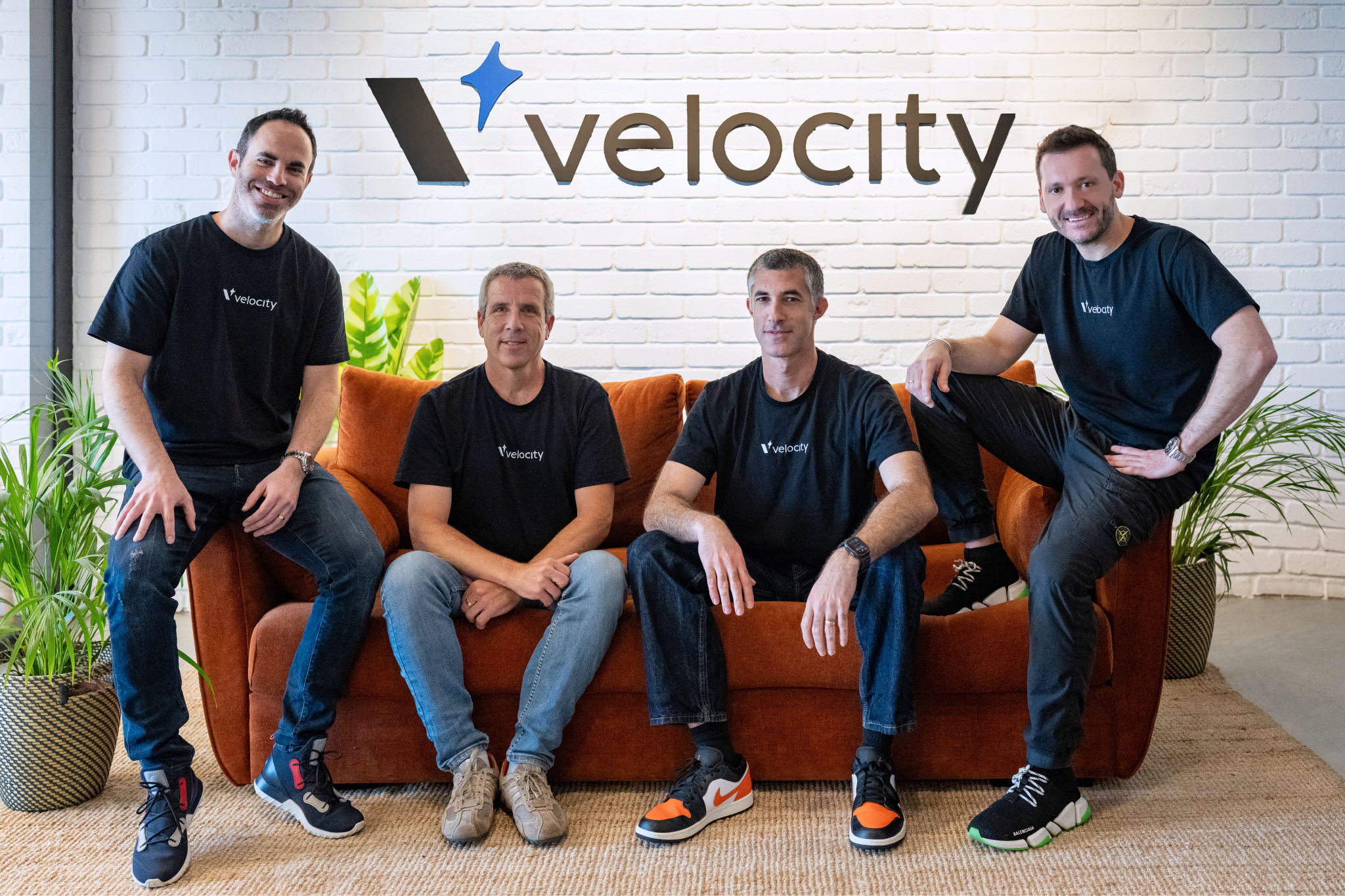
The rapid rise of generative AI has transformed how software is built, making development faster, more accessible, and increasingly affordable. But as AI applications attract millions of users, many companies are confronting a different challenge: turning that usage into sustainable revenue.
Velocity, a startup focused on monetization and distribution infrastructure for AI-native software, announced that it has raised $27 million in seed funding. The round was led by NFX and Red Dot Capital Partners, with participation from Stardom Ventures, Corner Ventures, and Transcend.
Founded by Tal Shoham alongside co-founders Amir Shaked and Nimrod Zuta, the company is positioning itself around what it sees as one of the next major infrastructure opportunities in AI: helping applications monetize and grow as traditional software economics evolve.
AI Growth Brings New Monetization Challenges
Generative AI has fueled one of the fastest-growing technology markets in recent years, with users increasingly relying on AI-powered assistants, coding tools, search experiences, and specialized applications. However, the financial model behind many of these products remains under pressure.
While user adoption continues to grow, only a small percentage of users ultimately become paying subscribers. At the same time, inference costs continue to increase as AI models generate more sophisticated outputs and support deeper reasoning capabilities.
Many AI companies have responded by limiting free usage through prompt caps, feature restrictions, or aggressive subscription paywalls. Velocity argues that while these approaches help manage costs, they may also reduce engagement, limit product discovery, and slow long-term growth.
Instead, the company is developing an additional monetization layer designed to generate revenue alongside subscriptions, allowing AI applications to expand free usage before users encounter paid barriers.
Building Around Real-Time User Intent
Velocity’s platform centers on what it describes as real-time user intent: the immediate expression of what users are trying to learn, create, purchase, or solve during AI conversations.
Rather than relying on cookies or historical browsing behavior, the company says conversational AI naturally surfaces user intent as interactions unfold. Its infrastructure analyzes multi-turn conversations, extracts structured intent in real time, and integrates relevant recommendations directly into AI experiences.
The platform is built around three core components: an AI-native advertising network for intent-driven placements, a mediation and auction layer designed to maximize revenue across demand sources, and a conversation intelligence layer that converts dialogue into structured, privacy-safe intent signals.
“AI is becoming the dominant interface for software, creating entirely new opportunities around monetization and distribution,” said Tal Shoham, CEO and co-founder. “We believe the biggest opportunity of the AI era will not only be building products, but also monetizing and distributing them. We’re building the infrastructure layer that helps solve both.”
Shoham added: “AI monetization should feel native to the experience. Users expect AI interactions to be useful, contextual, and trustworthy. Our goal is monetization, recommendations, and product discovery that enhance the experience rather than interrupt it.”
Early Customers Test the Model
Velocity says its early deployments suggest AI-native applications can introduce monetization without negatively affecting user experience, engagement, or retention.
Among its early customers is Leadtech / MAU. “Velocity has been a great partner to work with. The team is responsive, collaborative, and moves quickly,” said Diego Díaz, CEO of the Subscription Division at Leadtech / MAU. “We’ve been impressed by both the product and the people behind it, and we’re excited about the opportunities ahead. We’re confident this partnership will lead to meaningful outcomes as we continue building together.”
The company also reports adoption among consumer AI applications, including AIBY (Chaton). “Velocity has been an exceptional partner,” said Artsiom Turavets, Lead Product Manager at AIBY (Chaton). “The results have exceeded our expectations, delivering strong performance while maintaining a high-quality user experience. We’ve seen meaningful monetization outcomes alongside healthy engagement and retention metrics, which is critical for any consumer AI product. Beyond the results, the Velocity team is incredibly responsive, moves fast, and consistently builds tailored solutions to meet our needs. They operate as a true partner, and we’re excited about the opportunities ahead together.”
Investors Back a New Infrastructure Layer
Velocity’s investors view AI-native software as creating a new category of infrastructure focused on monetization and distribution.
“Every major platform shift creates new infrastructure categories,” said Gigi Levy-Weiss, General Partner at NFX. “We believe AI-native applications are creating one of the largest new technology platforms in history, built around real-time user intent, and Velocity is building the growth infrastructure layer that enables that intent to drive monetization, distribution, and growth.”
Atad Peled, Partner at Red Dot Capital Partners, echoed that view. “AI-native applications are creating a massive new opportunity around user intent,” said Peled. “Velocity is building the monetization and distribution layer for this new era, and we’re excited to partner with a team of proven operators whose track record of building and scaling global platforms, combined with their product vision and go-to-market expertise, positions them uniquely to define this category.”
As AI applications continue to expand across industries, Velocity believes user intent will become the defining signal for software growth.
“Every major platform has been built around a dominant signal,” said Shoham. “We believe the AI era will be built around intent, and we’re building the growth infrastructure layer to monetize and distribute through it.”