New York Tech Media
  • News
  • FinTech
  • AI & Robotics
  • Cybersecurity
  • Startups & Leaders
  • Venture Capital
No Result
View All Result
  • News
  • FinTech
  • AI & Robotics
  • Cybersecurity
  • Startups & Leaders
  • Venture Capital
No Result
View All Result
New York Tech Media
No Result
View All Result
Home AI & Robotics

New Method Simplifies Automated Driving Systems Approval

New York Tech Editorial Team by New York Tech Editorial Team
November 24, 2021
in AI & Robotics
0
New Method Simplifies Automated Driving Systems Approval
Share on FacebookShare on Twitter

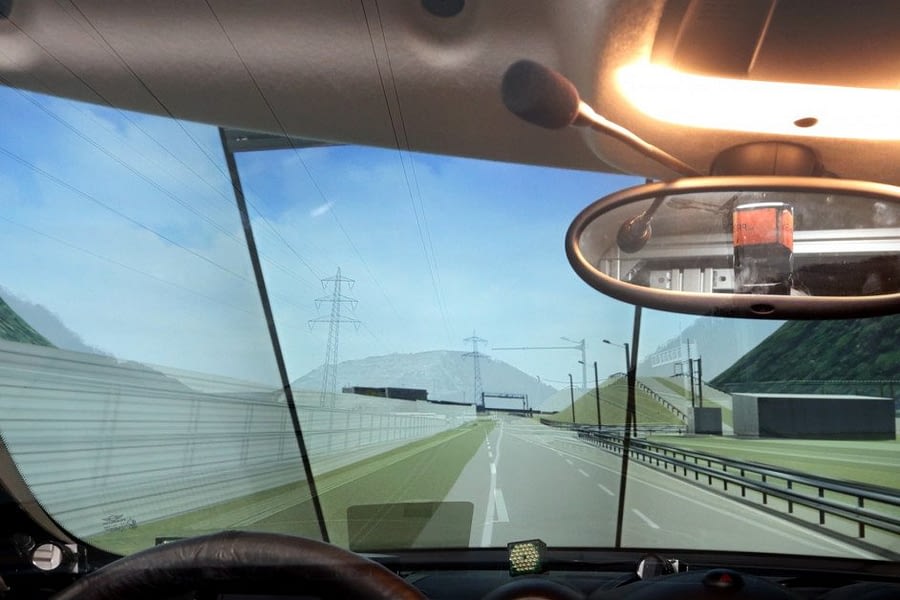
A new method developed by researchers at the Graz University of Technology could drastically improve and simplify the approval process for automated driving systems. 

Driving simulator tests are used for many different reasons, especially since they can simulate any scenario almost immediately. These scenarios are not affected by time and weather conditions, and there are no safety risks for the vehicle, people, or the environment. 

Driving simulators are also much cheaper and require less organization compared to the real thing. 

However, there are some questions surrounding the practice when it comes to automated driving. 

Automated Driving and Driving Simulators 

Arno Eichberger is head of the research area “Automated Driving & Driver Assistance Systems” at the Institute of Automotive Engineering at Graz University of Technology (TU Graz).

“In the field of highly automated driving, however, driving simulator studies are often questioned because of the lack of realism,” says Eichberger. “In addition, until recently there were no standardized test procedures that could have been used to check complex tasks such as the mutual interaction between human and system (handover procedures).”

The first global regulation for Automated Lane Keeping Systems (ALKS) was implemented in the beginning of 2021. According to Eichberger, the law fixes the issue of road approval.

“Until now, regulatory authorities did not know how to test and approve autonomous driving systems,” he said. “The vehicle manufacturers, in turn, did not know what requirements the systems had to meet in order to be approved.”

The regulations have specified, on the basis of a traffic jam assistant, the approval criteria for highly automated systems up to a maximum speed of 60 km/h. Once the assistant is activated, it becomes responsible for control. The driver can let go of the steering wheel, but they must take over if there is a malfunction. The system must also recognize that the driver has this ability. 

The New Method

The new method developed by Eichberger and his team from Fraunhofer Austria, AVL, and JOANNEUM RESEARCH was based on the regulation. It is able to safely, effectively, and realistically test the readiness to take over control in a driving simulator. The results can then be used for the certification of ALKS systems. 

The team had to carry out various processes to prove the validity of the driving simulation using the test drive. There needed to be a direct comparison between driving simulation and real driving, which had to match as closely as possible. 

The machine perception of the environment proved to be challenging in this regard. 

“If this is to run the same as in reality, the environments in the simulation have to match the real environment to the exact centimetre,” Eichberger said. 

The team achieved this accuracy by using “Ultra High Definition Maps” from JOANNEUM RESEARCH, which is a world leading research institution. 

Patrick Luley is head of the research laboratory for highly automated driving at the DIGITAL Institute. 

“We use a mobile mapping system to measure the test environments,” Luley said. “Finally, a seamless 3D map with an extremely high level of detail is created from the measurement data. In addition to traffic infrastructure objects such as traffic signs, lane markings and guard rails, vegetation and buildings are also represented in this map.”

This automated UHD mapping process is far faster and more cheaper than manual 3D modeling.

The last step is for the high-resolution 3D environment to be transferred to the driving simulator. 

According to Volker Settsgast from the Visual Computing business unit, “We prepare the data in such a way that the 3D environment can be displayed at high speed.”

The validation is then verified through comparative runs on the real route. 

“With our method, it is possible for car manufacturers to easily compare and validate a certain sampling on the real track and in the driving simulator,” Eichberger says. “This means that the test can ultimately be transferred from the real track to the driving simulator.”

The team is now working to set up virtual approval tests over the next few months. 

Credit: Source link

Previous Post

Wine in a can: San Francisco startup backed by music heavyweights

Next Post

ConstitutionDAO refunds $27 million, but fees are high to get a refund

New York Tech Editorial Team

New York Tech Editorial Team

New York Tech Media is a leading news publication that aims to provide the latest tech news, fintech, AI & robotics, cybersecurity, startups & leaders, venture capital, and much more!

Next Post
ConstitutionDAO loses $43 million auction of rare US Constitution copy

ConstitutionDAO refunds $27 million, but fees are high to get a refund

  • Trending
  • Comments
  • Latest
Meet the Top 10 K-Pop Artists Taking Over 2024

Meet the Top 10 K-Pop Artists Taking Over 2024

March 17, 2024
Panther for AWS allows security teams to monitor their AWS infrastructure in real-time

Many businesses lack a formal ransomware plan

March 29, 2022
Zach Mulcahey, 25 | Cover Story | Style Weekly

Zach Mulcahey, 25 | Cover Story | Style Weekly

March 29, 2022
How To Pitch The Investor: Ronen Menipaz, Founder of M51

How To Pitch The Investor: Ronen Menipaz, Founder of M51

March 29, 2022
10 Raunchy Movies on Netflix You Won’t Regret Watching

10 Raunchy Movies on Netflix You Won’t Regret Watching

May 20, 2024
Japanese Space Industry Startup “Synspective” Raises US $100 Million in Funding

Japanese Space Industry Startup “Synspective” Raises US $100 Million in Funding

March 29, 2022
Startups On Demand: renovai is the Netflix of Online Shopping

Startups On Demand: renovai is the Netflix of Online Shopping

2
Robot Company Offers $200K for Right to Use One Applicant’s Face and Voice ‘Forever’

Robot Company Offers $200K for Right to Use One Applicant’s Face and Voice ‘Forever’

1
Menashe Shani Accessibility High Tech on the low

Revolutionizing Accessibility: The Story of Purple Lens

1

Netgear announces a $1,500 Wi-Fi 6E mesh router

0
These apps let you customize Windows 11 to bring the taskbar back to life

These apps let you customize Windows 11 to bring the taskbar back to life

0
This bipedal robot uses propeller arms to slackline and skateboard

This bipedal robot uses propeller arms to slackline and skateboard

0
laptop on glass table

Automat-it Cuts Deployment Friction as Monce Scales AI Order Processing on AWS

April 13, 2026
Lee's Famous Recipe Chicken

Why Lee’s Famous Recipe Chicken Is Betting on Hi Auto to Quietly Rewire the Drive-Thru

April 9, 2026
computer generated image of letters

San Francisco Tribune Lists 11 HumanX Startups Moving AI Closer to the Operating Core

April 8, 2026
Impala CEO and Highrise AI CEO

The Industrialization of AI Infrastructure: What Impala and Highrise AI Reveal About the Next Scaling Frontier

April 7, 2026
Employee Time Tracking

What is an Employee Time Tracking Solution? A Definite Guide for 2026

March 31, 2026
Voltify founders

Voltify Raises $30 Million Seed Round as It Challenges $1 Trillion Rail Electrification Model

March 31, 2026

Recommended

laptop on glass table

Automat-it Cuts Deployment Friction as Monce Scales AI Order Processing on AWS

April 13, 2026
Lee's Famous Recipe Chicken

Why Lee’s Famous Recipe Chicken Is Betting on Hi Auto to Quietly Rewire the Drive-Thru

April 9, 2026
computer generated image of letters

San Francisco Tribune Lists 11 HumanX Startups Moving AI Closer to the Operating Core

April 8, 2026
Impala CEO and Highrise AI CEO

The Industrialization of AI Infrastructure: What Impala and Highrise AI Reveal About the Next Scaling Frontier

April 7, 2026

Categories

  • AI & Robotics
  • Benzinga
  • Cybersecurity
  • FinTech
  • New York Tech
  • News
  • Startups & Leaders
  • Venture Capital

Tags

AI AI QSRs Allseated Automat-it AWS B2B marketing Business CISO CISO Whisperer Collaborations Companies To Watch cryptocurrency Cybersecurity Entrepreneur Fetcherr Finance FINQ Fintech Funding Announcement hi-tech Hi Auto Impala Investing Investors investorsummit Israel israelitech Leaders LinkedIn Leaders Metaverse Mindset Minnesota omri hurwitz PointFive PR QSR Real Estate start- up startupnation Startups Startups On Demand Tech Tech leaders Unlimited Robotics VC
  • Contact Us
  • Privacy Policy
  • Terms and conditions

© 2024 All Rights Reserved - New York Tech Media

No Result
View All Result
  • News
  • FinTech
  • AI & Robotics
  • Cybersecurity
  • Startups & Leaders
  • Venture Capital

© 2024 All Rights Reserved - New York Tech Media