

Hello and welcome to Pipeline. I’m Tomio Geron, and I’m filling in for Biz Carson. Feel free to tell me something truly new, different or unexpected in VC. This week: Homebrew goes evergreen, Sequoia’s deal memo NFT and the SEC charged Alumni Ventures.
The future of seed
The conventional wisdom for seed-stage venture funds is go big or go home. Many new emerging managers raise first funds of up to $10 million, then seek to raise ever-larger funds, grow their team and invest in more companies or larger deals.
That’s because in the longstanding startup bull market — no one seems to remember a down market — startups are raising ever-more capital in larger rounds at higher valuations. So seed funds need capital to compete and many LPs are happy to oblige.
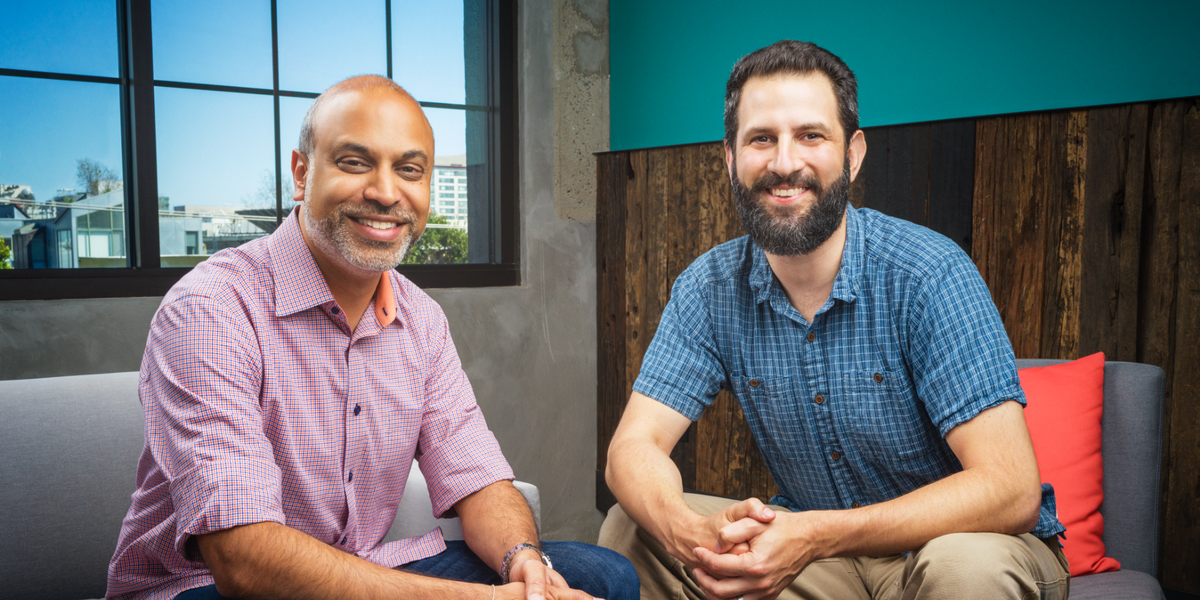
Homebrew, a firm founded by Satya Patel and Hunter Walk, has decided to go another route. Its fourth fund is an evergreen fund, with capital from just Walk and Patel.
- While its original structure enabled the firm to provide key advice and capital at the earliest stages for companies like Plaid, Chime and Gusto, the current market has split off capital from counsel — some firms provide just a check and very little involvement. Now Homebrew will be able to invest at any stage, and remain invested in a company beyond its IPO. Profits can get recycled back into new startups.
- The structure also means Patel and Walk don’t have to return capital to investors by a certain time as with a traditional venture fund. They haven’t ruled out adding LPs to the fund in the future. For now, they can bring in LPs for an SPV at later stages if necessary.
Homebrew’s much smaller than Sequoia, but the comparisons are inevitable. Sequoia shook up the industry last fall when it said it would adopt an evergreen fund structure.
- Homebrew’s evergreen fund isn’t designed so that it will have a public portfolio like Sequoia — though that would be nice, Walk said.
- While Homebrew could have raised a larger fund, that was not the partners’ goal. It would mean spending more time managing employees or other things not related to working with founders. “Frankly I believe that the larger your fund, the more likely you are to be out of sync implicitly or explicitly with what early-stage founders need,” Walk said.
- And Walk acknowledged that he and Patel are lucky to be in a position that they don’t need to raise a larger fund just to generate more fees.
- Evergreen and self-funded funds aren’t new, but in a bull market it’s unusual to jump off the train.
- There are a few firms like Indie.VC (RIP) that have tried to create alternative models to traditional VC, but most haven’t worked.
Bigger isn’t always better. In an industry where billion-dollar venture funds aren’t surprising anymore, Homebrew’s move also highlights some of the less-discussed negative impacts of ballooning seed funds.
- The larger your fund, the more you have to invest. Plowing more capital into a startup than it needs can have many negative impacts, but few startups will turn down a larger check.
- And of course there’s the VC’s incentive: The larger your fund, the more management fees you take in. The economics of new seed funds can be challenging. A typical 2% management fee on a $10 million fund is $200,000 — not a lot for one or two partners’ salaries plus expenses in a place like San Francisco or New York. “But we never started Homebrew to be capital accumulators and have never optimized for assets under management as a business model,” Walk and Patel wrote in a blog post.
- Meanwhile, VCs will feel FOMO from their peers and competitors raising larger funds. With the industry performing well, few will jump off the train. “Everyone is being rewarded for the velocity of capital,” Walk said. “The VC product has excellent returns for endowments.”
There are some good reasons to raise larger funds. Here are a few.
- VCs need to compete with others, especially the Tigers of the world. Rounds are getting larger and valuations are higher. The exits are bigger which justifies bigger rounds. And insider rounds are now seen as a sign of strength, not weakness.
- Some want to build lasting institutional legacies. Others want to help train the next generation, which is hard to do with a small firm. (Homebrew has Screendoor, a separate organization that supports underrepresented groups in VC.)
- Some believe that startups in certain sectors need large checks or they won’t get funded at all — such as in synthetic bio or climate tech.
- Operating as a solo GP has been popular lately, but it can be a lonely endeavor.
Ultimately, few seed funds are positioned to make the move Homebrew did. But there may be a few more who move to an evergreen model or become self-funded. It’s a good opportunity to reflect on what your priorities are — and whether the traditional VC model gets you to your goals.
Overheard
Sequoia raised 200 ETH by auctioning off an NFT of its 2005 YouTube investment memo. 0xPARC is helping distribute the proceeds to crypto groups through a Public Ecosystem Development Fund.
Tomasz Tunguz looked at the 20 most valuable DAOs and found some patterns in who participates. And he made some observations about DAO culture: “The vibe is more GitHub, less Goldman.”
Founders Fund partner Trae Stephens had high praise for “greatest of all time” COO Lauren Gross as the firm nearly doubled its capital under management with a new $5 billion fund. “She doesn’t like it when you say nice things about her publicly, so it’s probably best that she’s not on Twitter and will never see this,” he tweeted.
A MESSAGE FROM INTEL

Intel Partner University, exclusively available to Intel Partner Alliance members, helps professionals succeed in positioning and selling Intel products and solutions through industry-leading curriculum with specialized training paths and personalized training recommendations.
Learn more
Inside track
How should startups respond to macro risk? Cash may become harder to come by if public markets remain volatile, says Albert Wenger, so extend your runway and prepare for the worst.
Nia Johnson surveyed VC interns and found that 23% don’t get paid, median pay was $25/hour and gender didn’t play a significant role in pay.
Need to know
So much for the cooling of the late-stage market. Fanatics was valued at $27 billion with new investors Fidelity, Black Rock and Michael Dell’s MSD Partners.
Electric Capital raised $1 billion. It’s the latest crypto firm to raise a monster fund.
First Round launched its Angel Directory. It’s a way for founders to find angels in the right location, check size and sector, says Brett Berson.
The SEC charged Alumni Ventures, which will have to repay $4.7 million to investors. Officials said the firm misled investors by claiming a 2% annual management fee when it actually charged 20% upfront.
On Protocol: Ali Partovi is betting he can recapture the magic of early Y Combinator with his Neo Accelerator.
Your weekend reading: National Geographic Explorer Tara Roberts tells the story of diving for the hidden history of lost slave ships.
Five questions for … White Star Capital’s Sep Alavi
Alavi is a general partner and head of White Star Capital’s Digital Asset Fund, which invests in crypto. His investments include Ledn, ALEX, Paraswap, Rally and Multis. He also co-founded Residence Ventures and Icon Partners, a blockchain consulting firm.
What is the biggest issue that your partners are thinking/talking about at your Monday partner meeting?
Probably like everybody else in our world: Russia, Ukraine and the impact of inflation. Also, there’s been a lot of money pouring into the private and public markets over the past two years. This affects valuations all the way down to the seed-stage deals. We constantly have to remind ourselves to stay disciplined, especially those of us who have seen this play out before.
What’s a secret obsession of yours that most people don’t know about?
I’m an amateur DJ and also started producing my own tracks. Pre-COVID, I grew up playing at parties and clubs and played a set at Burning Man. That was a mystical experience and will be engraved in my memory forever. I’m also a triathlete. Although I haven’t competed in over two years, my last triathlon was in Port St. Lucie, Florida, where the swim part was in a lake inhabited by a few alligators. Needless to say, that was my fastest swim ever.
What book do you think every startup founder should read?
“Life After Google: The Fall of Big Data and the Rise of the Blockchain Economy,” by George Gilder. It does a fantastic job of bringing the concept of disruption and everlasting monopolies into perspective. Also shows how the future of technology will be built on open crypto networks as opposed to the current closed, walled-garden Web 2.0 infrastructure. George Gilder is a futurist and has been at the forefront of many disruptive technologies. It would be wise to listen carefully to what he has to say.
What product or service are you totally, even irrationally, loyal to?
Twitter, Telegram and Caviar. I get all my news and market updates (crypto and non-crypto) from Twitter on an ongoing basis. I also often get great deal flow and meet entrepreneurs this way. I then switch to Telegram for quick and efficient communication. I have a feeling TG will replace email eventually but this is not a surprise to anyone working in the crypto space. After a long day at work there’s nothing better than being able to order food from my favorite restaurants with the click of a button. That’s where Caviar comes very handy. I probably would be malnourished without it.
What’s a company in your anti-portfolio, and what did you learn from passing on the deal?
When we looked at investing [in] Figment, everything aligned from the business model, the sector, the team, to the product market fit and revenue traction. The only sticking point was the percentage ownership and investment amount. We decided to pass due to the limited size of the available investment. In retrospect, it would have been a 100x return!
A MESSAGE FROM INTEL

Gaining a specialization in cloud skills offers the opportunity for experts to promote their work, build a career and gain new experiences that may lead to new job opportunities. Learn how to keep up with new cloud technologies through Intel Partner University.
Learn more
Thanks for reading — see you next Saturday!
Credit: Source link