

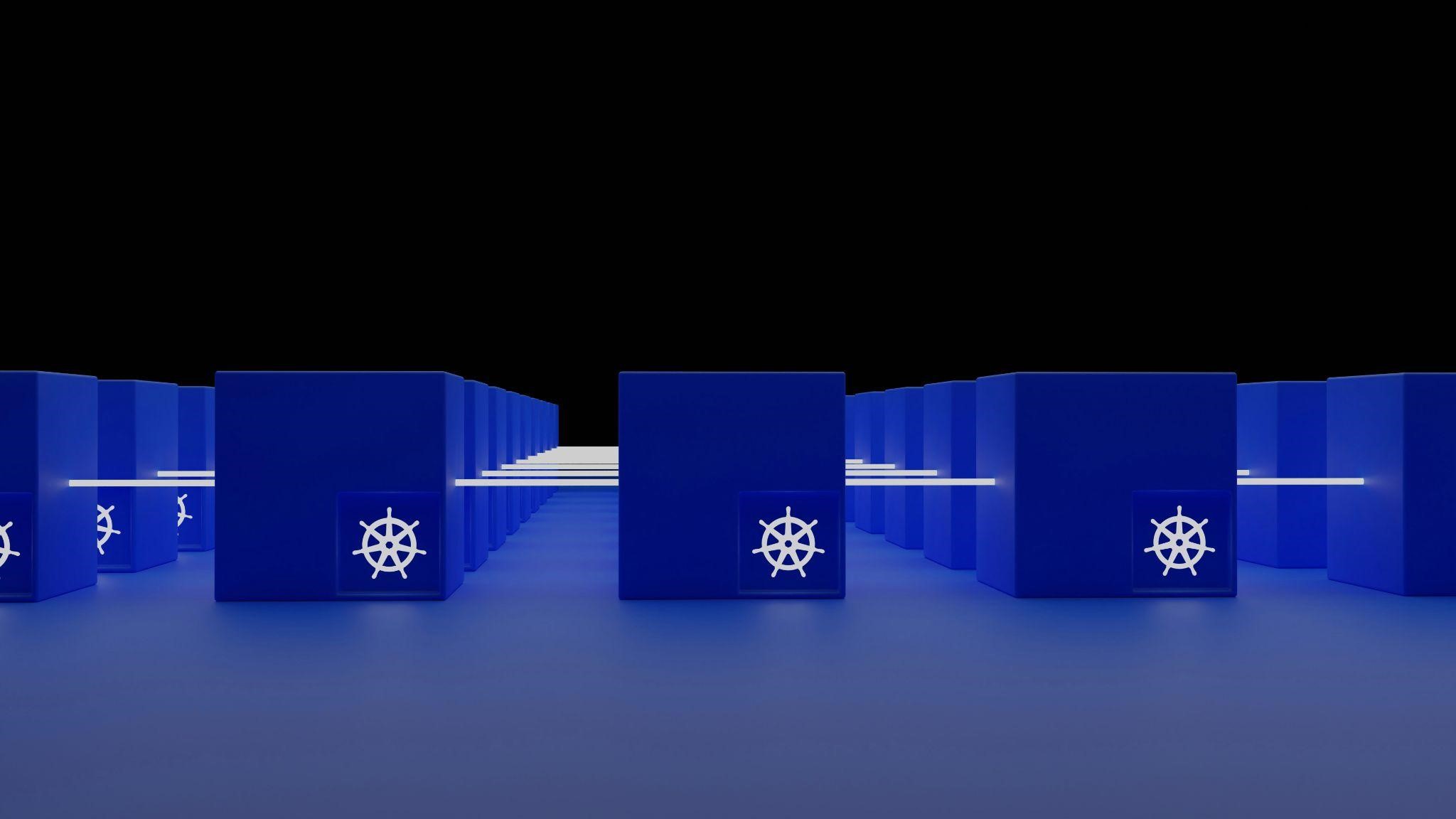
Ever wondered how your current cloud network can run unencumbered? Is it baffling to imagine the billions of files and tasks that are seamlessly handled daily by services like AWS, Azure, and Oracle? For the layperson, this may be a daunting task, as I quickly found out during my quick but thoroughly puzzling deep dive in Kubernetes.
It is mind blowing to think that there is a piece of technology that affects our everyday life, that is understood only at the highest level. Luckily, there are those who not only understand Kubernetes, but implement it at the highest level, allowing for our cloud services to work without a hitch.
One such individual, Ajay Chhabria, has taken the time to sit down with us today to discuss the progression of Kubernetes on what marks its 10-year anniversary. We discuss not only how far the open-source platform has come, but where he sees it transitioning to in the future. Chhabria has been working with the platform since 2018 during his time at Spirent as a technical marketing engineer. Now as a product manager at Oracle he heads up teams as well as mentor’s junior product managers, his roles have changed but his relationship to Kubernetes or K8s has progressively increased.
From Platform to Building Block
“For now, Kubernetes functions as a platform; however, I believe in the future it will be an enabler of innovation,” begins Chhabria. The platform has evolved significantly from its origins in Google’s Borg system, helping to advance how applications are scaled and simplified within cloud networking.
Kubernetes has revolutionized the industry by addressing some of the more complex problems in distributed computing. These problems, to name a few are, resource orchestration, auto-scaling and service discovery. The main feature of K8s is its ability to manage containerized applications, take care of tasks such as scaling deployment, and fault tolerance. These tasks were often prone to human error in the past leading to mass inefficiencies.
The perfect example of implementing Kubernetes, is Netflix. The popular streaming app leverages K8s for its microservice architecture to deliver uninterrupted viewing to millions of worldwide users. The platform itself orchestrates thousands of containerized services, allowing Netflix to quickly scale up during high-traffic events like the Jake Paul vs Mike Tyson fight.
Beyond entertainment, Kubernetes is also driving advancements in High-Performance Computing (HPC), where workloads demand exceptional speed and efficiency. For instance, bioinformatics firms use Kubernetes to manage genome sequencing workflows, processing massive datasets at an unprecedented pace.
“It’s not just about reducing costs; it’s about unlocking possibilities that were previously impractical or unimaginable,” says Chhabria. Industries ranging from financial services, where latency is critical, to automotive, where AI-driven workloads like autonomous vehicles need reliable orchestration, have embraced Kubernetes as the backbone of their innovation strategies.
“It is changing the economic landscape,” he says, “improving operational efficiency and enabling faster innovation cycles is helping to create global opportunities and redefine industry economics.” Kubernetes was released to the public in 2014 and donated to the Cloud Native Computing Foundation (CNCF) the following year with the ultimate goal of making cloud networks ubiquitous.
Kubernetes’ widespread adoption has enhanced the efficacy of cloud networking, fueling the rapid emergence of new applications and creating a springboard for groundbreaking inventions. “Kubernetes-based applications will define modern infrastructure similar to how operating systems defined the personal computing era,” Chhabria notes when discussing the platform’s transformative legacy.
Chhabria emphasizes Kubernetes’ role in advancing AI/ML workloads, particularly for managing resources like GPUs and TPUs critical for these computationally intensive tasks. Companies like OpenAI have adopted Kubernetes to train large language models efficiently, allowing them to scale GPU clusters dynamically based on workload demands.
The Future is Bright
While the progress of Kubernetes has been game-changing to watch, the future offers even larger advancements. “K8s is poised to become smarter, faster, and more secure,” notes Chhabria, “it will help address the growing complexity of cloud-native edge and hybrid workloads.”
So what type of workloads are we talking about?
Those found in the healthcare and retail worlds to start with. Kubernetes’ ability to support hybrid cloud and edge computing allows for real time processing which is paramount to these industries. Chhabria uses a retail store as an example, “the use of edge devices could help to enable dynamic pricing while also handling inventory management in real-time.” The same technology could be used in hospitals to help bedside monitoring or image analysis.
The adaptability of Kubernetes means it can help in any number of professional spaces and provide added security measures. This is particularly promising for industries such as finance and government where security is paramount. But Chhabria suggests that, “Kubernetes abstraction model will eventually allow it to handle diverse architectures seamlessly, from quantum workloads to distributed stateful systems, ultimately making it the cornerstone of next-generation computing.”
Evolving Towards Commoditization
Despite its pivotal role in the tech landscape, Chhabria foresees Kubernetes eventually becoming “a commoditized service, much like how virtualization or cloud infrastructure is viewed today.” This transition will allow organizations to focus on building solutions rather than managing infrastructure.
This commoditization trend is already visible with fully managed Kubernetes services like Amazon EKS, Azure AKS, and Oracle Kubernetes Engine (OKE), where enterprises offload operational burdens to cloud providers. “The next step,” Chhabria notes, “is abstracting Kubernetes to a point where developers no longer need to interact with it directly, enabling focus on building applications rather than managing clusters.”
Conclusion
Kubernetes has already redefined cloud computing by democratizing access to scalable and reliable infrastructure. As it enters its second decade, its potential to shape the future of AI, edge computing, and beyond is undeniable. Thanks to visionaries like Ajay Chhabria and countless other contributors in the open-source community, Kubernetes is evolving from a powerful platform into an invisible enabler, laying the foundation for the next generation of technological innovation.
Whether through enhancing global connectivity or enabling breakthroughs in artificial intelligence, Kubernetes is undoubtedly cementing its legacy as the operating system of the cloud.