


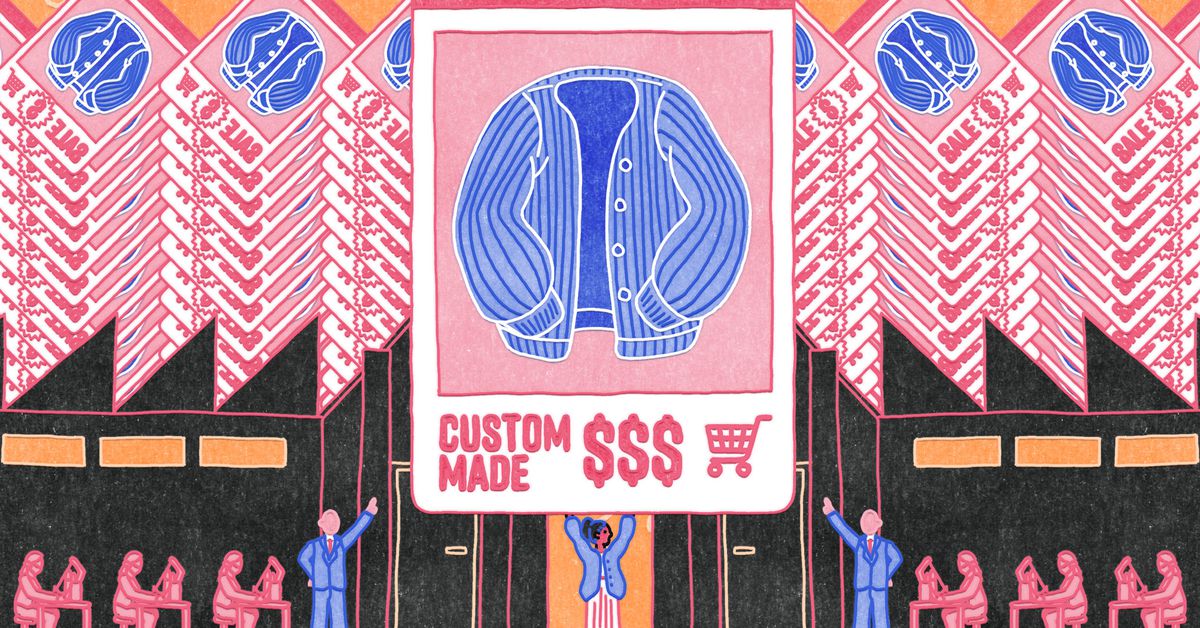
When the knitwear designer Crochet Bao posted her latest creation to Instagram last May, fans fawned over what they saw: a red and white cardigan with gingham-checked sleeves, chunky accents, and big strawberries patterned across the body. “A lot of people were DMing me and asking for a pattern, but some people were willing to pay for it as well,” Crochet Bao said.
If someone is interested in the cardigan, they can go to her Etsy store to buy crochet pattern instructions for $11 or a custom-made cardigan for $195.
Or, they can go to online clothing retailer Cider and buy a knockoff cardigan with an almost identical design for $32 — which isn’t surprising to the full-time designer, who found out about the listing after a follower messaged her.
“It seems like every day you look and then there’s a new design being taken or imitated and copied,” she said.
Fast-fashion companies like Cider and Shein are known to regularly rip off designs from small creators. Usually, there are very few consequences, because most clothing items cannot be protected under American copyright laws.
This means that when a small designer like Crochet Bao, who asked to be identified by the name of her online store, has her design imitated, the only thing she can do is post about it online and hope people see that the design is actually hers.
The problem is even more severe for knitwear designers, whose products have taken over the fashion world. Since many designers stitch their clothes by hand, prices tend to be high to reflect the quality and time of the work. It took Crochet Bao three months to make her cardigan design — she made prototypes to make sure her instructions were size-inclusive, created step-by-step videos for the pattern, and had multiple people test her design and give her feedback. Every time someone orders a cardigan, it takes her 18 hours to crochet the entire piece by hand.
“After all that work, for someone to just take it and then sell for like one-eighth of the price or even less, is just insane,” the 25-year old Etsy seller said.
Companies rarely respond to claims about copying designs. Emma Charlton, who runs an Etsy store called AlaskaCrochetCo, found this out when she learned that Cider was selling a sweater that looked similar to one she had worked to adapt from a vintage pattern. She contacted the company multiple times, and even went to the site and responded to comments on the store listing asking shoppers to look at her original work. Cider reached out and said she could file a copyright claim, but she knows that she technically has no claim to the pattern.
“I think my original goal was to get it taken down, but then it did turn to just calling attention to how they’re not a good place to shop from,” Charlton said.
Fast-fashion knockoffs can make the pieces these creators have worked so hard on no longer feel like unique, sustainable items that promote slow, ethical fashion practices. Lydia Bolton, a textile designer who specializes in one-of-a-kind clothes made from reused materials, posted a picture of a jacket she thought could not be replicated because she used a patterned fabric no longer sold in stores. Even when numerous people asked if they could buy the $164 jacket, she resisted customer demand to make more.
Now, those potential customers can buy a replica of the jacket on Cider.
“It is a shame really, because it makes this one awfully special jacket slightly less special because now the whole world can have it for $28 on Cider,” Bolton said.
That loss can be worse than the sales these creators miss out on. For Bolton, the Cider jacket “won’t impact my sales” because she only makes one-of-a-kind items.
Crochet Bao says the different price points mean she’s reaching different shoppers. “The people shopping at Cider are not the people who I think would buy my items in the first place,” she said. “They’re most likely not going to be shopping for a $250 cardigan at the same time.”
Some designers have had success taking down these designs from other fast-fashion companies, often after a social media post claiming design theft goes viral. Eliza Hilding, a knitwear designer from Sweden, posted an Instagram Reel showing similarities between a sweater vest they made and one that popped up on Shein six weeks later. The video got over a million views and shortly after, they received a DM from the company saying that the vest had been taken down.
“They said that it’s a third-party vendor that’s responsible, and that they are sorry, and that they respect every designer’s intellectual property,” Hilding said.
While getting the design taken down was great, Hilding says the comments that made her the happiest were from people who said they planned to stop shopping at Shein now that they knew the brand was stealing designs. For her, this is the real victory: helping people move away from fast fashion and be more selective about where they shop.
The trouble is, knitwear is expensive, fashion moves fast, and these companies offer an acceptable product at a much lower price. “We’re all babies of a capitalist society, we see something bright and shiny, we’re taught to want it,” said Kara Harms, who reviews fast fashion on her blog whimsysoul.
On its website, Cider claims that it cuts down on waste through its preorder model, which produces inventory in smaller batches and controls their margins. This model, the website claims, helps the company achieve sustainability while still keeping up with the latest trends. But Harms, who has tried to verify this claim, says it isn’t easy to find proof that the company is as sustainable as it makes itself out to be.
“You can talk all day about how the sweater feels and fits,” Harms said. “But where was it made? That’s actually really hard to know.” Cider did not respond to multiple requests for comment for this story.
In the knitwear community, the problem isn’t just big designers ripping off smaller ones. Sometimes, creators see other knitwear designers passing off patterns as their own, and even selling them for higher prices.
Alyssa Gomez, a knitwear designer who makes cardigans and hats, says that people can claim their designs are just following trends, but when she sees that a creator is selling a design she created months ago under the same name, it’s obvious what’s happened.
“I don’t want to step on anyone’s toes, but it definitely leaves a sour taste in your mouth,” she said.
When another creator makes a YouTube tutorial for someone else’s design or sells the same pattern under a different name, the lack of credit means that fewer people are aware of the original designer’s products and name. When Charlton saw that someone had created a free YouTube tutorial outlining her pattern, she thought it was even worse than when Shein took her design, because people would use that video instead of buying her pattern.
“The least I will ask for is for them to add credit in the video description,” Charlton said. “What I would really like is if they take the video down, but there’s not usually anything I can do about that if they choose not to.”
At the end of the day, these designers know they cannot stop small businesses or large fast-fashion companies from taking designs. So, they’d rather focus on helping people make informed choices.
“Just be conscious of what you consume,” Crochet Bao said. “Be conscious of where things come from. That doesn’t mean you have to go and shop small every time; it just means, be aware of what and who you’re buying from.”
Credit: Source link