New York Tech Media
  • News
  • FinTech
  • AI & Robotics
  • Cybersecurity
  • Startups & Leaders
  • Venture Capital
No Result
View All Result
  • News
  • FinTech
  • AI & Robotics
  • Cybersecurity
  • Startups & Leaders
  • Venture Capital
No Result
View All Result
New York Tech Media
No Result
View All Result
Home AI & Robotics

Algorithm Predicts Processor Power Consumption Incredibly Fast

New York Tech Editorial Team by New York Tech Editorial Team
December 15, 2021
in AI & Robotics
0
Algorithm Predicts Processor Power Consumption Incredibly Fast
Share on FacebookShare on Twitter

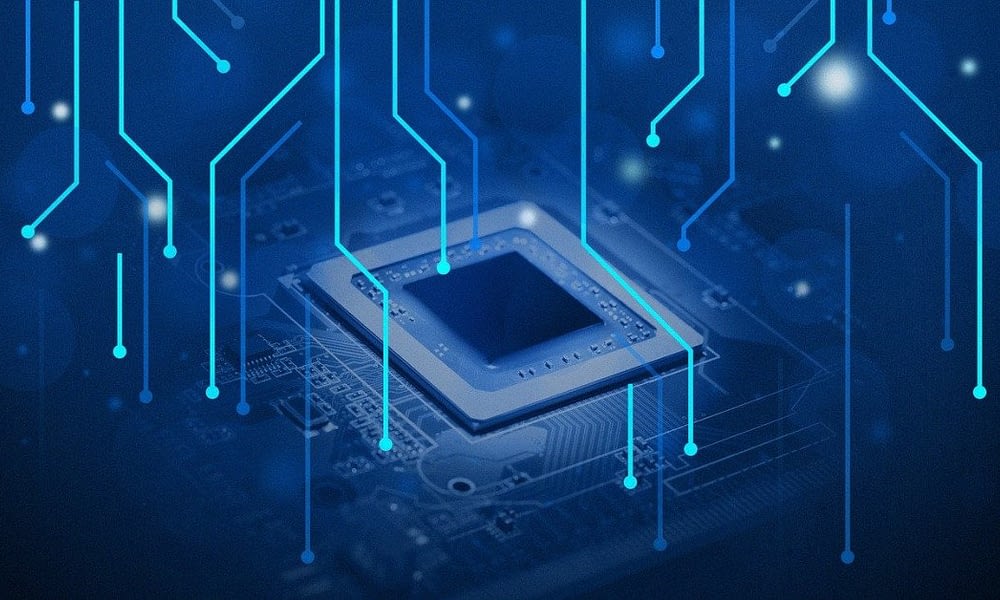
Computer engineers at Duke University have developed a new artificial intelligence (AI) method that can accurately predict the power consumption of any type of computer processor. The most impressive feature of this new method is its ability to carry this out over a trillion times per second, all while using very little computation power itself.

APOLLO Technique

The new technique is called APOLLO, and it has been validated on real-world, high-performance microprocessors. It could be applied in many different ways, including to improve the efficiency and inform the development of microprocessors. 

The research detailing this new method was published at MICRO-54: 54th Annual IEEE/ACM International Symposium on Microarchitecture. 

Zhiyao Xie is first author of the paper and a PhD candidate in the laboratory of Yiran Chen, who is a professor of electrical and computer engineering at Duke.

“This is an intensively studied problem that has traditionally relied on extra circuitry to address,” said Xie. “But our approach runs directly on the microprocessor in the background, which opens many new opportunities. I think that’s why people are excited about it.”

Modern Computer Processors 

Modern computer processors rely on cycles of computations that are made 3 trillion times per second. In order to maintain the chip’s performance and efficiency, the power consumption of these fast transitions must be tracked. When a processor draws too much power, it can result in overheating and damage. When the power changes fast, it can cause internal electromagnetic complications that result in a slower processor.

Software can predict and stop these extremes, and computer engineers can use it to protect hardware and increase performance. However, this process requires extra hardware and computational power.

“APOLLO approaches an ideal power estimation algorithm that is both accurate and fast and can easily be built into a processing core at a low power cost,” Xie said. “And because it can be used in any type of processing unit, it could become a common component in future chip design.”

Drawing on AI

APOLLO draws on artificial intelligence for its power. The algorithm relies on AI to identify and select 100 of a processor’s millions of signals, which correlate with its power consumption. Those 100 signals are then used to build a power consumption model, and the algorithm monitors them to predict the chip’s performance in real-time. 

This process is autonomous and data driven, meaning it  can be implemented on nearly any type of computer processor architecture. 

“After the AI selects its 100 signals, you can look at the algorithm and see what they are,” Xie said. “A lot of the selections make intuitive sense, but even if they don’t, they can provide feedback to designers by informing them which processes are most strongly correlated with power consumption and performance.”

The researchers say that the algorithm still needs further testing and comprehensive evaluations on different platforms. This is required before it can be adopted by commercial computer manufacturers.

Credit: Source link

Previous Post

Philanthropy- and community-funded startups tackle news deserts » Nieman Journalism Lab

Next Post

Why the US Navy is sending robots out to sea

New York Tech Editorial Team

New York Tech Editorial Team

New York Tech Media is a leading news publication that aims to provide the latest tech news, fintech, AI & robotics, cybersecurity, startups & leaders, venture capital, and much more!

Next Post
Why the US Navy is sending robots out to sea

Why the US Navy is sending robots out to sea

  • Trending
  • Comments
  • Latest
Meet the Top 10 K-Pop Artists Taking Over 2024

Meet the Top 10 K-Pop Artists Taking Over 2024

March 17, 2024
Panther for AWS allows security teams to monitor their AWS infrastructure in real-time

Many businesses lack a formal ransomware plan

March 29, 2022
Zach Mulcahey, 25 | Cover Story | Style Weekly

Zach Mulcahey, 25 | Cover Story | Style Weekly

March 29, 2022
10 Raunchy Movies on Netflix You Won’t Regret Watching

10 Raunchy Movies on Netflix You Won’t Regret Watching

May 20, 2024
How To Pitch The Investor: Ronen Menipaz, Founder of M51

How To Pitch The Investor: Ronen Menipaz, Founder of M51

March 29, 2022
Japanese Space Industry Startup “Synspective” Raises US $100 Million in Funding

Japanese Space Industry Startup “Synspective” Raises US $100 Million in Funding

March 29, 2022
Startups On Demand: renovai is the Netflix of Online Shopping

Startups On Demand: renovai is the Netflix of Online Shopping

2
Robot Company Offers $200K for Right to Use One Applicant’s Face and Voice ‘Forever’

Robot Company Offers $200K for Right to Use One Applicant’s Face and Voice ‘Forever’

1
Menashe Shani Accessibility High Tech on the low

Revolutionizing Accessibility: The Story of Purple Lens

1

Netgear announces a $1,500 Wi-Fi 6E mesh router

0
These apps let you customize Windows 11 to bring the taskbar back to life

These apps let you customize Windows 11 to bring the taskbar back to life

0
This bipedal robot uses propeller arms to slackline and skateboard

This bipedal robot uses propeller arms to slackline and skateboard

0
laptop on glass table

Automat-it Cuts Deployment Friction as Monce Scales AI Order Processing on AWS

April 13, 2026
Lee's Famous Recipe Chicken

Why Lee’s Famous Recipe Chicken Is Betting on Hi Auto to Quietly Rewire the Drive-Thru

April 9, 2026
computer generated image of letters

San Francisco Tribune Lists 11 HumanX Startups Moving AI Closer to the Operating Core

April 8, 2026
Impala CEO and Highrise AI CEO

The Industrialization of AI Infrastructure: What Impala and Highrise AI Reveal About the Next Scaling Frontier

April 7, 2026
Employee Time Tracking

What is an Employee Time Tracking Solution? A Definite Guide for 2026

March 31, 2026
Voltify founders

Voltify Raises $30 Million Seed Round as It Challenges $1 Trillion Rail Electrification Model

March 31, 2026

Recommended

laptop on glass table

Automat-it Cuts Deployment Friction as Monce Scales AI Order Processing on AWS

April 13, 2026
Lee's Famous Recipe Chicken

Why Lee’s Famous Recipe Chicken Is Betting on Hi Auto to Quietly Rewire the Drive-Thru

April 9, 2026
computer generated image of letters

San Francisco Tribune Lists 11 HumanX Startups Moving AI Closer to the Operating Core

April 8, 2026
Impala CEO and Highrise AI CEO

The Industrialization of AI Infrastructure: What Impala and Highrise AI Reveal About the Next Scaling Frontier

April 7, 2026

Categories

  • AI & Robotics
  • Benzinga
  • Cybersecurity
  • FinTech
  • New York Tech
  • News
  • Startups & Leaders
  • Venture Capital

Tags

AI AI QSRs Allseated Automat-it AWS B2B marketing Business CISO CISO Whisperer Collaborations Companies To Watch cryptocurrency Cybersecurity Entrepreneur Fetcherr Finance FINQ Fintech Funding Announcement hi-tech Hi Auto Impala Investing Investors investorsummit Israel israelitech Leaders LinkedIn Leaders Metaverse Mindset Minnesota omri hurwitz PointFive PR QSR Real Estate start- up startupnation Startups Startups On Demand Tech Tech leaders Unlimited Robotics VC
  • Contact Us
  • Privacy Policy
  • Terms and conditions

© 2024 All Rights Reserved - New York Tech Media

No Result
View All Result
  • News
  • FinTech
  • AI & Robotics
  • Cybersecurity
  • Startups & Leaders
  • Venture Capital

© 2024 All Rights Reserved - New York Tech Media