This article is an on-site version of our #fintechFT newsletter. Sign up here to get the newsletter sent straight to your inbox every Monday
A warm start to the week for you, FintechFT readers, from a surprisingly sunny London.
News media NFTs have been on my mind of late, not least because they’re multiplying. Later this week, TIME magazine will join vaunted company, including the New York Times, when it releases an NFT issue featuring Ethereum co-founder Vitalik Buterin. (Cue joke about the FT becoming the NFT).
Like other institutions, media companies are understandably keen to innovate. But they should also be wary of ensuring that these new efforts do not conflict with ethical norms — see the Associated Press’ plan (now cancelled) to sell an NFT video “of migrants drifting in an overcrowded boat in the Mediterranean”.
This week’s newsletter also features Leo Lewis on Japanese fintech, my interview with the chief executive of online mortgage provider Molo and news of more tech firms preparing to take the plunge into the amorphous world of Web3.
As always, reach out to Imani (imani.moise@ft.com) or me (sid.v@ft.com) with thoughts for other companies to cover, trends to follow or general tips.
Block’s Tokyo investment stirs excitement about Japanese fintech
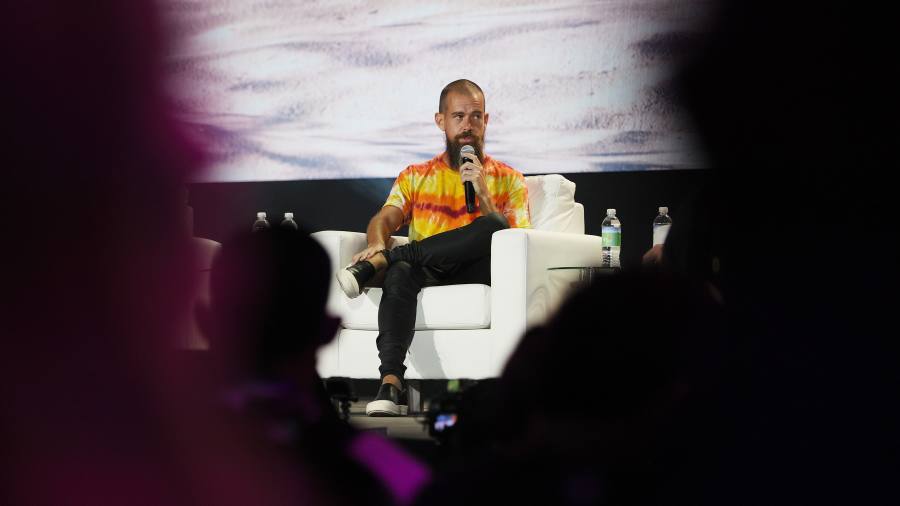
Last week, a wave of excitement rippled through Japan’s fintech world when Jack Dorsey’s financial services group, Block, set its investment sights on Tokyo for the first time.
The investment in mobile payments app Kyash, reportedly Block’s only investment to date in Asia, was unusual for several reasons that I’ll get into below. It also raised the question of whether Japan’s start-up and venture capital scene could be expanding to include different models.
Block, formerly called Square, along with a platoon of sizeable US and Japanese backers, participated in a $41.2mn round of series D funding — a stage that start-ups everywhere often fail to reach, but which is especially rare in Japan. After this latest round, Kyash’s total funding since the company launched in 2015 exceeds $107mn.
Kyash’s app allows consumers to make online and offline payments and remittances as well as providing virtual pre-paid debit cards. While none of this may sound especially cutting-edge in global terms, it is significant in Japan, where the fintech industry is locked in a war of attrition with cash, traditional banking and a large, conservative and elderly population.
Nevertheless, that battle has tilted more clearly in fintech’s favour over the past two years. The Covid-19 pandemic has, as elsewhere, accelerated the shift towards digital payments and other fintech services that might otherwise have taken longer to adopt.
Perhaps not surprisingly, therefore, Japan’s mainstream banking, insurance and broader financial industry are now looking more urgently at higher quality fintech start-ups in which to invest. Participants in Kyash’s four stages of funding have given it a list of investors that include Japan Post, the country’s largest online brokerage and one of its largest trading houses, as well as the investment arms of all three of Japan’s “megabank” financial groups. The company is also backed by Japan’s largest venture capital group, JAFCO.
The breadth of this group, which has now been joined by Block, is intriguing if it means that pre-IPO Japanese fintech start-ups may now find themselves on the radars of VC investors in Silicon Valley and beyond. Generally Japanese companies either rush to go public or are cajoled into initial public offerings that even brokers admit look premature. The Mothers market, which is run by the same JPX Group that owns the Tokyo Stock Exchange, has been a favourite destination for these listings: a record 25 start-ups listed in December 2021 alone.
But the arguments for companies taking this plunge are strong. Outside the internal corporate venture scene, Japan’s VC industry is neither very large nor particularly adventurous. The relative shortage of domestic VC funding options beyond the second or third stages is one of the reasons Japan has historically produced so few start-up unicorns.
Japanese start-ups turn to the stock market not only as a source of funding but because listed status in Japan is disproportionately important as a means of securing bank loans and attracting staff. If Kyash proves that it can somehow break that pattern, the template effect could be transformational. (Leo Lewis)
Quickfire Q&A
Every week we ask the founders of fast-growing fintechs to introduce themselves and explain what makes them stand out in a crowded industry. Our conversation, lightly edited, appears below.
“Innovation” is probably not what springs to mind when the word mortgage is mentioned. Molo Finance, which launched in 2019 to provide fully online mortgages, is seeking to change that. To date, it has raised over £270mn from investors, including Macquarie and Patron Capital. Last week, it announced the launch of an online only 15-40 year “FlexLife” mortgage product which customers can take with them when they move house, and which is funded by a £250mn facility from insurer Rothesay. I spoke to Francesca Carlesi, chief executive at Molo, on the start-up’s aims.
How has fintech impacted the world of mortgages? In the last 20 years, nothing much has happened in mortgages — that’s crazy when you look at banking and everything has been digitised, the whole way through the journey. The good news is that in the last five years, we started to see some innovation coming to the market. For example, banks have begun to realise that they need a front-end for people to put their data in when applying for products, that’s a massive step forward compared to 20 years ago, but it’s still so far away from the experience that everyone has on everything else. The biggest reason for this is risk aversion due to regulatory requirements, so everyone is trying to do small innovations in a small silo, but you need to develop a full-stack lender, front to back, to cut out a lot of inefficiencies.
How do you see further rate rises affecting the mortgage market? What we see happening are potentially two or three things — firstly, the broader impact is that there may be some slowdown as some customers may hold off on their decision as the cost of mortgaging gets higher. We’ve seen a slight shift in customer preference towards longer term fixed-rate products, and at the same time, a lot of lenders are bringing more innovative longer term products — that’s why we’re so happy we launched FlexLife at the right moment.
What users trends do you see from your data? I think the most surprising thing for us was that a big majority of people are using mobile, which is not something we expected from online mortgages. Potentially that’s a general shift. When you ask people their preferred contact point, 30 per cent say it’s online. More surprisingly, 50 per cent said they look for advice on social media, which tells you how far digital adoption has come, but there is a duty for lenders to give the right kind of support for those looking for mortgages. We also found that young people still put a lot of store in home ownership; nine out of 10 in the UK say it’s a core priority to buy a home, even in the “sharing economy”. But the biggest hurdle in terms of accessibility of houses remains affordability — house prices have increased dramatically in the last 10 years, income has not.
Fintech Fascination
Andreessen Horowitz to share in windfall on Bored Ape crypto coin Bored Apes are not just the most (in) famous NFT collection in the world; with the launch of ApeCoin, they’ve been a boon to investors. A billion coins were released by a consortium led by Bored Ape creator Yuga Labs last week, although prices fell from $39 to $7 in early trading before recovering to about $15 by 24 hours after its launch.
Ethereum co-founder questions economics of rival Solana Joseph Lubin, co-founder of the Ethereum blockchain struck out last week at fast-growing competitor Solana. Venture capitalists are pouring cash into new cryptocurrency networks; Ethereum is still the most widely used ledger when it comes to areas including decentralised finance and non-fungible tokens, however.
Spotify mulls entering the wild world of Web3 In the same week that Mark Zuckerberg confirmed Instagram will soon start to support NFTs, music streaming platform Spotify also hinted at its ambitions for the loosely defined world of Web3. Among the musician NFT aficionados is Snoop Dogg, who is building a metaverse mansion.
Recommended newsletters for you
FT Asset Management — The inside story on the movers and shakers behind a multitrillion-dollar industry. Sign up here
#techFT — The latest on the most pressing issues in the tech sector. Sign up here
Credit: Source link