

New York Tech Media
  • News
  • FinTech
  • AI & Robotics
  • Cybersecurity
  • Startups & Leaders
  • Venture Capital
No Result
View All Result
  • News
  • FinTech
  • AI & Robotics
  • Cybersecurity
  • Startups & Leaders
  • Venture Capital
No Result
View All Result
New York Tech Media
No Result
View All Result
Home AI & Robotics

Disney Combines CGI With Neural Rendering to tackle the ‘Uncanny Valley’

New York Tech Editorial Team by New York Tech Editorial Team
November 30, 2021
in AI & Robotics
0
Disney Combines CGI With Neural Rendering to tackle the ‘Uncanny Valley’
Share on FacebookShare on Twitter

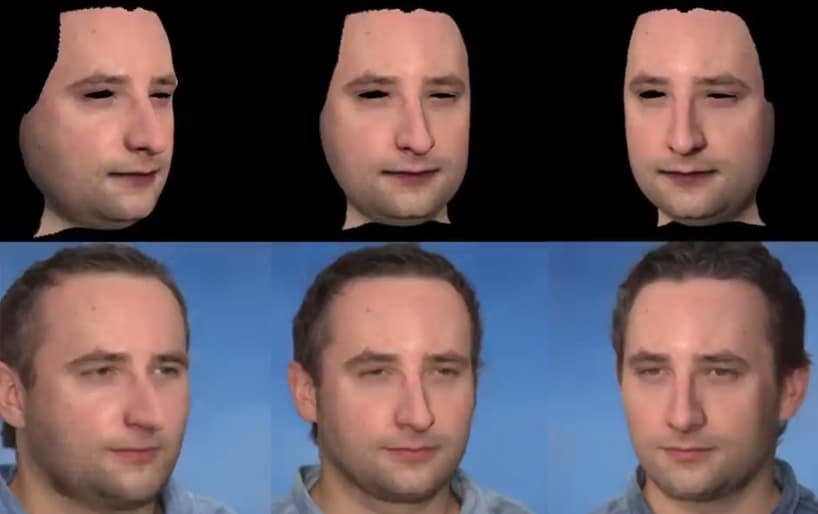
Disney’s AI research division has developed a hybrid method for movie-quality facial simulation, combining the strengths of facial neural rendering with the consistency of a CGI-based approach.

The pending paper is titled Rendering with Style: Combining Traditional and Neural Approaches for High Quality Face Rendering, and is previewed in a new 10-minute video at the Disney Research YouTube channel (embedded at end of this article).
Meshes combined with neural facial renders. Source: https://www.youtube.com/watch?v=k-RKSGbWLng

Meshes combined with neural facial renders. See video embed at end of article for better detail and quality. Source: https://www.youtube.com/watch?v=k-RKSGbWLng

As the video notes, neural rendering of faces (including deepfakes) can produce far more realistic eyes and mouth interiors than CGI is capable of, while CGI-driven facial textures are more consistent and suitable for cinema-level VFX output.

Therefore Disney is experimenting with letting NVIDIA’s StyleGan2 neural generator handle the surrounding features of a face and the ‘life-critical’ elements such as eyes, while superimposing consistent CGI facial skin and related elements into the output.

From the video (see end of article), the architectural concept behind Disney's hybrid approach, where an old-school CGI mesh, of the type used to recreate 'young' Carrie Fisher and the late Peter Cushing for Rogue One (2016), is integrated into neurally-rendered face environments.

From the video (see end of article), the architectural concept behind Disney’s hybrid approach, where an old-school CGI mesh, of the type used to recreate ‘young’ Carrie Fisher and the late Peter Cushing for Rogue One (2016), is integrated into neurally-rendered face environments.

The video makes a tacit reference to frequent criticism of the inauthenticity and ‘uncanny valley’ effect of the CGI recreation of late British Star Wars actor Peter Cushing in Rogue One (2016), conceding:

‘[There’s] still a huge gap between what people can easily capture and render versus final photorealistic digital doubles, complete with hair, eyes and inner mouth. To close this gap, it usually takes a lot of manual work from skilled artists.’

In truth, even the most modern facial capture systems do not even attempt to recreate eyes, mouth interiors or hair, which either have issues of authenticity in such techniques (eyes) or else of temporal consistency (hair).

The video illustrates what VFX artists will get after a typical modern facial capture session. Eyes, hair, facial hair, and mouth interiors will all have to be handled by separate teams in the production pipeline.

The video illustrates what VFX artists will get after a typical modern facial capture session. Eyes, hair, facial hair, and mouth interiors will all have to be handled by separate teams in the production pipeline, in addition to texturing and lighting.

Illumination Control

The hybrid approach is also a benefit with relighting – a notable challenge for neural rendering of faces, since CGI skin superimpositions can be more easily relit.
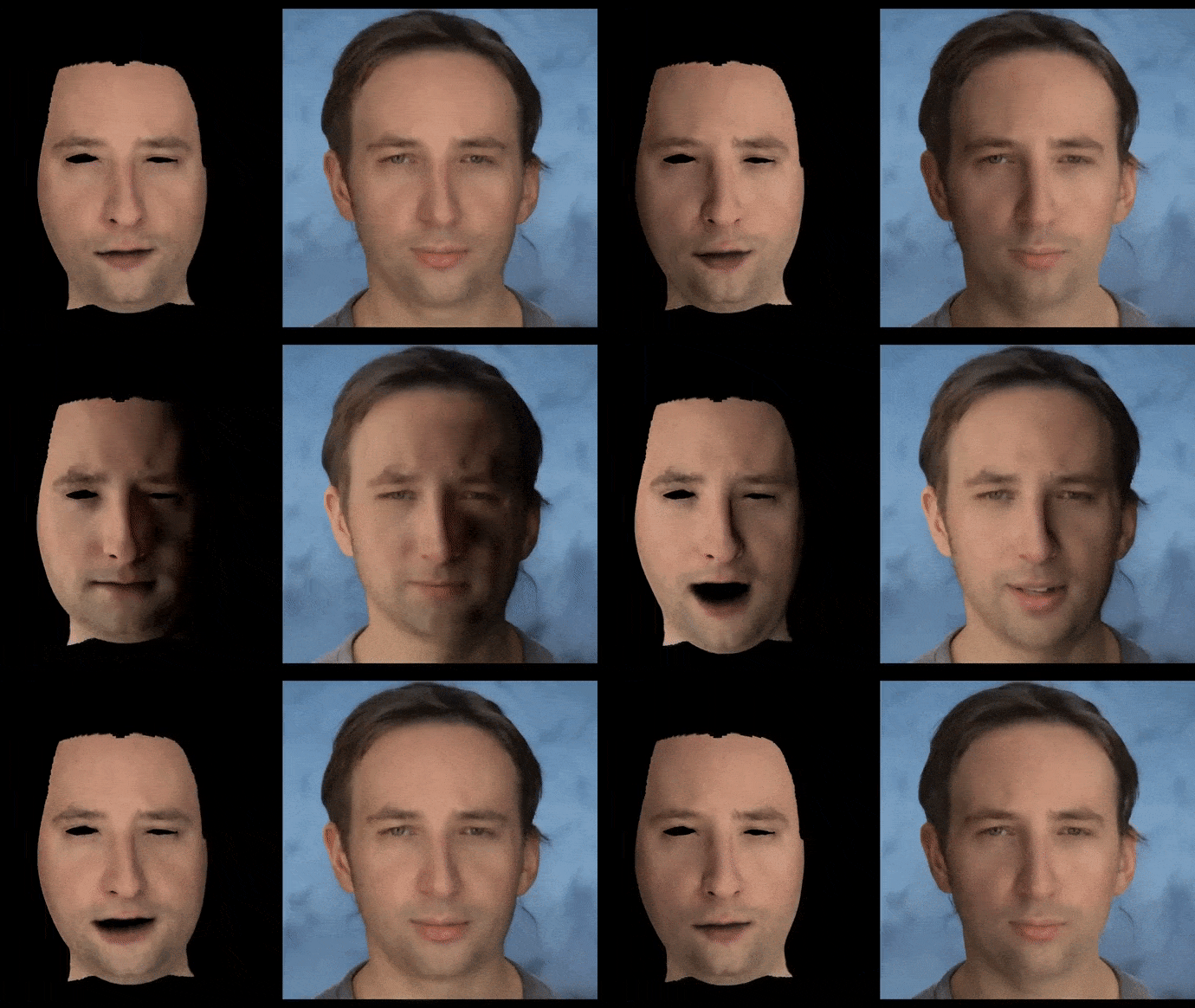
An animated version of the CGI/Neural approach.

An animated version of the CGI/Neural approach.

In more challenging environments, such as exterior shoots, the researchers have developed a method of inpainting around a kind of demilitarized zone surrounding the person being ‘created’.

A black margin is generated to allow a 'canvas' for inpainting the outer parts of the identity and integrating the CGI skin into the combined CGI/neural output.

A black margin is generated to allow a ‘canvas’ for inpainting the outer parts of the identity and integrating the CGI skin into the combined CGI/neural output.

The video notes:

‘[The] neural render does not match the background constraint perfectly. – it’s only meant as a guide, since optimizing for realistic human components like the hair, eyes and teeth is the main goal. More challenging is to try and maintain a consistent identity, while changing the environment lighting.’

Creating CGI Meshes From Neural Renders

The research team have also developed a variational autoencoder trained on a (unspecified) large database of 3D face images, and claims that it can produce ‘random but plausible’ 3D face meshes from ground truth data.

There are limitations for this research to overcome, including the difficulty in getting hair to stay temporally consistent in the neural renderings, and the video (see below) shows several examples of rapidly mutating hair in an otherwise consistent pan around a CGI/neural face.

Temporal consistency in neural video rendering is a far wider problem than just Disney’s, and it seems likely that later iterations of this system may resort to adding hair ‘in post’, or various other possible approaches to hair generation than hoping a novel neural approach will eventually solve it.

Uses for Dataset Generation

The method is proposed also as a potential method of generating synthetic data, and enriching the facial image set landscape, which has in recent years become dangerously monotonous.

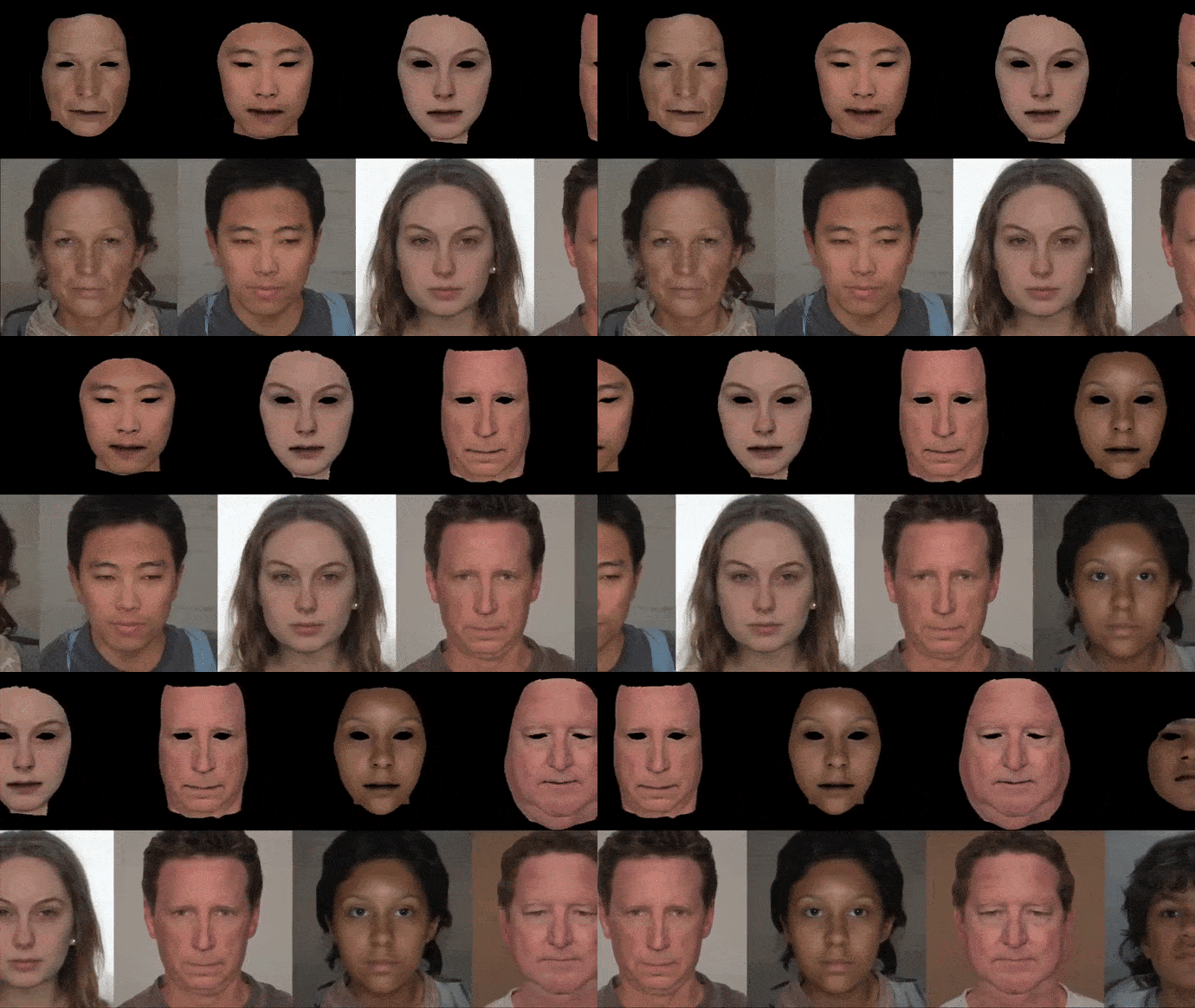
Disney envisages the new technique populating facial image datasets.

Disney envisages the new technique populating facial image datasets.

‘[Every] photorealistic result we generate has an underlying corresponding geometry, and appearance maps, rendered from unknown camera viewpoints with known illumination. This ‘ground truth’ information can be vital for training downstream applications, such as monocular, 3D face reconstruction, facial recognition, or scene understanding. And so every results render could be considered a data sample, and we can generate many variations of many different individuals.

‘Furthermore, even for a single person rendered in a single expression with a single viewpoint and illumination, we can generate random variations of the photo-real render by varying the randomization seed during optimization.’

The researchers note that this diversity of configurable output could be useful in training facial recognition applications, concluding:

‘[Our] method is able to leverage current technology for facial skin capture, modeling and rendering, and automatically create complete photorealistic face renders that match the desired identity, expression and scene configuration. This approach has applications and facial rendering for film and entertainment, saving manual artists labor and also for data generation in different fields of deep learning.’

For a deeper look at the new approach, check out the 10-minute video released today:


Credit: Source link

Previous Post

Developer productivity tools startup Raycast raises $15M from Accel and Coatue – TechCrunch

Next Post

Scientists Build the First-Ever Living Robots That Can Reproduce

New York Tech Editorial Team

New York Tech Editorial Team

New York Tech Media is a leading news publication that aims to provide the latest tech news, fintech, AI & robotics, cybersecurity, startups & leaders, venture capital, and much more!

Next Post
Scientists Build the First-Ever Living Robots That Can Reproduce

Scientists Build the First-Ever Living Robots That Can Reproduce

  • Trending
  • Comments
  • Latest
Meet the Top 10 K-Pop Artists Taking Over 2024

Meet the Top 10 K-Pop Artists Taking Over 2024

March 17, 2024
Panther for AWS allows security teams to monitor their AWS infrastructure in real-time

Many businesses lack a formal ransomware plan

March 29, 2022
Zach Mulcahey, 25 | Cover Story | Style Weekly

Zach Mulcahey, 25 | Cover Story | Style Weekly

March 29, 2022
10 Raunchy Movies on Netflix You Won’t Regret Watching

10 Raunchy Movies on Netflix You Won’t Regret Watching

May 20, 2024
How To Pitch The Investor: Ronen Menipaz, Founder of M51

How To Pitch The Investor: Ronen Menipaz, Founder of M51

March 29, 2022
Japanese Space Industry Startup “Synspective” Raises US $100 Million in Funding

Japanese Space Industry Startup “Synspective” Raises US $100 Million in Funding

March 29, 2022
Startups On Demand: renovai is the Netflix of Online Shopping

Startups On Demand: renovai is the Netflix of Online Shopping

2
Robot Company Offers $200K for Right to Use One Applicant’s Face and Voice ‘Forever’

Robot Company Offers $200K for Right to Use One Applicant’s Face and Voice ‘Forever’

1
Menashe Shani Accessibility High Tech on the low

Revolutionizing Accessibility: The Story of Purple Lens

1

Netgear announces a $1,500 Wi-Fi 6E mesh router

0
These apps let you customize Windows 11 to bring the taskbar back to life

These apps let you customize Windows 11 to bring the taskbar back to life

0
This bipedal robot uses propeller arms to slackline and skateboard

This bipedal robot uses propeller arms to slackline and skateboard

0
laptop on glass table

Automat-it Cuts Deployment Friction as Monce Scales AI Order Processing on AWS

April 13, 2026
Lee's Famous Recipe Chicken

Why Lee’s Famous Recipe Chicken Is Betting on Hi Auto to Quietly Rewire the Drive-Thru

April 9, 2026
computer generated image of letters

San Francisco Tribune Lists 11 HumanX Startups Moving AI Closer to the Operating Core

April 8, 2026
Impala CEO and Highrise AI CEO

The Industrialization of AI Infrastructure: What Impala and Highrise AI Reveal About the Next Scaling Frontier

April 7, 2026
Employee Time Tracking

What is an Employee Time Tracking Solution? A Definite Guide for 2026

March 31, 2026
Voltify founders

Voltify Raises $30 Million Seed Round as It Challenges $1 Trillion Rail Electrification Model

March 31, 2026

Recommended

laptop on glass table

Automat-it Cuts Deployment Friction as Monce Scales AI Order Processing on AWS

April 13, 2026
Lee's Famous Recipe Chicken

Why Lee’s Famous Recipe Chicken Is Betting on Hi Auto to Quietly Rewire the Drive-Thru

April 9, 2026
computer generated image of letters

San Francisco Tribune Lists 11 HumanX Startups Moving AI Closer to the Operating Core

April 8, 2026
Impala CEO and Highrise AI CEO

The Industrialization of AI Infrastructure: What Impala and Highrise AI Reveal About the Next Scaling Frontier

April 7, 2026

Categories

  • AI & Robotics
  • Benzinga
  • Cybersecurity
  • FinTech
  • New York Tech
  • News
  • Startups & Leaders
  • Venture Capital

Tags

AI AI QSRs Allseated Automat-it AWS B2B marketing Business CISO CISO Whisperer Collaborations Companies To Watch cryptocurrency Cybersecurity Entrepreneur Fetcherr Finance FINQ Fintech Funding Announcement hi-tech Hi Auto Impala Investing Investors investorsummit Israel israelitech Leaders LinkedIn Leaders Metaverse Mindset Minnesota omri hurwitz PointFive PR QSR Real Estate start- up startupnation Startups Startups On Demand Tech Tech leaders Unlimited Robotics VC
  • Contact Us
  • Privacy Policy
  • Terms and conditions

© 2024 All Rights Reserved - New York Tech Media

No Result
View All Result
  • News
  • FinTech
  • AI & Robotics
  • Cybersecurity
  • Startups & Leaders
  • Venture Capital

© 2024 All Rights Reserved - New York Tech Media