

New York Tech Media
  • News
  • FinTech
  • AI & Robotics
  • Cybersecurity
  • Startups & Leaders
  • Venture Capital
No Result
View All Result
  • News
  • FinTech
  • AI & Robotics
  • Cybersecurity
  • Startups & Leaders
  • Venture Capital
No Result
View All Result
New York Tech Media
No Result
View All Result
Home Startups & Leaders

EV conversion startup Opibus raises $7.5M to start bus and motorcycle mass production – TechCrunch

New York Tech Editorial Team by New York Tech Editorial Team
November 2, 2021
in Startups & Leaders
0
EV conversion startup Opibus raises $7.5M to start bus and motorcycle mass production – TechCrunch
Share on FacebookShare on Twitter

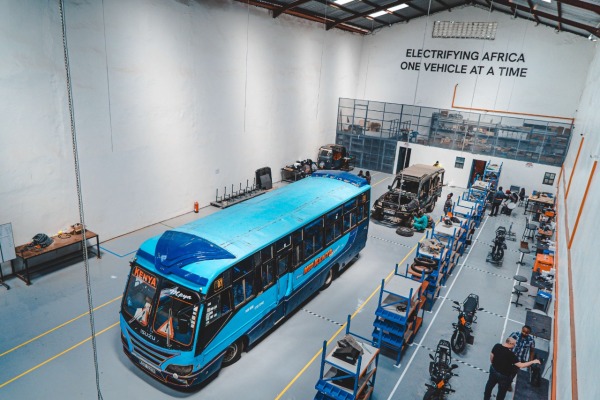
Opibus, the first company in Kenya to commercially future-proof diesel and gasoline vehicles by converting them to electric, is set to embark on an ambitious plan to mass produce electric buses and motorcycles after unlocking $7.5 million in pre series A round.

The Swedish-Kenyan company raised $5 million in equity and $2.5 million in grants in a round led by Silicon Valley fund At One Ventures,  backed by Factor[e] Ventures and pan-African VC firm Ambo Ventures. The round is the company’s first major fundraise, having previously raised capital from angel investors.

Opibus told TechCrunch that it is looking to deliver its first electric bus by the first quarter of next year.

“We are proud to be backed by globally recognized investors providing a balance between deep-tech and emerging market expertise. We have together reached a clear strategic and visionary alignment, with the conviction that mass manufacturing of electric mobility solutions in Africa will not only make the products more accessible and affordable, but also lead to one of the largest industrialization and welfare transitions of the region in modern time,” said Opibus’ CEO and co-founder, Filip Gardler.

Founded in 2017 by Gardler, Filip Lövström and Mikael Gånge, Opibus has over the years specialized in auto conversions, and is now moving to full electric vehicle manufacturing, starting with motorcycles and public commercial vehicles, all while developing charging and energy solutions.  

“The targets and objectives we’ve set for Opibus might seem bold, however it is a mission that has become more important than ever. We have a responsibility to the coming generations and the earth [as a] whole,” said Gardler. 

Already, the company has started taking pre-orders of its electric motorcycles, while confirming to TechCrunch that the demand is promising. Opibus bikes will start at $1,300 depending on several features including battery capacity. The company said the competitive advantage of its product includes declining operational costs of up to 60% lower that of fossil fuel alternatives.

Going forward, the company plans to move to a bigger plant as it prepares to increase its production to serve the entire African continent.

“We are about giving vehicles a second life but for motorcycles we see that we won’t be able to scale fast enough if we’re converting motorcycles. And since we want to design a product that’s better than what is already in the market, we are building our bikes from the ground up – by designing and manufacturing them in-house,” Opibus’ chief strategy and marketing officer Albin Wilson told TechCrunch.

In addition to Kenya, the company’s other clients are spread out in Nigeria, Sierra Leone, Ghana, Uganda, Democratic Republic of Congo and South Africa. 

A switch to electric power offers countries in sub-Saharan Africa a range of gains including a reduced cost of transport and lower carbon emissions. Countries like South Africa, Mauritius and Rwanda are already ahead of the game. South Africa has drafted a roadmap for the increased production and adoption of fully electric vehicles, while Rwanda rolled-out incentives that will make it less costly to buy and operate them.

“The electric mobility space in Africa represents a huge opportunity; not only to provide a better service at a lower cost to customers, but also to reduce carbon emissions and avoid deadly exposure to particulate pollution on a local level,” said Factor[e] Ventures managing partner, Morgan DeFoort.

Reports show that electric mobility in Africa is nascent but opportunities remain vast, especially if the infrastructure to support its adoption is built. Challenges facing the industry include the initial high cost of electric vehicles, a lack of charging infrastructure, low grid power connectivity, taxation and low level of awareness about EVs.

With inadequate infrastructure being among the biggest setbacks in EV adoption, Opibus has started installing communal charging infrastructure to serve public transport providers. The company plans to install the charging hubs in major towns near the country’s capital city, Nairobi, as it builds out a network that will sustain the mass transport electric buses planned for launch next year. Opibus also plans to forge partnerships with mini grid companies to ensure that its motorcycle customers in rural areas have access to charging points.

The company sees great potential for electric vehicles on the continent as the price of items like the solar batteries reduce significantly. It has so far converted 170 vehicles to serve different clientele including mining companies and tour firms. Its SUV conversions reach a maximum speed of 50 miles per hour, and an off-road driving range of just over 60 mph. 

 For its conversions, Opibus replaces diesel and gasoline engines with electric motors and controllers, served by battery packs that are fitted with minimal modifications on the chassis.

Credit: Source link

Previous Post

Chinese VC Ameba Capital closes $265m debut USD fund for SaaS bets

Next Post

Miso Robotics made its Flippy kitchen robot faster and even more autonomous

New York Tech Editorial Team

New York Tech Editorial Team

New York Tech Media is a leading news publication that aims to provide the latest tech news, fintech, AI & robotics, cybersecurity, startups & leaders, venture capital, and much more!

Next Post
Miso Robotics made its Flippy kitchen robot faster and even more autonomous

Miso Robotics made its Flippy kitchen robot faster and even more autonomous

  • Trending
  • Comments
  • Latest
Meet the Top 10 K-Pop Artists Taking Over 2024

Meet the Top 10 K-Pop Artists Taking Over 2024

March 17, 2024
Panther for AWS allows security teams to monitor their AWS infrastructure in real-time

Many businesses lack a formal ransomware plan

March 29, 2022
Zach Mulcahey, 25 | Cover Story | Style Weekly

Zach Mulcahey, 25 | Cover Story | Style Weekly

March 29, 2022
How To Pitch The Investor: Ronen Menipaz, Founder of M51

How To Pitch The Investor: Ronen Menipaz, Founder of M51

March 29, 2022
10 Raunchy Movies on Netflix You Won’t Regret Watching

10 Raunchy Movies on Netflix You Won’t Regret Watching

May 20, 2024
Japanese Space Industry Startup “Synspective” Raises US $100 Million in Funding

Japanese Space Industry Startup “Synspective” Raises US $100 Million in Funding

March 29, 2022
Startups On Demand: renovai is the Netflix of Online Shopping

Startups On Demand: renovai is the Netflix of Online Shopping

2
Robot Company Offers $200K for Right to Use One Applicant’s Face and Voice ‘Forever’

Robot Company Offers $200K for Right to Use One Applicant’s Face and Voice ‘Forever’

1
Menashe Shani Accessibility High Tech on the low

Revolutionizing Accessibility: The Story of Purple Lens

1

Netgear announces a $1,500 Wi-Fi 6E mesh router

0
These apps let you customize Windows 11 to bring the taskbar back to life

These apps let you customize Windows 11 to bring the taskbar back to life

0
This bipedal robot uses propeller arms to slackline and skateboard

This bipedal robot uses propeller arms to slackline and skateboard

0
laptop on glass table

Automat-it Cuts Deployment Friction as Monce Scales AI Order Processing on AWS

April 13, 2026
Lee's Famous Recipe Chicken

Why Lee’s Famous Recipe Chicken Is Betting on Hi Auto to Quietly Rewire the Drive-Thru

April 9, 2026
computer generated image of letters

San Francisco Tribune Lists 11 HumanX Startups Moving AI Closer to the Operating Core

April 8, 2026
Impala CEO and Highrise AI CEO

The Industrialization of AI Infrastructure: What Impala and Highrise AI Reveal About the Next Scaling Frontier

April 7, 2026
Employee Time Tracking

What is an Employee Time Tracking Solution? A Definite Guide for 2026

March 31, 2026
Voltify founders

Voltify Raises $30 Million Seed Round as It Challenges $1 Trillion Rail Electrification Model

March 31, 2026

Recommended

laptop on glass table

Automat-it Cuts Deployment Friction as Monce Scales AI Order Processing on AWS

April 13, 2026
Lee's Famous Recipe Chicken

Why Lee’s Famous Recipe Chicken Is Betting on Hi Auto to Quietly Rewire the Drive-Thru

April 9, 2026
computer generated image of letters

San Francisco Tribune Lists 11 HumanX Startups Moving AI Closer to the Operating Core

April 8, 2026
Impala CEO and Highrise AI CEO

The Industrialization of AI Infrastructure: What Impala and Highrise AI Reveal About the Next Scaling Frontier

April 7, 2026

Categories

  • AI & Robotics
  • Benzinga
  • Cybersecurity
  • FinTech
  • New York Tech
  • News
  • Startups & Leaders
  • Venture Capital

Tags

AI AI QSRs Allseated Automat-it AWS B2B marketing Business CISO CISO Whisperer Collaborations Companies To Watch cryptocurrency Cybersecurity Entrepreneur Fetcherr Finance FINQ Fintech Funding Announcement hi-tech Hi Auto Impala Investing Investors investorsummit Israel israelitech Leaders LinkedIn Leaders Metaverse Mindset Minnesota omri hurwitz PointFive PR QSR Real Estate start- up startupnation Startups Startups On Demand Tech Tech leaders Unlimited Robotics VC
  • Contact Us
  • Privacy Policy
  • Terms and conditions

© 2024 All Rights Reserved - New York Tech Media

No Result
View All Result
  • News
  • FinTech
  • AI & Robotics
  • Cybersecurity
  • Startups & Leaders
  • Venture Capital

© 2024 All Rights Reserved - New York Tech Media