

New York Tech Media
  • News
  • FinTech
  • AI & Robotics
  • Cybersecurity
  • Startups & Leaders
  • Venture Capital
No Result
View All Result
  • News
  • FinTech
  • AI & Robotics
  • Cybersecurity
  • Startups & Leaders
  • Venture Capital
No Result
View All Result
New York Tech Media
No Result
View All Result
Home Startups & Leaders

How a Knoxville startup is turning local pollution into ‘black gold’

New York Tech Editorial Team by New York Tech Editorial Team
January 17, 2022
in Startups & Leaders
0
How a Knoxville startup is turning local pollution into ‘black gold’
Share on FacebookShare on Twitter

What if we could capture the carbon dioxide that power plants put into the air and make it something useful?

East Tennessee startup SkyNano is trying to make that possible.

The company has produced its first nanotube made from carbon emitted by the Tennessee Valley Authority’s John Sevier Combined Cycle Plant in Rogersville.

The carbon nanotubes the company manufactures could be used to make practical, durable items like batteries and tires. It’s turning pollution into a useful and environmentally safe material, said SkyNano CEO and co-founder Anna Douglas.

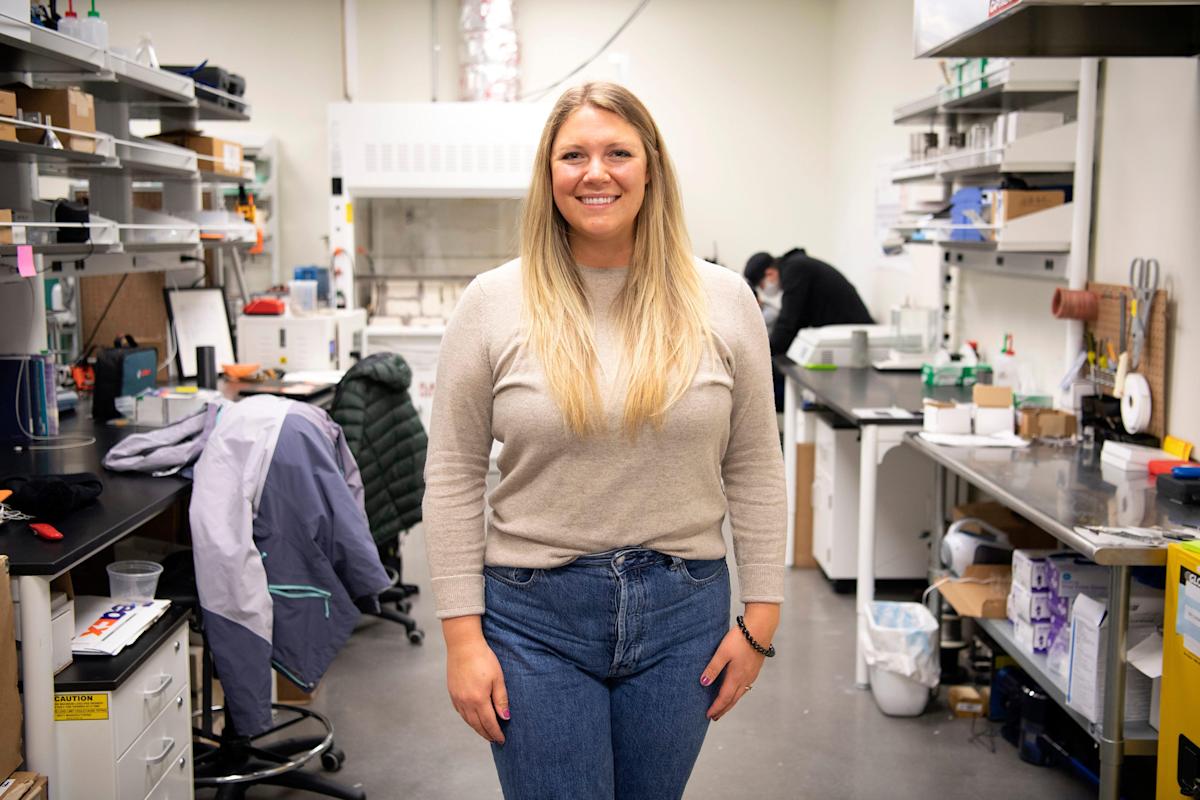
SkyNano CEO and co-founder Anna Douglas is photographed inside the local tech startup's lab at the University of Tennessee's Institute for Advanced Materials and Manufacuturing in Knoxville on Friday, January 7, 2022. SkyNano recently announced its first production of carbon nanotubes from power plant emissions.

SkyNano CEO and co-founder Anna Douglas is photographed inside the local tech startup’s lab at the University of Tennessee’s Institute for Advanced Materials and Manufacuturing in Knoxville on Friday, January 7, 2022. SkyNano recently announced its first production of carbon nanotubes from power plant emissions.

“We are making a really high-value product at a price point that makes it market competitive,” Douglas said. “This really presents an immediate route forward towards decarbonizing.”

Coal ash cleanup workers: Over 13 years, coal ash cleanup workers have endured to forge a legacy of public good

EPA: Biden administration zeroes in on protecting groundwater from coal ash contamination

What are carbon nanotubes?

Carbon nanotubes have been used to make ultralight bicycles for the Tour de France, extremely dark pigments, un-manned boats and components in NASA spacecraft.

An experimental project at IBM aims to use them as a component of computer chips. You might also find them in rechargeable batteries for your phone.

They are so potentially useful that Vanderbilt nanoengineer and SkyNano co-founder Cary Pint called them “black gold.”

But what are carbon nanotubes?

They’re super strong, flexible, lightweight, atomic tubes with a hexagonal pattern like a soccer ball and so small they’re not visible under a traditional microscope.

Put millions of carbon nanotubes into plastic and it can become as light and strong as aluminum or steel. Change their chemistry slightly and they can conduct electricity.

“This is our final product,” Douglas said, holding up a small jar of a jet black powder. “To the naked eye it just looks like black carbon. But under a really powerful microscope it looks a bit like spaghetti.”

SkyNano’s nanotubes were made by piping carbon dioxide from a smokestack into a lithium salt reactor and spinning it into nanotubes.

Carbon nanotubes are visible under incredibly powerful electron microscopes. This tangle of super-strong carbon spaghetti was made at SkyNano from carbon dioxide captured from TVA carbon emissions.

Carbon nanotubes are visible under incredibly powerful electron microscopes. This tangle of super-strong carbon spaghetti was made at SkyNano from carbon dioxide captured from TVA carbon emissions.

Naturally formed nanotubes occur in quantities that are very small and hard to trace.

Some carbon nanotubes form naturally in the smoke of forest fires. Every time you light a candle at home there’s a chance the wick might release some carbon nanotubes as component of smoke.

Ancient potters and swordsmiths harnessed the power of nanotechnology without knowing it. Carbon nanotubes have been discovered in ancient, super-strong pottery glazes and Damascus steel swords famed for their strength.

Like other components of smoke, you probably shouldn’t inhale carbon nanotubes. But their long-term environmental impact is unclear. Some evidence suggests that some bacteria may be able to biodegrade nanotubes.

Bringing down the cost

Carbon nanotubes have been observed since 1952 when researchers in the former Soviet Union reported they had created filaments out of carbon.

But these were obscure curiosities until 1991 when Japanese scientist Sumio Ijima described the structure of carbon nanotubes along with a process for reliably producing them.

The global market for nanotubes moved beyond research in the mid-2000s. Since then, carbon nanotube global production has increased to roughly 3,000 metric tons a year.

But the global market is still small because carbon nanotubes are expensive, starting at about $100 a kilogram. The typical process to make them comes with high energy costs and toxic byproducts.

SkyNano aims to change that by using a process that is cleaner and requires less energy.

Instead of the “chemical vapor deposition” method, which requires vacuum conditions at high temperatures, the company uses an electrochemical process that requires less energy and can suck carbon out of harmful airborne carbon dioxide.

“Electrochemistry presents a really lower cost way of doing chemistry,” said Douglas. “These are efficiency numbers that are just totally unparalleled in traditional gas phase synthesis.”

Some of the carbon nanotubes local tech startup SkyNano produced from converted power plant emissions on Friday, January 7, 2022.

Some of the carbon nanotubes local tech startup SkyNano produced from converted power plant emissions on Friday, January 7, 2022.

The process was developed as part of Douglas’s Ph.D. dissertation at Vanderbilt University. She was part of the inaugural class of Oak Ridge National Laboratory’s Innovation Crossroads two-year entrepreneurial fellowship program in 2017.

Capturing carbon, cornering markets

In 2020, Douglas secured a $2.5 million project from the Department of Energy to demonstrate carbon nanotubes could be made using emissions from natural gas plants.

Joe Hoagland, vice president of Tennessee Valley Authority’s innovation and research, said sustainable technology helps the utility meet its long-term 100% carbon neutrality goals.

“Once we’ve captured the carbon the problem becomes, OK, what do I do with it?” Hoagland said. “Ideally you’d really want to do is do something with the carbon that would add value.”

If the technology performs at scale, Hoagland said TVA’s carbon dioxide emissions could become a “phenomenal” amount of carbon nanotubes.

For now, SkyNano is producing small amounts of research-grade nanotubes for specific clients. But its leaders hope to scale up to serve commercial clients in the next few years.

“If SkyNano could capture all of it and turn it into carbon nanotubes, they’d basically saturate the global marketplace,” Hoagland said. “There’s places for the market to grow, but (both production and use) all gotta grow.”

A look inside local tech startup SkyNano's lab at the University of Tennessee's Institute for Advanced Materials and Manufacuturing in Knoxville on Friday, January 7, 2022. SkyNano recently announced the first ever production of carbon nanotubes from power plant emissions.

A look inside local tech startup SkyNano’s lab at the University of Tennessee’s Institute for Advanced Materials and Manufacuturing in Knoxville on Friday, January 7, 2022. SkyNano recently announced the first ever production of carbon nanotubes from power plant emissions.

Next, Douglas will focus on scaling up the technology to manufacture more and make a reactor that can suck emissions out of a power plant and covert them to nanotubes on site.

“All these power plants that currently generate the majority of our electricity,” said Douglas. “Let’s find solutions to decarbonize those.”

This article originally appeared on Knoxville News Sentinel: SkyNano turns TVA’s carbon emissions into nanotubes, “black gold”

Credit: Source link

Previous Post

Mirantis Secure Registry 3.0 helps enterprises secure their software supply chain

Next Post

Mobile device management market to reach $20.4 billion by 2026

New York Tech Editorial Team

New York Tech Editorial Team

New York Tech Media is a leading news publication that aims to provide the latest tech news, fintech, AI & robotics, cybersecurity, startups & leaders, venture capital, and much more!

Next Post
Mobile device management market to reach $20.4 billion by 2026

Mobile device management market to reach $20.4 billion by 2026

  • Trending
  • Comments
  • Latest
Meet the Top 10 K-Pop Artists Taking Over 2024

Meet the Top 10 K-Pop Artists Taking Over 2024

March 17, 2024
Panther for AWS allows security teams to monitor their AWS infrastructure in real-time

Many businesses lack a formal ransomware plan

March 29, 2022
Zach Mulcahey, 25 | Cover Story | Style Weekly

Zach Mulcahey, 25 | Cover Story | Style Weekly

March 29, 2022
10 Raunchy Movies on Netflix You Won’t Regret Watching

10 Raunchy Movies on Netflix You Won’t Regret Watching

May 20, 2024
How To Pitch The Investor: Ronen Menipaz, Founder of M51

How To Pitch The Investor: Ronen Menipaz, Founder of M51

March 29, 2022
Japanese Space Industry Startup “Synspective” Raises US $100 Million in Funding

Japanese Space Industry Startup “Synspective” Raises US $100 Million in Funding

March 29, 2022
Startups On Demand: renovai is the Netflix of Online Shopping

Startups On Demand: renovai is the Netflix of Online Shopping

2
Robot Company Offers $200K for Right to Use One Applicant’s Face and Voice ‘Forever’

Robot Company Offers $200K for Right to Use One Applicant’s Face and Voice ‘Forever’

1
Menashe Shani Accessibility High Tech on the low

Revolutionizing Accessibility: The Story of Purple Lens

1

Netgear announces a $1,500 Wi-Fi 6E mesh router

0
These apps let you customize Windows 11 to bring the taskbar back to life

These apps let you customize Windows 11 to bring the taskbar back to life

0
This bipedal robot uses propeller arms to slackline and skateboard

This bipedal robot uses propeller arms to slackline and skateboard

0
laptop on glass table

Automat-it Cuts Deployment Friction as Monce Scales AI Order Processing on AWS

April 13, 2026
Lee's Famous Recipe Chicken

Why Lee’s Famous Recipe Chicken Is Betting on Hi Auto to Quietly Rewire the Drive-Thru

April 9, 2026
computer generated image of letters

San Francisco Tribune Lists 11 HumanX Startups Moving AI Closer to the Operating Core

April 8, 2026
Impala CEO and Highrise AI CEO

The Industrialization of AI Infrastructure: What Impala and Highrise AI Reveal About the Next Scaling Frontier

April 7, 2026
Employee Time Tracking

What is an Employee Time Tracking Solution? A Definite Guide for 2026

March 31, 2026
Voltify founders

Voltify Raises $30 Million Seed Round as It Challenges $1 Trillion Rail Electrification Model

March 31, 2026

Recommended

laptop on glass table

Automat-it Cuts Deployment Friction as Monce Scales AI Order Processing on AWS

April 13, 2026
Lee's Famous Recipe Chicken

Why Lee’s Famous Recipe Chicken Is Betting on Hi Auto to Quietly Rewire the Drive-Thru

April 9, 2026
computer generated image of letters

San Francisco Tribune Lists 11 HumanX Startups Moving AI Closer to the Operating Core

April 8, 2026
Impala CEO and Highrise AI CEO

The Industrialization of AI Infrastructure: What Impala and Highrise AI Reveal About the Next Scaling Frontier

April 7, 2026

Categories

  • AI & Robotics
  • Benzinga
  • Cybersecurity
  • FinTech
  • New York Tech
  • News
  • Startups & Leaders
  • Venture Capital

Tags

AI AI QSRs Allseated Automat-it AWS B2B marketing Business CISO CISO Whisperer Collaborations Companies To Watch cryptocurrency Cybersecurity Entrepreneur Fetcherr Finance FINQ Fintech Funding Announcement hi-tech Hi Auto Impala Investing Investors investorsummit Israel israelitech Leaders LinkedIn Leaders Metaverse Mindset Minnesota omri hurwitz PointFive PR QSR Real Estate start- up startupnation Startups Startups On Demand Tech Tech leaders Unlimited Robotics VC
  • Contact Us
  • Privacy Policy
  • Terms and conditions

© 2024 All Rights Reserved - New York Tech Media

No Result
View All Result
  • News
  • FinTech
  • AI & Robotics
  • Cybersecurity
  • Startups & Leaders
  • Venture Capital

© 2024 All Rights Reserved - New York Tech Media