“No Code” tools can be an online marketer’s secret weapon. They can help marketers carry out complex marketing operations, and without having to learn code or hire a coding professional.
Marketing, especially for online businesses or for the digital sides of brick-and-mortar businesses, can be a complex and costly effort. This is especially true since you need a sophisticated app to accomplish the majority of administrative or rote tasks these days, like sending out emails to followers or coordinating social media posts.
What if there was a way to develop and carry out complex marketing operations without having to hire an IT professional or learn to code yourself? As it turns out, there already is.
Enter no-code tools. These platforms allow you to build custom apps from scratch, which you can then use for your business’s marketing or other operations. Sounds too good to be true? Let’s take a deep dive and see how these tools work.

Can you make marketing tools without any understanding of code?
Not exactly.
A no-code app or tool can theoretically make an app or program creation a breeze for those without a background in programming/IT. In a way, such an app can allow a more diverse group of employees, including those without IT backgrounds, to productively engage in the development of a marketing tool. This can provide many benefits for businesses that want to diversify their creation pipeline or incorporate unique ideas outside the IT/programming complex.
This being said, many no-code apps still require at least a rudimentary understanding of how coding is performed and how programs work. In other words, if you want to use a no-code app efficiently, you need to have a basic understanding of computers and app functionality. Still, it’s certainly a lot easier than learning to code yourself so you can whip up a quick marketing tool to help with your next campaign.
Low Code vs No Code
In looking for good no-code apps, you might also find “low code” variations. It’s important to recognize that these are not the same thing. Low code apps are still intended for use by professional developers and are fairly complex. Think of them more as programming streamlining tools rather than programming skipping tools like the best no-code apps.
How do no-code apps work?
Most no-code apps follow a relatively similar process. After all, they allow you to develop your marketing tools in large part because they’re simple machines that you plug information into. The no-code app then generates a program you can use for the assigned functions. It’s not quite AI, but more complex programs use machine learning as well.
No-code apps work with the following basic process:
- Users fill out a business spreadsheet program like Excel, Google Sheets, or so on, or a sheet on the app-builder itself, with relevant information
- Users must also have a cloud storage provider like Dropbox, Microsoft OneDrive, or Google Drive that comes with features such as flexible storage capacity, file versioning, and zero-knowledge encryption security.
- Using a no-code app’s editor, users can add features to their marketing tool. The app digests the data in the spreadsheet above to build the app
- Most no-code apps use drag-and-drop visual boxes to place functions or buttons where they like. Other customization options, like color palette, are also often offered
- The app can then be deployed to a chosen mobile device.
You can even use no-code apps to build end-to-end enterprise applications. The sky is already the limit, and this tech is likely to get more sophisticated in the future. Even better, no-code apps are often easily scalable and can work or integrate with a variety of third-party applications and other tools.
So why use a no-code app?
No-code apps provide several important benefits for those who decide to use them.
For example, no-code apps:

Image credit: Quixy.com
- Save you money over the long run. Qualified IT specialists and developers are almost always worth the price they demand, but some smaller businesses may not have the scratch to make that work. No-code apps will allow you to bootstrap mobile app functionality on a budget. Alternatively, you can consider hiring a freelance developer instead if you’re still in need
- Save you time. No-code apps are often faster to develop (and are still quite functional) than hiring a dedicated IT professional or team. The latter app might be a little more focused or specialized for your business/marketing strategy, but again, sometimes time is of the essence.
- Allow you to modify the app on a whim. If you don’t like the no-code app you created, you can just whip up another one. There’s no need to spend weeks hashing out the details with your IT professional or a freelancer.
Who should use no-code apps?
No-code apps are ideal for business owners or employees who don’t have a background in IT, but who nonetheless need to create a mobile, web, or business application for their enterprise. In today’s digitally driven world, apps are an essential thing to have for many businesses.
Small businesses can make great use of no-code apps, as can sales and marketing teams for even larger companies. Even freelancers and other consultants can benefit from no-code apps, as they don’t have to invest huge sums of money in these apps as they would otherwise.
Many bootstrapped companies, in particular, are already relying on no-code apps for internal applications to create automated processes. Marketing teams will benefit from using a platform that can automate many of their daily tasks, including sending emails, nurturing leads, posting to social media, and analyzing data from multiple channels to name a few things. This frees up more time that they can use to come up with grand marketing strategies or reach out to new clients directly.
Retail, insurance, consulting, and even B2B sales industries can all benefit from no-code apps. Most importantly of all, AI-based no-code apps can help supercharge your marketing efforts no matter the industry. With the right no-code app, you’ll be able to create a complex marketing operation or strategy to capture new leads, streamline your purchase funnel, and reach out to existing customers to retain their loyalty over the long term.
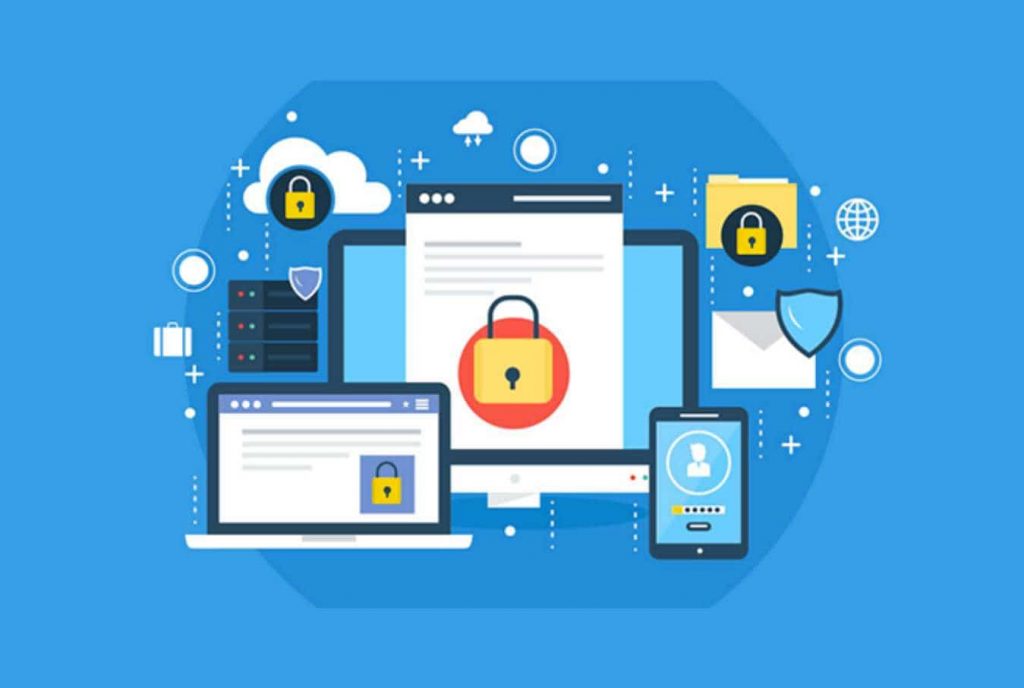
Keeping your no code apps safe
We live in an era of high-profile data breaches, and many no-code apps in particular that are built from scratch utilizing more traditional development methods typically come with a host of vulnerabilities. This is especially common with back-end business apps, which are often targeted by cybercriminals because they are usually easier to break into.
Just because you may take a shortcut to have your apps built using no-code development tools does not mean that you should take a shortcut with security too. The opposite is true. Marketing to customers also means that you are intrinsically dealing with personal information, including names, financial data, and contact information, and protecting this kind of information should be of the utmost importance to you.
The good news is that there are a variety of measures you can take to help protect your no-code apps against cybercriminal activity. One is to carefully monitor your employees while they are on the job and to teach your employees about valuable security measures, including password security training, two-factor authentication methods, and how to recognize and respond to phishing and social engineering attacks.
Another very wise idea would be to always encrypt your connection when using your apps. You can make it a company policy that all employees must be connected through a reputable virtual private network (VPN) server that uses end-to-end encryption measures to ensure that hackers will not be able to view any customer or company data that is sent to your company apps.
Finally, find out what security measures your no-code vendor has already installed. While many no-code platform vendors put security protocols in place, not all of these may be highly visible to an enterprise. It’s a good idea to find out the specific security measures that the vendor for your no-code platform puts in place. As a golden rule, these include cybersecurity insurance, compliance certifications, and third-party security audits.
Conclusion
All in all, no-code tools are more than capable of helping you master even complex marketing operations and supercharge your digital transformation efforts and all without requiring a single line of code on your end. Give any of these a try and we expect you’ll be surprised and pleased at the results.
Did you enjoy reading this article? Like our page on Facebook and follow us on Twitter.
Credit: Source link