


Hud has built its business around a simple premise: software can only be fully understood where it runs. While AI has accelerated the way code is written, the company focuses on what happens after deployment, capturing function-level production behavior to help engineering teams investigate incidents, identify root causes, and validate fixes before merging code.
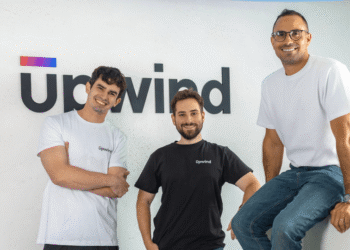
Now the Runtime Intelligence company is investing in the next stage of its growth. Hud announced that Shai Alani has joined the company as Vice President of Marketing, where he will oversee global marketing strategy, category creation, brand, and demand generation.
The appointment comes as Hud looks to expand awareness of Runtime Intelligence, a category it believes will become increasingly important as engineering teams adopt AI-assisted software development.
Building the Next Phase of Growth
Alani brings experience leading go-to-market efforts for developer-focused technology companies. Before joining Hud, he served as VP Marketing at Lightrun and previously held marketing leadership roles at Coralogix and Aporia.
His focus at Hud extends beyond traditional marketing responsibilities. The company is positioning Runtime Intelligence as a distinct layer within modern software development that provides production evidence to both engineers and AI coding agents.
“AI has changed the speed of software creation, but production is still where code proves itself,” said Roee Adler, Co-founder and CEO of Hud. “The next major category in the AI SDLC is Runtime Intelligence: production behavior resolved to the function level, coupled with deep forensics when things go wrong, so humans and agents can understand, fix, and validate software with confidence. Shai brings the experience we need to build that category and scale Hud into a defining company for AI-native engineering teams.”
From Code Generation to Production Understanding
The rapid adoption of AI coding assistants has increased development velocity, but production debugging continues to present familiar challenges.
According to Hud, existing observability tools typically indicate that something has gone wrong but often leave engineers reconstructing events from logs and multiple telemetry sources. AI coding agents face a similar limitation. Although they can analyze repositories and generate new code, they lack direct visibility into how software behaved in production.
Hud’s platform is designed to provide that missing context. Its runtime code sensor operates alongside every function in production, collecting forensic information whenever an issue occurs. The resulting function-level evidence is intended to help engineers understand failures more quickly, determine the exact root cause, validate changes, and deploy safer fixes.
A Different Role for AI
Rather than viewing AI as a replacement for engineering judgment, Hud’s approach is to give coding agents better information to work with. By combining runtime behavior with forensic context, the company aims to make AI-generated recommendations more reliable while helping engineering teams spend less time reconstructing production incidents.
For Alani, that opportunity was a key reason for joining the company.
“Runtime Intelligence is the missing layer in the AI software stack,” said Shai Alani, VP Marketing at Hud. “AI has made it easy to generate code, but it has not made it any easier to stand behind that code once it is running in production, where reliability is actually decided. That gap is fast becoming one of the defining problems for AI-native engineering teams, and it is exactly the kind of category you build a company around. That is why I joined Hud, and it is the story I am excited to take to market.”
Hud says engineering teams at companies including Monday.com, Lemonade, Axonius, and Cyera already run its platform across millions of production services. The company has raised $21 million in funding led by Aleph and SquarePeg as it continues expanding its Runtime Intelligence platform for AI-native engineering teams.
With Alani now leading marketing, Hud is pairing product development with a broader effort to define the market around Runtime Intelligence and bring production evidence closer to the center of modern software development.