

New York Tech Media
  • News
  • FinTech
  • AI & Robotics
  • Cybersecurity
  • Startups & Leaders
  • Venture Capital
No Result
View All Result
  • News
  • FinTech
  • AI & Robotics
  • Cybersecurity
  • Startups & Leaders
  • Venture Capital
No Result
View All Result
New York Tech Media
No Result
View All Result
Home AI & Robotics

Human heart cells make this robotic “fish” swim

New York Tech Editorial Team by New York Tech Editorial Team
February 12, 2022
in AI & Robotics
0
Human heart cells make this robotic “fish” swim
Share on FacebookShare on Twitter

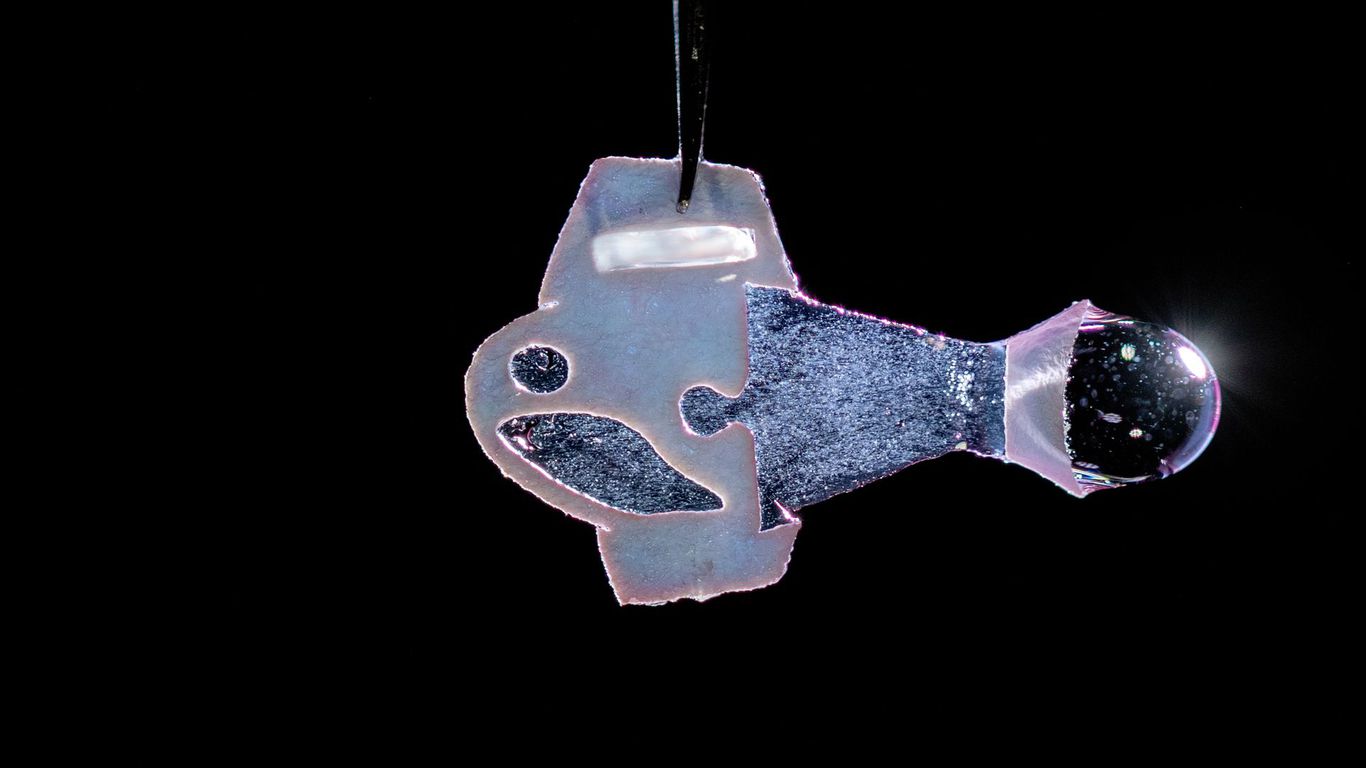
Human heart cells make a new robotic “fish” swim, scientists reported this week.

Why it matters: The engineering feat is a step toward creating artificial muscle that could one day be used in medicine and in soft robots. In the nearer term, the researchers say the robotic fish offers a platform for studying how heart muscle works in humans.

How it works: A team led by Kit Parker, a professor of bioengineering and applied physics at Harvard University, put sheets of human heart muscle cells on each side of the tail of a fish skeleton made from paper and plastic, and covered in gelatin. (The design builds on their earlier work creating a robotic stingray.)

  • A cluster of cells sends signals that synchronize the stretching and contracting of the muscle cells, the researchers report in a study published Thursday in Science.
  • When cells on one side of the fish contract, the cells on the other side stretch, and so on, creating a self-sustaining swimming motion.
  • It’s a “tour de force in engineering,” says Barry Trimmer, a professor of biology at Tufts University, who studies how to engineer artificial muscle using insect cells and wasn’t involved in the new research.

A challenge for making a bigger muscle is how to keep the cells alive. In mammals, vasculature and blood vessels support the cells, but a similar design hasn’t been developed to give cells access to a blood supply in artificial muscle.

  • The fish, fed by nutrients in the swimming medium, maintained their swimming speed and coordination for at least 108 days. “That far exceeds what others have managed to do,” Trimmer says.
  • It could be that the interaction of the muscles helps to maintain them.

The big picture: Artificial muscle could enable soft robots that can interact with people or be deployed to survey delicate environments (and then biodegrade when they are done).

  • One challenge though is developing soft actuators, or motors. Today’s machines are driven by electric motors, gasoline engines and other technologies. Some researchers are trying to make synthetic actuators from new materials that move when heated or cooled.
  • But, “we already have what we need — it’s called a muscle — we just don’t know how to put it into a robot,” Trimmer says.
  • The second problem is power. Instead of lithium batteries or gasoline, some researchers are aiming to create a sustainable machine powered by sugars or fat.

Credit: Source link

Previous Post

Mexico’s cultural appropriation ban is off to a messy start

Next Post

TTU’s Innovation Hub announces $100K for 7 startups

New York Tech Editorial Team

New York Tech Editorial Team

New York Tech Media is a leading news publication that aims to provide the latest tech news, fintech, AI & robotics, cybersecurity, startups & leaders, venture capital, and much more!

Next Post
TTU’s Innovation Hub announces $100K for 7 startups

TTU's Innovation Hub announces $100K for 7 startups

  • Trending
  • Comments
  • Latest
Meet the Top 10 K-Pop Artists Taking Over 2024

Meet the Top 10 K-Pop Artists Taking Over 2024

March 17, 2024
Clubhouse will soon let you pin links to the top of rooms

Clubhouse will soon let you pin links to the top of rooms

October 23, 2021
10 Raunchy Movies on Netflix You Won’t Regret Watching

10 Raunchy Movies on Netflix You Won’t Regret Watching

May 20, 2024
Panther for AWS allows security teams to monitor their AWS infrastructure in real-time

Many businesses lack a formal ransomware plan

March 29, 2022
Zach Mulcahey, 25 | Cover Story | Style Weekly

Zach Mulcahey, 25 | Cover Story | Style Weekly

March 29, 2022
How To Pitch The Investor: Ronen Menipaz, Founder of M51

How To Pitch The Investor: Ronen Menipaz, Founder of M51

March 29, 2022
Startups On Demand: renovai is the Netflix of Online Shopping

Startups On Demand: renovai is the Netflix of Online Shopping

2
Robot Company Offers $200K for Right to Use One Applicant’s Face and Voice ‘Forever’

Robot Company Offers $200K for Right to Use One Applicant’s Face and Voice ‘Forever’

1
Menashe Shani Accessibility High Tech on the low

Revolutionizing Accessibility: The Story of Purple Lens

1

Netgear announces a $1,500 Wi-Fi 6E mesh router

0
These apps let you customize Windows 11 to bring the taskbar back to life

These apps let you customize Windows 11 to bring the taskbar back to life

0
This bipedal robot uses propeller arms to slackline and skateboard

This bipedal robot uses propeller arms to slackline and skateboard

0
corporate practice of medicine

When Business Growth Starts to Influence Clinical Decisions

September 10, 2026
man using a computer

AI Is Easy to Try. Making It Work Is Harder.

September 9, 2026
Kesewi works to a two-word standard: think simple.

One Concept, One Yes: The Studio That Stopped Offering Options

September 8, 2026
FINQ’s Autonomous Ranking Engine Produces 23.51% and 23.83% Since Inception as the S&P 500 Returns 11.61%

FINQ’s Autonomous Ranking Engine Produces 23.51% and 23.83% Since Inception as the S&P 500 Returns 11.61%

September 7, 2026
Blackstone Backs Huskeys With $27M Series A as Security Teams Struggle to Control the Modern Network Edge

Blackstone Backs Huskeys With $27M Series A as Security Teams Struggle to Control the Modern Network Edge

September 2, 2026
Deal Room and Playlist Agent

Walnut Extends AI Agents Across the Full Buyer Journey With Enterprise-Grade Platform Launch

September 2, 2026

Recommended

corporate practice of medicine

When Business Growth Starts to Influence Clinical Decisions

September 10, 2026
man using a computer

AI Is Easy to Try. Making It Work Is Harder.

September 9, 2026
Kesewi works to a two-word standard: think simple.

One Concept, One Yes: The Studio That Stopped Offering Options

September 8, 2026
FINQ’s Autonomous Ranking Engine Produces 23.51% and 23.83% Since Inception as the S&P 500 Returns 11.61%

FINQ’s Autonomous Ranking Engine Produces 23.51% and 23.83% Since Inception as the S&P 500 Returns 11.61%

September 7, 2026

Categories

  • AI & Robotics
  • Benzinga
  • Cybersecurity
  • FinTech
  • New York Tech
  • News
  • Startups & Leaders
  • Venture Capital

Tags

AI AI QSRs AI security Allseated Automat-it AWS B2B marketing Business CISO CISO Whisperer Collaborations Companies To Watch Cybersecurity Enterprise AI Entrepreneur Fetcherr Finance FINQ Fintech Funding Announcement Hi Auto Impala Investing Investors investorsummit israelitech Leaders Mate Security Metaverse Mindset Minnesota omri hurwitz Perion PointFive PR QSR Real Estate start- up startupnation Startups Startups On Demand Tech Tech leaders Unlimited Robotics VC
  • Contact Us
  • Privacy Policy
  • Terms and conditions

© 2024 All Rights Reserved - New York Tech Media

No Result
View All Result
  • News
  • FinTech
  • AI & Robotics
  • Cybersecurity
  • Startups & Leaders
  • Venture Capital

© 2024 All Rights Reserved - New York Tech Media