


Last year, venture capitalists funneled a record $34.8 billion to startups in Massachusetts. But only a tiny fraction — 0.4 percent — went to startups with Black founders, according to a Globe analysis of Crunchbase data published in January. The figure has barely changed since 2016, when nearly 0.3 percent of venture capital went to companies in the state with a Black founder. And it’s lower than the nationwide average in 2021, which hovered a little over 1 percent.
Massachusetts ranks third among all states for total VC funding since 2016, behind California and New York. But it sits at 20th for the percentage of venture capital going to Black founders. In comparison, 3.2 percent of New York’s venture capital goes to Black-founded companies. In California, it’s roughly 0.8 percent over the past five years. (Seven percent of Massachusetts’ population is Black, compared to 17 percent for New York and nearly 6 percent for California.)
Despite the national reckoning, change is happening slowly, if at all. Between 2019 and 2021, funding for Black founders in Massachusetts barely increased two-tenths of a percent. And many Black entrepreneurs continue to feel underestimated at every turn.
“It’s frustrating,” said Daniel Acheampong, cofounder of Boston venture capital firm Visible Hands, which invests solely in underrepresented founders. “It’s a missed opportunity.”
‘Delegitimized’
Shironda White knows how a lack of funding can jeopardize a dream. In 2017, with $10,000 from her father, she founded CauseEDU, a crowdfunding platform to help students struggling to pay for college.
White then met with investors to pitch a bigger project: a comprehensive, online financial planning platform for college students and their families. She came armed with two decades of experience in financial services, philanthropy, and higher education management. She was nearly done with her MBA at Boston University.
But none of that mattered, she said, when sitting down in front of a white, female investor to discuss funding. White presented her business plan, but the investor paid little attention to it. Instead, she spent most of the meeting explaining why White didn’t have the ability to make the business grow.
Ultimately, White left without an investment and soured on venture capitalists, instead raising nearly $100,000 from accelerators, pitch competitions, and donations. In half a dozen VC meetings, she said, she often felt underestimated because of her race. (She is Black.)
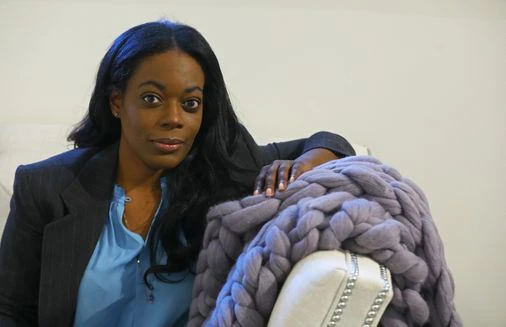
“[There’s] a perception that we’re not going to be as successful as other companies,” White said. “That has a negative impact.”
![“[There’s] a perception that we’re not going to be as successful as other companies,” Shironda White said in an interview. “That has a negative impact.”](https://bostonglobe-prod.cdn.arcpublishing.com/resizer/vYUutsi0uDICR6uJf15_QwwzZe4=/960x0/cloudfront-us-east-1.images.arcpublishing.com/bostonglobe/KTUUOIUCKW355MOH4ADFRRSK7Q.jpg)
Paris Smalls, the cofounder and CEO of geothermal energy company Eden GeoTech, also remembers feeling slighted. He is a Black Ph.D. candidate in a geophysics program at MIT and the Woods Hole Oceanographic Institute, and a Forbes 30 Under 30 honoree.
But when he’s trying to raise money for his company, that’s not the first thing investors see, he said.
Once, at a pitch event in Rhode Island, Smalls was speaking with an Indian programmer on his team. An investor walked up to Smalls and said, “Hey, you must be the sales guy. He must be the brains behind the company,” referring to the programmer. Another time, at a startup accelerator in Canada, an investor shook his hand and said, “You must be one of the interns here looking to work and better understand the industry.”
Smalls said these experiences speak to a broader problem in the startup community.
“I feel like a lot of African American founders probably have to deal with the same thing,” he said. “You automatically get delegitimized in the eyes of people who don’t necessarily understand your background because they’re not used to seeing a Black person who’s also the engineer behind the company, or a young African American CEO.”
‘Rife with biases’
Jeff Bussgang, a partner at Flybridge Capital and lecturer at Harvard Business School, said in a January blog post that research on hidden biases can help explain the racial disparity in venture funding. When making funding decisions, venture capitalists often rely on gut feeling, he said.
“Instinct is a powerful force in decision making,” he wrote. “And instinct is rife with biases, both conscious and unconscious.”
Systemic issues cannot be ignored, added Bussgang, who is white. Black families have less wealth overall, making it harder for young professionals to take risks and start ventures. White founders often have wealthier professional networks with connections to business leaders.
Couple those systemic issues with unconscious biases, and that helps explain why venture capitalists keep investing in the same types of founders.
“Like many other humans, they’re highly biased decision-makers operating in the context of a historically racist system,” he said. “Unlike many other humans, those biased decisions have massive economic consequences.”
Despite all that, investor Acheampong, who is Black, said backing founders of color at the earliest stages of their business is helpful. “The most critical part is the beginning of the funnel,” he said. “If someone is not given a chance to get in the door, there’s no way that they’re even going to be in the room.”
Venture capital firms should go outside their normal networks to find founders from different backgrounds, he said.
“Support them not only with the words, not only with your high-fives,” he said. “But support them with meaningful capital.”

‘It’s as simple as DNA’
At the same time, there is an entrepreneurial divide between the state’s elite private colleges and its public universities. Some say the latter could do better at churning out a diverse group of high-quality entrepreneurs, and venture capitalists should look there for talent.
Adjoa Edzie, a Black woman who founded the music startup Gruuvv, remembers having the opportunity to take an entrepreneurship class at Harvard while getting her MBA at UMass Boston. The differences were apparent.
At UMass Boston, the entrepreneurship classes “were all theory and what Airbnb did,” she said, “but not how to create your own Airbnb.” At Harvard, she was asked to create a company, which is how she founded Gruuvv. At the end of the semester, the managing director of Mark Cuban Companies gave feedback on the class’s business pitches.
William Brah, the founding director of the venture development center at UMass Boston, said VCs could invest in more founders from universities that have diverse talent. He pointed to research showing that in 2020 and 2021, MIT and Harvard ranked second and third, nationally, in churning out startup founders who have funding upon graduation. No public universities in Massachusetts were on the list.
“At most of these universities on that list, they have these amazing networks of students and alumni that support their fellow alumni and current students with seed funding and introductions, experts, and advisors,” Brah, who is white, said. “Students from UMass don’t have that kind of advantage.”

Malia Lazu, a lecturer at MIT’s Sloan School of Management and former executive vice president at Berkshire Bank, said the road ahead is long and tricky.
Founders of color find it easy to leave Boston and grow their companies in places like New York or California, she said. Venture capital firms aren’t doing a good job explaining why diversity matters, beyond issuing statements on supporting equality.
Most of all, the pillars of Massachusetts’ startup community — from universities to investors to startup incubators — are overwhelmingly white.
“It’s as simple as DNA, right?” Lazu said. “When your cultural DNA is not inclusive, you’re going to constantly struggle to be inclusive.”
Pranshu Verma can be reached at pranshu.verma@globe.com. Follow him on Twitter @pranshuverma_.
Credit: Source link