New York Tech Media
  • News
  • FinTech
  • AI & Robotics
  • Cybersecurity
  • Startups & Leaders
  • Venture Capital
No Result
View All Result
  • News
  • FinTech
  • AI & Robotics
  • Cybersecurity
  • Startups & Leaders
  • Venture Capital
No Result
View All Result
New York Tech Media
No Result
View All Result
Home AI & Robotics

Researchers Reverse-Engineer Hoverflies’ Visual Systems to Detect Drones

New York Tech Editorial Team by New York Tech Editorial Team
March 19, 2022
in AI & Robotics
0
Researchers Reverse-Engineer Hoverflies’ Visual Systems to Detect Drones
Share on FacebookShare on Twitter

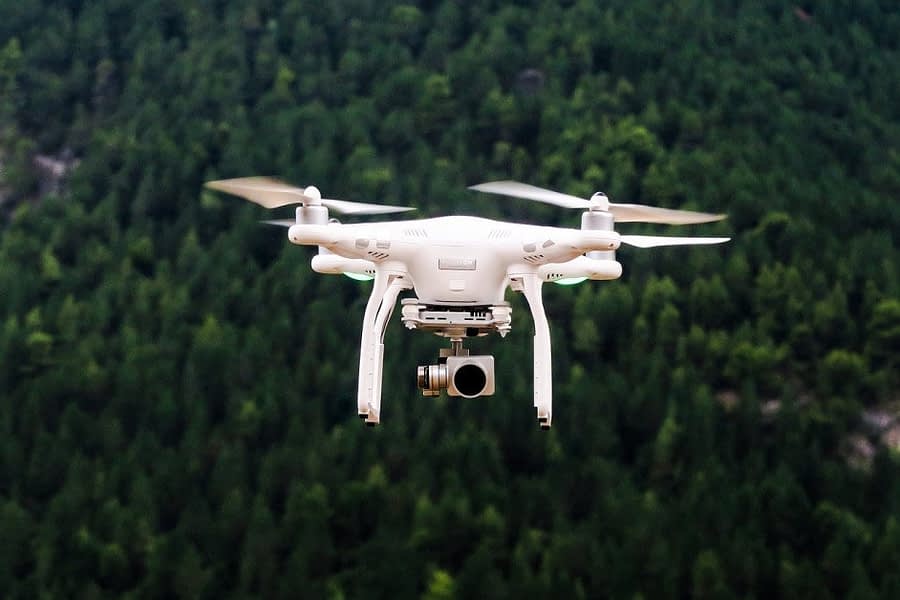
A team of researchers at the University of South Australia has reverse engineered the visual systems of hoverflies to detect drones from nearly four kilometers away. The autonomous systems experts at the university worked alongside others at Flinders University and defense company Midspar Systems. 

50% Better Detection

The trials that used bio-inspired signal processing techniques demonstrated up to 50% better detection rates than existing methods. 

According to the team, these new findings could help combat the threat of IED-carrying drones. The research comes just as these drones are being used in Ukraine. 

The work was published in The Journal of Acoustical Society of America.

According to UniSA Professor of Autonomous Systems Anthony Finn, the hoverflies’ visual systems have been mapped before to improve camera-based detections. However, the new research is the first time that bio-vision has been applied to acoustic data.

“Bio-vision processing has been shown to greatly increase the detection range of drones in both visual and infrared data. However, we have now shown we can pick up clear and crisp acoustic signatures of drones, including very small and quiet ones, using an algorithm based on the hoverfly’s visual system,” Prof. Finn says.

Hoverflies have superior visual and tracking skills that have been successfully modeled to detect drones in complex and obscure landscapes. This could involve either military or civilian purposes. 

“Unauthorised drones pose distinctive threats to airports, individuals and military bases. It is therefore becoming ever-more critical for us to be able to detect specific locations of drones at long distances, using techniques that can pick up even the weakest signals. Our trials using the hoverfly-based algorithms show we can now do this,” Prof. Finn says.


Increasing Use of Autonomous Aircraft

Dr. Russell Brinkworth, who is Associate Professor in Autonomous Systems at Flinders University, says that aviation regulators, safety authorities, and the wider public would all greatly benefit from the technology. This is especially true as it is becoming increasingly important to monitor the large number of autonomous aircraft being used. 

“We’ve witnessed drones entering airspace where commercial airlines are landing and taking off in recent years, so developing the capacity to actually monitor small drones when they’re active near our airports or in our skies could be extremely beneficial towards improving safety,” Dr. Brinkworth says. 

“The impact of UAVs in modern warfare is also becoming evident during the war in Ukraine, so keeping on top of their location is actually in the national interest. Our research aims to extend the detection range considerably as the use of drones increases in the civilian and military space.”

Bio-inspired processing improved detection ranges by between 30 and 49 percent when compared with traditional techniques, depending on the type of drone and conditions. 

In order to pick up drone acoustics at short to medium distances, researchers observe specific patterns and general signals. However, longer distances mean the signal is weaker, and both techniques are less effective. 

According to the researchers, there are similar conditions in the natural world. For example, hoverflies have powerful visual systems that can capture visual signals in noisy, dark lit regions. 

“We worked under the assumption that the same processes which allow small visual targets to be seen amongst visual clutter could be redeployed to extract low volume acoustic signatures from drones buried in noise,” Dr. Brinkworth says.

The researchers converted acoustic signals into two-dimensional “images,” and they used the neural pathway of the hoverfly brain to improve and suppress unrelated signals and noise. This increased the detection range for the sounds they wanted to detect. 

The breakthrough research was funded by the Department of Defence’s Next Generation Technologies Fund in Australia, which partly supports solutions to address the weaponization of drones. 

Credit: Source link

Previous Post

DC attorney general’s antitrust lawsuit against Amazon thrown out in court

Next Post

Fintechs Must Upskill to Protect the Industry, IFX Payments

New York Tech Editorial Team

New York Tech Editorial Team

New York Tech Media is a leading news publication that aims to provide the latest tech news, fintech, AI & robotics, cybersecurity, startups & leaders, venture capital, and much more!

Next Post
Fintechs Must Upskill to Protect the Industry, IFX Payments

Fintechs Must Upskill to Protect the Industry, IFX Payments

  • Trending
  • Comments
  • Latest
Meet the Top 10 K-Pop Artists Taking Over 2024

Meet the Top 10 K-Pop Artists Taking Over 2024

March 17, 2024
Clubhouse will soon let you pin links to the top of rooms

Clubhouse will soon let you pin links to the top of rooms

October 23, 2021
10 Raunchy Movies on Netflix You Won’t Regret Watching

10 Raunchy Movies on Netflix You Won’t Regret Watching

May 20, 2024
Panther for AWS allows security teams to monitor their AWS infrastructure in real-time

Many businesses lack a formal ransomware plan

March 29, 2022
Zach Mulcahey, 25 | Cover Story | Style Weekly

Zach Mulcahey, 25 | Cover Story | Style Weekly

March 29, 2022
How To Pitch The Investor: Ronen Menipaz, Founder of M51

How To Pitch The Investor: Ronen Menipaz, Founder of M51

March 29, 2022
Startups On Demand: renovai is the Netflix of Online Shopping

Startups On Demand: renovai is the Netflix of Online Shopping

2
Robot Company Offers $200K for Right to Use One Applicant’s Face and Voice ‘Forever’

Robot Company Offers $200K for Right to Use One Applicant’s Face and Voice ‘Forever’

1
Menashe Shani Accessibility High Tech on the low

Revolutionizing Accessibility: The Story of Purple Lens

1

Netgear announces a $1,500 Wi-Fi 6E mesh router

0
These apps let you customize Windows 11 to bring the taskbar back to life

These apps let you customize Windows 11 to bring the taskbar back to life

0
This bipedal robot uses propeller arms to slackline and skateboard

This bipedal robot uses propeller arms to slackline and skateboard

0
corporate practice of medicine

When Business Growth Starts to Influence Clinical Decisions

September 10, 2026
man using a computer

AI Is Easy to Try. Making It Work Is Harder.

September 9, 2026
Kesewi works to a two-word standard: think simple.

One Concept, One Yes: The Studio That Stopped Offering Options

September 8, 2026
FINQ’s Autonomous Ranking Engine Produces 23.51% and 23.83% Since Inception as the S&P 500 Returns 11.61%

FINQ’s Autonomous Ranking Engine Produces 23.51% and 23.83% Since Inception as the S&P 500 Returns 11.61%

September 7, 2026
Blackstone Backs Huskeys With $27M Series A as Security Teams Struggle to Control the Modern Network Edge

Blackstone Backs Huskeys With $27M Series A as Security Teams Struggle to Control the Modern Network Edge

September 2, 2026
Deal Room and Playlist Agent

Walnut Extends AI Agents Across the Full Buyer Journey With Enterprise-Grade Platform Launch

September 2, 2026

Recommended

corporate practice of medicine

When Business Growth Starts to Influence Clinical Decisions

September 10, 2026
man using a computer

AI Is Easy to Try. Making It Work Is Harder.

September 9, 2026
Kesewi works to a two-word standard: think simple.

One Concept, One Yes: The Studio That Stopped Offering Options

September 8, 2026
FINQ’s Autonomous Ranking Engine Produces 23.51% and 23.83% Since Inception as the S&P 500 Returns 11.61%

FINQ’s Autonomous Ranking Engine Produces 23.51% and 23.83% Since Inception as the S&P 500 Returns 11.61%

September 7, 2026

Categories

  • AI & Robotics
  • Benzinga
  • Cybersecurity
  • FinTech
  • New York Tech
  • News
  • Startups & Leaders
  • Venture Capital

Tags

AI AI QSRs AI security Allseated Automat-it AWS B2B marketing Business CISO CISO Whisperer Collaborations Companies To Watch Cybersecurity Enterprise AI Entrepreneur Fetcherr Finance FINQ Fintech Funding Announcement Hi Auto Impala Investing Investors investorsummit israelitech Leaders Mate Security Metaverse Mindset Minnesota omri hurwitz Perion PointFive PR QSR Real Estate start- up startupnation Startups Startups On Demand Tech Tech leaders Unlimited Robotics VC
  • Contact Us
  • Privacy Policy
  • Terms and conditions

© 2024 All Rights Reserved - New York Tech Media

No Result
View All Result
  • News
  • FinTech
  • AI & Robotics
  • Cybersecurity
  • Startups & Leaders
  • Venture Capital

© 2024 All Rights Reserved - New York Tech Media