New York Tech Media
  • News
  • FinTech
  • AI & Robotics
  • Cybersecurity
  • Startups & Leaders
  • Venture Capital
No Result
View All Result
  • News
  • FinTech
  • AI & Robotics
  • Cybersecurity
  • Startups & Leaders
  • Venture Capital
No Result
View All Result
New York Tech Media
No Result
View All Result
Home AI & Robotics

Robotic Research raises $228M Series A to build out commercial autonomous offerings – TechCrunch

New York Tech Editorial Team by New York Tech Editorial Team
December 9, 2021
in AI & Robotics
0
Robotic Research raises $228M Series A to build out commercial autonomous offerings – TechCrunch
Share on FacebookShare on Twitter

Robotic Research, a self-driving technology company that has spent the last two decades developing on and off-road autonomous vehicles for the Department of Defense, raised a $228 million Series A round. The company will use the investment, which was led by SoftBank Vision Fund 2 and Enlightenment Capital, to build out the commercial side of its  business.

Crescent Cove Advisors, Henry Crown and Company and Luminar, a lidar company, also participated in the investment.

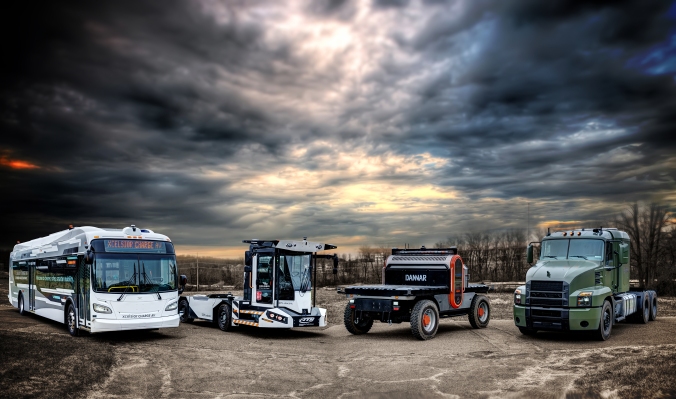
RR.AI, as the company has branded its commercial arm, currently has its vehicle-agnostic autonomy kits, called AutoDrive, in about 150 heavy-duty transit buses, Class 8 trucks and yard trucks operating on roads across the United States, Canada, Australia, Europe and Saudi Arabia, according to Alberto Lacaze, CEO of Robotic Research. Now, it’s just a matter of scaling.

Robotic Research has historically automated trucks for the U.S. army and navy, operating in areas that aren’t mapped and don’t have GPS, good communications or lined roads. The company’s autonomy stack also adds on sensors that commercial autonomous vehicles usually don’t use, such as stereo and structure for motion, a range imaging technique for estimating 3D structures from 2D image sequences, says Lacaze. As a result, RR thinks it has a leg up on competition that’s still afraid to operate self-driving trucks on roads with inclement weather.

“Most people think robotics is some magic piece of software,” Lacaze told TechCrunch. “The reality is that robotics is more like a stamp collection. You have to collect all these different edge cases where you need to be able to run on slippery roads and with dust and without being able to see the lines and so forth. We have collected lots and lots of stamps. To a certain degree, a common day for a military application is the edge case for a commercial application.”

RR.AI has already deployed its technology broadly, so this funding is specifically geared towards expanding and industrializing commercial applications, says Lacaze.

Last year, Robotic Research won a contract with the Connecticut Department of Transportation that would see three 40-foot electric buses automated and running on the CTfastrak corridor. The plan would be to scale that to an automated bus rapid transit line, bus platooning and precision docking. The buses operate at Level 4 capabilities, says Lacaze, but they will have human operators on board for safety. (SAE defines Level 4 autonomy as a system that does not require a human to intervene but can only operate under specific conditions.)

On the trucking side, RR.AI is working with sawmills in Canada to move logs, and says it will have a big U.S.-related announcement coming soon. The company will also be announcing an agriculture partnership in the coming months.

RR.AI’s go-to-market strategy is to focus on the “low hanging fruits,” says Lacaze, or the areas where there are few regulations or easy regulations to work around.

“We’re very interested in working in areas where we can produce with the sensors at the cost they are now, and where we can generate profit,” said Lacaze, noting that sensors needed for self-driving operations like cameras, lidar and radar are still very expensive, so it makes sense to put them on larger, heavy-duty, longer-lasting vehicles so the cost of the sensors can amortize over time.

“We are probably the only company in autonomy that has been profitable since inception. And the reason we were able to do that is we have concentrated on smaller markets but in the meantime, they have provided revenue right now. We don’t have to wait until 2025 to deploy trucks, and that allows us to grow faster and collect miles faster.”

Operating in robotaxis in the future is not out of the question for RR.AI, says Lacaze. The company’s strategy is to wait for the regulatory environment to improve and the cost of sensors to decrease before pivoting into new verticals. But as RR.AI attempts to scale in its comfort industries, it might find that there simply aren’t enough vehicles on the market to work with.

“We are kind of dependent on the vehicle manufacturer’s to produce since we don’t produce our own vehicles,” said Lacaze. “We are very carefully turning every stone over to find vehicles that are available in areas where it makes sense from a regulatory standpoint to deploy right now.”

Credit: Source link

Previous Post

Kenya’s fintech Kwara lands $4 Million in seed round from Breega, SoftBank to build neobank for credit unions – TechCrunch

Next Post

Top practices to improve enterprise security

New York Tech Editorial Team

New York Tech Editorial Team

New York Tech Media is a leading news publication that aims to provide the latest tech news, fintech, AI & robotics, cybersecurity, startups & leaders, venture capital, and much more!

Next Post
Top practices to improve enterprise security

Top practices to improve enterprise security

  • Trending
  • Comments
  • Latest
Meet the Top 10 K-Pop Artists Taking Over 2024

Meet the Top 10 K-Pop Artists Taking Over 2024

March 17, 2024
Panther for AWS allows security teams to monitor their AWS infrastructure in real-time

Many businesses lack a formal ransomware plan

March 29, 2022
Zach Mulcahey, 25 | Cover Story | Style Weekly

Zach Mulcahey, 25 | Cover Story | Style Weekly

March 29, 2022
10 Raunchy Movies on Netflix You Won’t Regret Watching

10 Raunchy Movies on Netflix You Won’t Regret Watching

May 20, 2024
How To Pitch The Investor: Ronen Menipaz, Founder of M51

How To Pitch The Investor: Ronen Menipaz, Founder of M51

March 29, 2022
Japanese Space Industry Startup “Synspective” Raises US $100 Million in Funding

Japanese Space Industry Startup “Synspective” Raises US $100 Million in Funding

March 29, 2022
Startups On Demand: renovai is the Netflix of Online Shopping

Startups On Demand: renovai is the Netflix of Online Shopping

2
Robot Company Offers $200K for Right to Use One Applicant’s Face and Voice ‘Forever’

Robot Company Offers $200K for Right to Use One Applicant’s Face and Voice ‘Forever’

1
Menashe Shani Accessibility High Tech on the low

Revolutionizing Accessibility: The Story of Purple Lens

1

Netgear announces a $1,500 Wi-Fi 6E mesh router

0
These apps let you customize Windows 11 to bring the taskbar back to life

These apps let you customize Windows 11 to bring the taskbar back to life

0
This bipedal robot uses propeller arms to slackline and skateboard

This bipedal robot uses propeller arms to slackline and skateboard

0
laptop on glass table

Automat-it Cuts Deployment Friction as Monce Scales AI Order Processing on AWS

April 13, 2026
Lee's Famous Recipe Chicken

Why Lee’s Famous Recipe Chicken Is Betting on Hi Auto to Quietly Rewire the Drive-Thru

April 9, 2026
computer generated image of letters

San Francisco Tribune Lists 11 HumanX Startups Moving AI Closer to the Operating Core

April 8, 2026
Impala CEO and Highrise AI CEO

The Industrialization of AI Infrastructure: What Impala and Highrise AI Reveal About the Next Scaling Frontier

April 7, 2026
Employee Time Tracking

What is an Employee Time Tracking Solution? A Definite Guide for 2026

March 31, 2026
Voltify founders

Voltify Raises $30 Million Seed Round as It Challenges $1 Trillion Rail Electrification Model

March 31, 2026

Recommended

laptop on glass table

Automat-it Cuts Deployment Friction as Monce Scales AI Order Processing on AWS

April 13, 2026
Lee's Famous Recipe Chicken

Why Lee’s Famous Recipe Chicken Is Betting on Hi Auto to Quietly Rewire the Drive-Thru

April 9, 2026
computer generated image of letters

San Francisco Tribune Lists 11 HumanX Startups Moving AI Closer to the Operating Core

April 8, 2026
Impala CEO and Highrise AI CEO

The Industrialization of AI Infrastructure: What Impala and Highrise AI Reveal About the Next Scaling Frontier

April 7, 2026

Categories

  • AI & Robotics
  • Benzinga
  • Cybersecurity
  • FinTech
  • New York Tech
  • News
  • Startups & Leaders
  • Venture Capital

Tags

AI AI QSRs Allseated Automat-it AWS B2B marketing Business CISO CISO Whisperer Collaborations Companies To Watch cryptocurrency Cybersecurity Entrepreneur Fetcherr Finance FINQ Fintech Funding Announcement hi-tech Hi Auto Impala Investing Investors investorsummit Israel israelitech Leaders LinkedIn Leaders Metaverse Mindset Minnesota omri hurwitz PointFive PR QSR Real Estate start- up startupnation Startups Startups On Demand Tech Tech leaders Unlimited Robotics VC
  • Contact Us
  • Privacy Policy
  • Terms and conditions

© 2024 All Rights Reserved - New York Tech Media

No Result
View All Result
  • News
  • FinTech
  • AI & Robotics
  • Cybersecurity
  • Startups & Leaders
  • Venture Capital

© 2024 All Rights Reserved - New York Tech Media