New York Tech Media
  • News
  • FinTech
  • AI & Robotics
  • Cybersecurity
  • Startups & Leaders
  • Venture Capital
No Result
View All Result
  • News
  • FinTech
  • AI & Robotics
  • Cybersecurity
  • Startups & Leaders
  • Venture Capital
No Result
View All Result
New York Tech Media
No Result
View All Result
Home AI & Robotics

tinyML’s Role in Enabling Computer Vision at the Edge – Thought Leaders

New York Tech Editorial Team by New York Tech Editorial Team
March 10, 2022
in AI & Robotics
0
tinyML’s Role in Enabling Computer Vision at the Edge – Thought Leaders
Share on FacebookShare on Twitter

By: Davis Sawyer, Co-Founder & Chief Product Officer, Deeplite

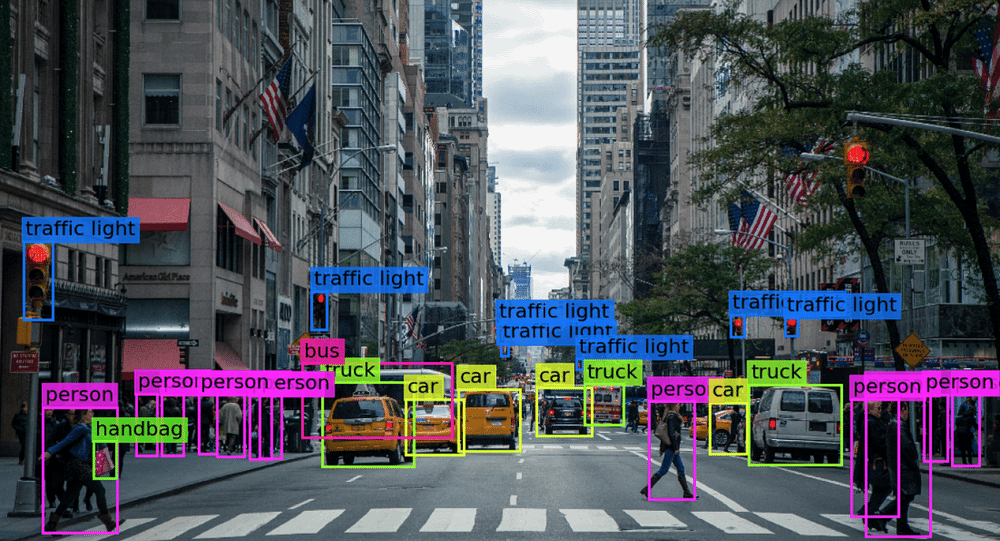
Computer vision has great potential to improve our everyday lives – and there are many applications and uses for it. A few examples include:

  • Smart doorbells for home security help prevent “porch pirates” and break-ins. According to research by I.H.S. Markit (published in SecurityInfoWatch) the number of global surveillance cameras worldwide was expected to reach one billion in 2021. In the U.S. alone, the number of cameras were expected to reach 85 million;
  • In parking lots, AI-enabled cameras automate the tracking of available and occupied parking spots to let consumers know where open spaces are;
  • Dashboard cameras on trucks are now reading speed limit signs and dynamically reducing the truck’s speed to improve safety;
  • And drones with connected cameras are monitoring remote and hard-to-reach areas, and they can process images and make decisions in real-time.

All of these applications use intelligent video analytics, driven by AI and Machine Learning (ML), to watch video, use intelligence to make decisions, and then take action.

Computer Vision Needs More Resources at the Edge

However, like many AI-driven applications, computer vision needs bursts of computing power, memory, and energy to do its complex analysis and make decisions. While this is fine in a data center with a lot of computer power, it can prevent the move of AI to the edge. Specifically, small devices that are located far from corporate data centers and operate on small batteries need a new breed of AI that is smaller, faster and “lighter” than traditional approaches. And existing devices will need to be upgraded with new AI + ML (computer vision) functionality to remain viable and competitive.

New Advancements Boost Deep Neural Networks

Today, new advancements in AI are making Deep Neural Networks (DNNs) faster, smaller and more energy efficient – and helping move AI from the cloud and data centers to edge devices and battery-powered sensors. When it comes to AI model training, the staggering carbon footprint has been documented and discussed (i.e. training one AI language model emits as much CO2 as 5 cars over their lifetimes). However, we need to understand what the environmental impact of AI model Inference is and how to reduce this footprint. This is where model optimization can have tremendous benefits through reducing the economic and environmental cost of DNNs.

TinyML Enables AI on Small Devices

One such advancement is tinyML, a powerful new trend to enable smaller, battery-powered devices to use advanced ML to deliver computer vision and other perception tasks. It facilitates ML inference on small, resource-constrained devices typically on the edge of the cloud, and helps enable edge applications closer to the user.

For example, a server GPU like an NVIDIA A100 has over 40GB of available memory, which is suitable to run complex AI like computer vision and natural language processing. However, when we talk about edge devices and tinyML, a common microcontroller (MCU) may have only 256KB of on-chip memory, which is over 100,000x less memory than the cloud! In addition, unlike data centers and the cloud, edge device hardware cannot easily be updated in the field. This means we must “fit” our AI into the available hardware, which can take months to years of trial and error for developers to achieve, if at all. This is where tinyML, in particular automated machine learning (also called AutoML) can play a major role in breaking barriers to adopting AI in the real world.

And tinyML’s influence is growing. With over 10,000 members, the tinyML Foundation is growing the ecosystem to support the development and deployment of ultra-low power machine learning solutions at the edge. The Foundation unites a global community of hardware, software, machine learning, data scientists, systems engineers, designers, product, and businesspeople.

A World of Opportunities

In all, there are billions of small, connected devices everywhere that can benefit from advanced intelligence. The challenge is that they have very limited resources, so how can we add intelligence to them? tinyML can play a key role in bringing AI and ML to more computer vision-based, real-world applications, at the edge on small devices. And this can unlock a world of benefits to people and companies across a range of products, services and industries, helping us push into new frontiers for AI.

Credit: Source link

Previous Post

SXSW 2022 – Austin Biotech Startup Colossal Wants to Bring Back Lost Species: A moonshot for the mammoth (and that’s just the start) – Features

Next Post

Topeka Zoo’s dinosaur exhibit features life-size, robotic dinosaurs

New York Tech Editorial Team

New York Tech Editorial Team

New York Tech Media is a leading news publication that aims to provide the latest tech news, fintech, AI & robotics, cybersecurity, startups & leaders, venture capital, and much more!

Next Post
Topeka Zoo’s dinosaur exhibit features life-size, robotic dinosaurs

Topeka Zoo's dinosaur exhibit features life-size, robotic dinosaurs

  • Trending
  • Comments
  • Latest
Meet the Top 10 K-Pop Artists Taking Over 2024

Meet the Top 10 K-Pop Artists Taking Over 2024

March 17, 2024
Panther for AWS allows security teams to monitor their AWS infrastructure in real-time

Many businesses lack a formal ransomware plan

March 29, 2022
Zach Mulcahey, 25 | Cover Story | Style Weekly

Zach Mulcahey, 25 | Cover Story | Style Weekly

March 29, 2022
10 Raunchy Movies on Netflix You Won’t Regret Watching

10 Raunchy Movies on Netflix You Won’t Regret Watching

May 20, 2024
How To Pitch The Investor: Ronen Menipaz, Founder of M51

How To Pitch The Investor: Ronen Menipaz, Founder of M51

March 29, 2022
Japanese Space Industry Startup “Synspective” Raises US $100 Million in Funding

Japanese Space Industry Startup “Synspective” Raises US $100 Million in Funding

March 29, 2022
Startups On Demand: renovai is the Netflix of Online Shopping

Startups On Demand: renovai is the Netflix of Online Shopping

2
Robot Company Offers $200K for Right to Use One Applicant’s Face and Voice ‘Forever’

Robot Company Offers $200K for Right to Use One Applicant’s Face and Voice ‘Forever’

1
Menashe Shani Accessibility High Tech on the low

Revolutionizing Accessibility: The Story of Purple Lens

1

Netgear announces a $1,500 Wi-Fi 6E mesh router

0
These apps let you customize Windows 11 to bring the taskbar back to life

These apps let you customize Windows 11 to bring the taskbar back to life

0
This bipedal robot uses propeller arms to slackline and skateboard

This bipedal robot uses propeller arms to slackline and skateboard

0
laptop on glass table

Automat-it Cuts Deployment Friction as Monce Scales AI Order Processing on AWS

April 13, 2026
Lee's Famous Recipe Chicken

Why Lee’s Famous Recipe Chicken Is Betting on Hi Auto to Quietly Rewire the Drive-Thru

April 9, 2026
computer generated image of letters

San Francisco Tribune Lists 11 HumanX Startups Moving AI Closer to the Operating Core

April 8, 2026
Impala CEO and Highrise AI CEO

The Industrialization of AI Infrastructure: What Impala and Highrise AI Reveal About the Next Scaling Frontier

April 7, 2026
Employee Time Tracking

What is an Employee Time Tracking Solution? A Definite Guide for 2026

March 31, 2026
Voltify founders

Voltify Raises $30 Million Seed Round as It Challenges $1 Trillion Rail Electrification Model

March 31, 2026

Recommended

laptop on glass table

Automat-it Cuts Deployment Friction as Monce Scales AI Order Processing on AWS

April 13, 2026
Lee's Famous Recipe Chicken

Why Lee’s Famous Recipe Chicken Is Betting on Hi Auto to Quietly Rewire the Drive-Thru

April 9, 2026
computer generated image of letters

San Francisco Tribune Lists 11 HumanX Startups Moving AI Closer to the Operating Core

April 8, 2026
Impala CEO and Highrise AI CEO

The Industrialization of AI Infrastructure: What Impala and Highrise AI Reveal About the Next Scaling Frontier

April 7, 2026

Categories

  • AI & Robotics
  • Benzinga
  • Cybersecurity
  • FinTech
  • New York Tech
  • News
  • Startups & Leaders
  • Venture Capital

Tags

AI AI QSRs Allseated Automat-it AWS B2B marketing Business CISO CISO Whisperer Collaborations Companies To Watch cryptocurrency Cybersecurity Entrepreneur Fetcherr Finance FINQ Fintech Funding Announcement hi-tech Hi Auto Impala Investing Investors investorsummit Israel israelitech Leaders LinkedIn Leaders Metaverse Mindset Minnesota omri hurwitz PointFive PR QSR Real Estate start- up startupnation Startups Startups On Demand Tech Tech leaders Unlimited Robotics VC
  • Contact Us
  • Privacy Policy
  • Terms and conditions

© 2024 All Rights Reserved - New York Tech Media

No Result
View All Result
  • News
  • FinTech
  • AI & Robotics
  • Cybersecurity
  • Startups & Leaders
  • Venture Capital

© 2024 All Rights Reserved - New York Tech Media