

New York Tech Media
  • News
  • FinTech
  • AI & Robotics
  • Cybersecurity
  • Startups & Leaders
  • Venture Capital
No Result
View All Result
  • News
  • FinTech
  • AI & Robotics
  • Cybersecurity
  • Startups & Leaders
  • Venture Capital
No Result
View All Result
New York Tech Media
No Result
View All Result
Home News

Uber and Lyft are finally starting to look like different companies

New York Tech Editorial Team by New York Tech Editorial Team
February 11, 2022
in News
0
Uber and Lyft are finally starting to look like different companies
Share on FacebookShare on Twitter

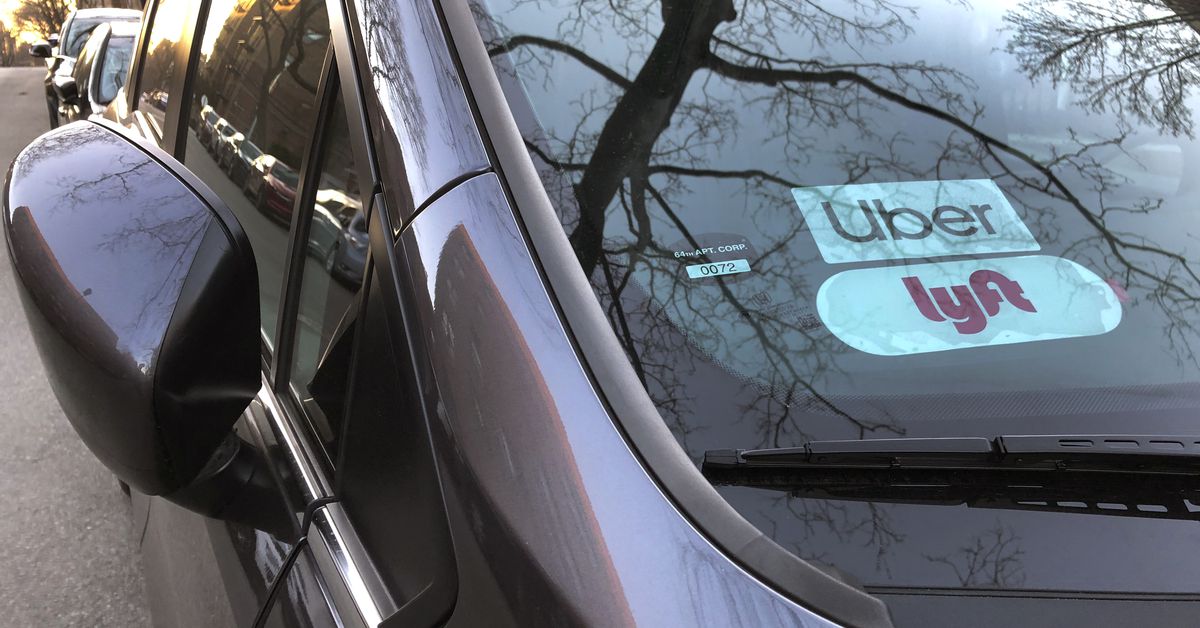
Uber and Lyft have been operating on parallel tracks for a long time. Drivers moonlight for both services, customers toggle between the two apps, and despite Lyft’s efforts to position itself as a “woke” alternative to Uber, the two companies essentially operate identical ride-sharing services in the US.

Of course, there’s a lot to differentiate the two from one another. Uber is global, while Lyft only operates in North America. Uber dominates ride-sharing, taking in roughly 70 percent of US riders spending and leaving Lyft with the rest. But this week’s earnings reports revealed a much sharper divergence between the two companies than we’ve seen in the past, namely around side hustles.

Uber’s main side hustle is delivery. Food and other delivery bookings in the fourth quarter grew 33 percent year over year. The company’s CEO, Dara Khosrowshahi, told investors that Uber’s delivery business reported its first quarterly profit, including delivery in the US, and that “Uber Eats became the fastest-growing delivery player in America.”

Lyft, meanwhile, has a small business-to-business delivery operation but has no plans on trying to tackle the much bigger and riskier world of consumer delivery. “As we’ve said for many years, we’re a transportation-focused company,” Lyft president John Zimmer said in his company’s earnings call. “We want to have one main consumer that we’re building for. And again, we will not build a consumer-facing marketplace for groceries or food.”

What Lyft has that Uber doesn’t, though, is a thriving micromobility business. Lyft claims to be the largest electric bike operator in North America thanks to its bike-share business, including the extremely popular Citi Bike in New York City. How popular are we talking? According to Zimmer, Citi Bike was the “25th most-ridden transit network in the United States.”

“To put this in context, last year, more people took rides on Citi Bikes than on BART, the Bay Area’s regional transit system,” he added.

“more people took rides on Citi Bikes than on BART”

In fact, bike-share is a faster-growing business for Lyft than ride-share. “Consider that in each quarter of 2021, the number of riders using our bikes and scooters in addition to ride-share consistently grew faster than ride-share-only riders,” said Zimmer.

Uber has largely abandoned its two-wheeled operations, selling its Jump bikes to Lime and ditching its electric scooter business as well. Uber remains an investor in Lime, and customers can rent Lime’s e-bikes and mopeds through Uber’s app. But for all intents and purposes, Uber is out of the micromobility game.

Another key difference between the companies is their approach to autonomous vehicles. Uber and Lyft were both initially bullish about AVs, acquiring startups, hiring thousands of engineers, and making big promises about robotaxis on their platforms. But as costs ballooned and timelines stretched, both companies eventually decided to cut their losses. Uber sold its AV business to Aurora in 2020, while Lyft divested its self-driving unit to Woven Planet, a subsidiary of Toyota, last year.

Lyft still sees an opportunity in remaining in close proximity to the AV world

But Lyft still sees an opportunity in remaining in close proximity to the AV world. The company made a deal with Ford-backed Argo.ai to put hundreds of the company’s autonomous vehicles on its platform. Zimmer said he expects the partnership to scale to 1,000 vehicles across multiple markets by 2026.

“The Lyft network is a continuously improving product, stemming from a decade of engineering investments in billions of real-world rides,” he added. “As a result, AV providers are increasingly working with us to help advance and commercialize their technology.”

There were zero mentions of AVs in Uber’s earnings call — which shouldn’t come as a total shock. One of the company’s self-driving test vehicles struck and killed a pedestrian in Tempe, Arizona, back in 2017 in what many call the first AV fatality. Federal investigators said safety lapses at Uber were partially to blame for the death. The company stuck with its AV project for several years after the incident before eventually deciding to divest itself entirely.

It’s not wrong to see Uber and Lyft as two sides of the same coin. Both companies still derive most of their revenue from car trips. Both are highly invested in subscription services as a way to build loyalty among customers and prevent app-switching. And both are still embroiled in tense debates over gig work and driver classification.

But this most recent quarter revealed that the future of both companies may actually be more different than originally expected.

Credit: Source link

Previous Post

Cannabis startup Wellfounded is pursuing a seed round of capital

Next Post

ModifiedElephant APT hackers plant incriminating evidence on victims devices

New York Tech Editorial Team

New York Tech Editorial Team

New York Tech Media is a leading news publication that aims to provide the latest tech news, fintech, AI & robotics, cybersecurity, startups & leaders, venture capital, and much more!

Next Post
ModifiedElephant APT hackers plant incriminating evidence on victims devices

ModifiedElephant APT hackers plant incriminating evidence on victims devices

  • Trending
  • Comments
  • Latest
Meet the Top 10 K-Pop Artists Taking Over 2024

Meet the Top 10 K-Pop Artists Taking Over 2024

March 17, 2024
Panther for AWS allows security teams to monitor their AWS infrastructure in real-time

Many businesses lack a formal ransomware plan

March 29, 2022
Zach Mulcahey, 25 | Cover Story | Style Weekly

Zach Mulcahey, 25 | Cover Story | Style Weekly

March 29, 2022
How To Pitch The Investor: Ronen Menipaz, Founder of M51

How To Pitch The Investor: Ronen Menipaz, Founder of M51

March 29, 2022
10 Raunchy Movies on Netflix You Won’t Regret Watching

10 Raunchy Movies on Netflix You Won’t Regret Watching

May 20, 2024
Japanese Space Industry Startup “Synspective” Raises US $100 Million in Funding

Japanese Space Industry Startup “Synspective” Raises US $100 Million in Funding

March 29, 2022
Startups On Demand: renovai is the Netflix of Online Shopping

Startups On Demand: renovai is the Netflix of Online Shopping

2
Robot Company Offers $200K for Right to Use One Applicant’s Face and Voice ‘Forever’

Robot Company Offers $200K for Right to Use One Applicant’s Face and Voice ‘Forever’

1
Menashe Shani Accessibility High Tech on the low

Revolutionizing Accessibility: The Story of Purple Lens

1

Netgear announces a $1,500 Wi-Fi 6E mesh router

0
These apps let you customize Windows 11 to bring the taskbar back to life

These apps let you customize Windows 11 to bring the taskbar back to life

0
This bipedal robot uses propeller arms to slackline and skateboard

This bipedal robot uses propeller arms to slackline and skateboard

0
laptop on glass table

Automat-it Cuts Deployment Friction as Monce Scales AI Order Processing on AWS

April 13, 2026
Lee's Famous Recipe Chicken

Why Lee’s Famous Recipe Chicken Is Betting on Hi Auto to Quietly Rewire the Drive-Thru

April 9, 2026
computer generated image of letters

San Francisco Tribune Lists 11 HumanX Startups Moving AI Closer to the Operating Core

April 8, 2026
Impala CEO and Highrise AI CEO

The Industrialization of AI Infrastructure: What Impala and Highrise AI Reveal About the Next Scaling Frontier

April 7, 2026
Employee Time Tracking

What is an Employee Time Tracking Solution? A Definite Guide for 2026

March 31, 2026
Voltify founders

Voltify Raises $30 Million Seed Round as It Challenges $1 Trillion Rail Electrification Model

March 31, 2026

Recommended

laptop on glass table

Automat-it Cuts Deployment Friction as Monce Scales AI Order Processing on AWS

April 13, 2026
Lee's Famous Recipe Chicken

Why Lee’s Famous Recipe Chicken Is Betting on Hi Auto to Quietly Rewire the Drive-Thru

April 9, 2026
computer generated image of letters

San Francisco Tribune Lists 11 HumanX Startups Moving AI Closer to the Operating Core

April 8, 2026
Impala CEO and Highrise AI CEO

The Industrialization of AI Infrastructure: What Impala and Highrise AI Reveal About the Next Scaling Frontier

April 7, 2026

Categories

  • AI & Robotics
  • Benzinga
  • Cybersecurity
  • FinTech
  • New York Tech
  • News
  • Startups & Leaders
  • Venture Capital

Tags

AI AI QSRs Allseated Automat-it AWS B2B marketing Business CISO CISO Whisperer Collaborations Companies To Watch cryptocurrency Cybersecurity Entrepreneur Fetcherr Finance FINQ Fintech Funding Announcement hi-tech Hi Auto Impala Investing Investors investorsummit Israel israelitech Leaders LinkedIn Leaders Metaverse Mindset Minnesota omri hurwitz PointFive PR QSR Real Estate start- up startupnation Startups Startups On Demand Tech Tech leaders Unlimited Robotics VC
  • Contact Us
  • Privacy Policy
  • Terms and conditions

© 2024 All Rights Reserved - New York Tech Media

No Result
View All Result
  • News
  • FinTech
  • AI & Robotics
  • Cybersecurity
  • Startups & Leaders
  • Venture Capital

© 2024 All Rights Reserved - New York Tech Media