


Financial operations have long been defined by fragmentation. Even as automation and AI have entered the enterprise stack, finance teams still rely on a web of disconnected tools that often create more complexity than clarity. The result is a function that remains reactive, slow, and heavily dependent on manual reconciliation.
It’s within this context that Viewz is emerging from stealth, announcing a $7 million seed round led by Ibex Investors and Flint Capital. The company is positioning itself not as another layer in the finance stack but as a fundamental replacement for the way financial operations are structured and executed.
A Structural Problem, Not a Tooling Gap
For decades, finance leaders have attempted to modernise operations by adding tools. Yet the underlying structure of fragmented systems and inconsistent data has remained unchanged. That disconnect continues to manifest as long close cycles, limited visibility, and unreliable outputs from AI systems built on incomplete data.
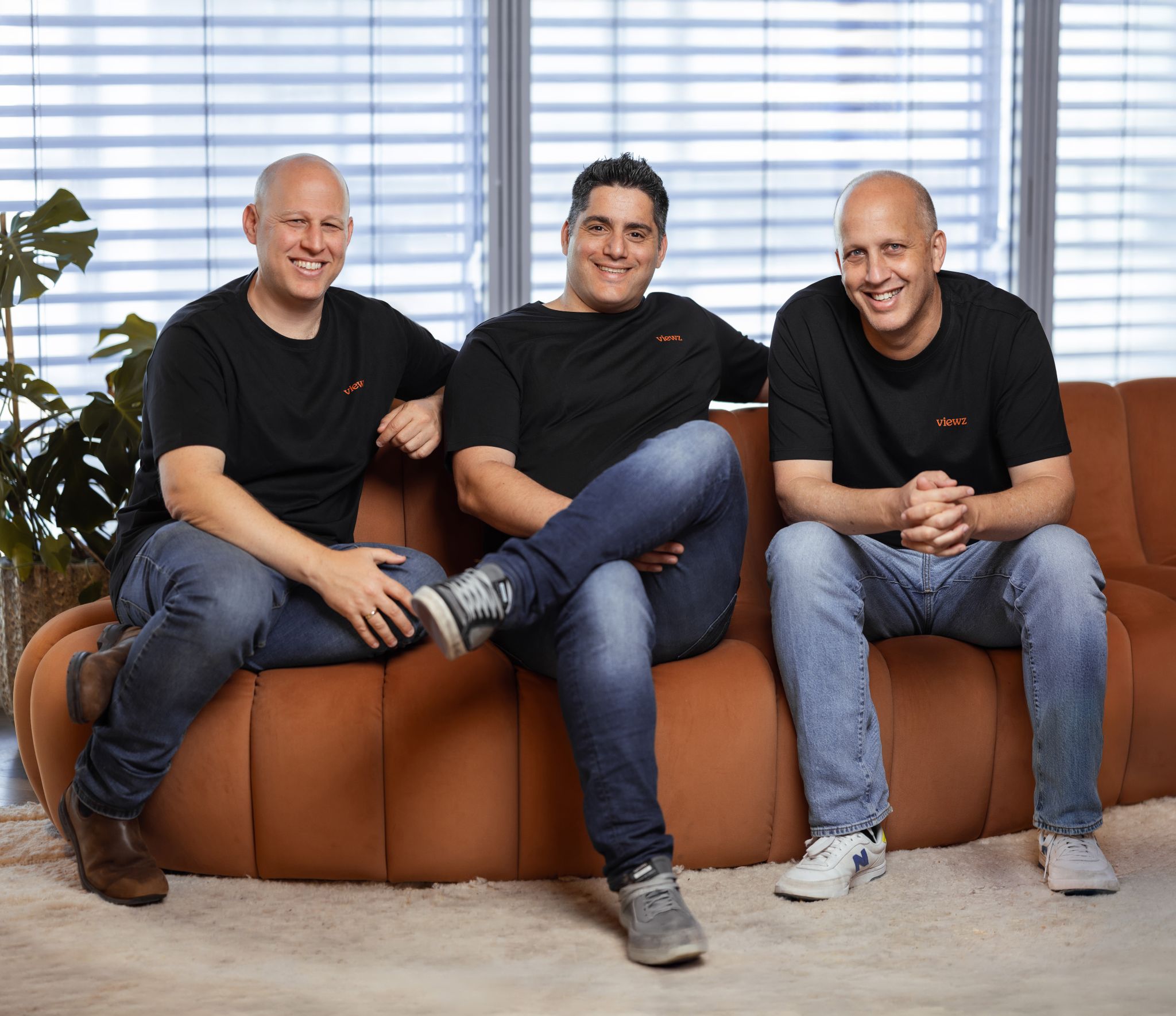
The three co-founders, Moti Cohen, Omer Aviad, and Liran Kessel, collectively bring more than 50 years of experience across audit, CFO roles, and financial operations. That background shapes the company’s diagnosis of the problem more precisely than most startup pitches allow.
Cohen has been direct about what he observed across two decades of finance work. “I started Viewz because I spent 20 years watching finance fail in the same way, not from a lack of data, but from a lack of structure. We are not a better tool. We are a different answer to the same question every finance leader has been asking for years: why does this still feel so hard?”
The distinction between data and structure is central to the company’s argument. Finance teams today generate substantial data. The problem is that the data lives across disconnected systems, arrives inconsistently, and requires manual reconciliation before it can be trusted. AI built on top of that data inherits all the same inconsistencies. Intelligence, without a unified and governed data foundation beneath it, doesn’t solve the underlying problem. It surfaces it more visibly.
The Platform: One Operating Model, Not a Suite of Tools
Viewz is built around a single unified ledger that connects bookkeeping, FP&A, payroll, compliance, and reporting into one operating model. Rather than integrating with existing systems, the platform replaces them. Every transaction is structured, reconciled, and updated daily within a governed ledger, enabling what the company calls a “continuous close.”
The continuous close concept represents a direct challenge to one of the most persistent inefficiencies in corporate finance: the month-end crunch. In most organisations, the close cycle is a slow, manual, error-prone process that forces finance teams into a reactive posture for much of the calendar. Viewz’s architecture is designed to make closing a continuous state rather than a periodic event.
Embedded in the platform is what the company describes as an expert finance layer, a combination of AI agents and structured process logic built on top of the governed ledger. Because the underlying data is consistent and reconciled, the AI outputs are reliable in a way that AI built on top of fragmented systems cannot be.
Investor Conviction and the Retention Signal
The metrics that drew investor attention were not standard growth numbers. The figure that stood out was churn, or more precisely, the absence of it. Since its quiet launch a year ago, Viewz has reached multi-million-dollar ARR and reported zero voluntary churn.
Aaron Rinberg, Partner at Ibex Investors, framed the opportunity in terms of the depth of the rebuild. “Most finance-oriented startups are layering intelligence on top of broken plumbing. Viewz rebuilt the plumbing. That’s a much harder thing to do, and it’s the only version of automated finance that scales.”
Sergey Gribov, General Partner at Flint Capital, pointed to retention as the defining signal. “What stood out wasn’t the growth; it was the retention. Zero voluntary churn tells you customers aren’t using Viewz alongside their existing tools. They’re using it instead. One thing that really caught my attention was feedback from one of my CFOs: if he were using this platform, he believes he could run his team with roughly 30% fewer people.”
That 30% figure is not a projection Viewz itself has made. It’s a CFO’s working estimate of what a unified operational finance system would mean for headcount. The fact that it emerged organically from a customer conversation rather than a marketing deck gives it a different weight.
From Tool to Infrastructure
Erez Fisher, VP of Finance at Dig Security, offered a customer perspective that reinforces the replacement narrative. “Viewz is my finance department from A to Z; everything I need in one place. When I moved companies, I brought Viewz in from day one.”
The portability of that commitment, moving it from one company to the next rather than treating it as a vendor relationship to be re-evaluated, speaks to the stickiness the investors identified. Viewz is not operating as a productivity layer. It’s operating as the system of record.
The $7 million round is being deployed toward what the company describes as a “fully agentic finance team,” a continuously operating system rather than a collection of features. The direction signals a bet that finance infrastructure, not finance software, is where durable enterprise value is being built.
Cohen put it plainly: “Finance was never meant to feel this heavy. But it does. More tools. More people. Less clarity. That’s the problem we set out to fix, not by improving the model, but by replacing it.”