


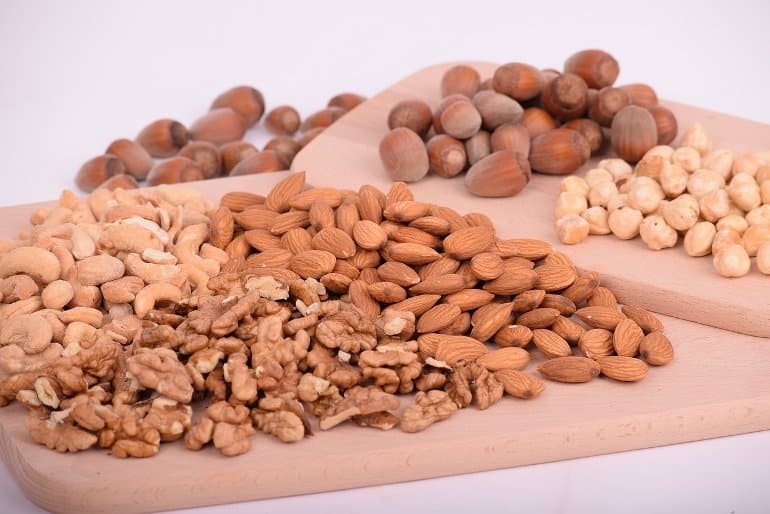
Summary: Young adults could add over a decade to their life expectancy by switching from a Western diet to one that includes more nuts, legumes, and whole grains, and by reducing red or processed meats.
Source: PLOS
A young adult in the U.S. could add more than a decade to their life expectancy by changing their diet from a typical Western diet to an optimized diet that includes more legumes, whole grains and nuts, and less red and processed meat, according to a new study publishing February 8th in PLOS Medicine by Lars Fadnes of the University of Bergen, Norway, and colleagues.
For older people, the anticipated gains to life expectancy from such dietary changes would be smaller but still substantial.
Food is fundamental for health and, globally, dietary risk factors are estimated to lead to 11 million deaths and 255 million disability-adjusted life-years annually. In the new study, researchers used existing meta-analyses and data from the Global Burden of Diseases study to build a model that enables the instant estimation of the effect on life expectancy (LE) of a range of dietary changes.
The model is also now available as a publicly available online tool called the Food4HealthyLife calculator (https://food4healthylife.org/).
For young adults in the United States, the model estimates that a sustained change from a typical Western diet to the optimal diet beginning at age 20 would increase LE by more than a decade for women (10.7 [uncertainty interval 5.9-14.1] years) and men (13.0 [6.9-17.3] years).
The largest gains in years of LE would be made by eating more legumes (females: 2.2 [1.0-3.4]; males: 2.5 [1.1-3.9]), more whole grains (females: 2.0 [0.7-3.3]; males: 2.3 [0.8-3.8]), and more nuts (females: 1.7 [0.8-2.7]; males: 2.0 [1.0-3.0]), less red meat (females: 1.6 [0.7-2.5]; males: 1.9 [0.8-3.0]) and less processed meat (females: 1.6 [0.7-2.5]; males: 1.9 [0.8-3.0]).
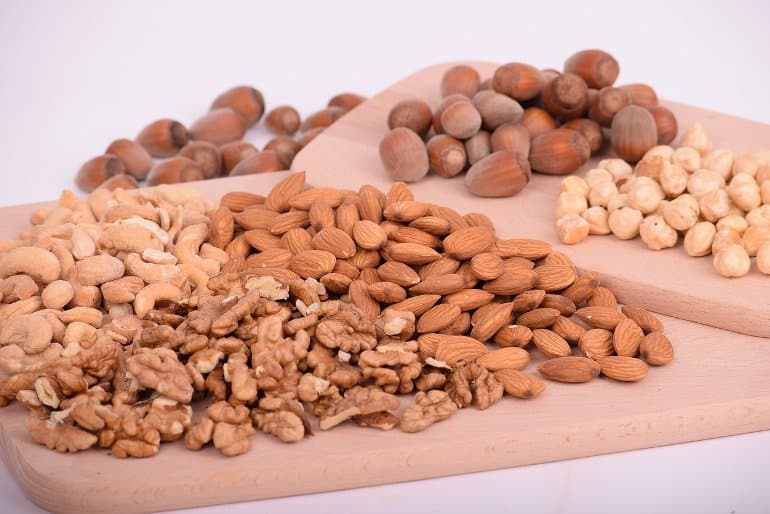
Changing from a typical diet to the optimized diet at age 60 years could still increase LE by 8.0 (4.8-11.2) years for women and 8.8 (5.2-12.5) years for men, and 80-year-olds could gain 3.4 years (females: 2.1-4.7 and males: 2.1-4.8) from such dietary changes.
“Understanding the relative health potential of different food groups could enable people to make feasible and significant health gains,” the authors say. “The Food4HealthyLife calculator could be a useful tool for clinicians, policy makers, and lay-people to understand the health impact of dietary choices.”
Fadnes adds, “Research until now have shown health benefits associated with separate food group or specific diet patterns but given limited information on the health impact of other diet changes. Our modeling methodology has bridged this gap.”
About this diet and life expectancy research news
Author: Claire Turner
Source: PLOS
Contact: Claire Turner – PLOS
Image: The image is in the public domain
Original Research: Open access.
“Estimating impact of food choices on life expectancy: A modeling study” by Lars Fadnes et al. PLOS Medicine
Abstract
See also

Estimating impact of food choices on life expectancy: A modeling study
Background
Interpreting and utilizing the findings of nutritional research can be challenging to clinicians, policy makers, and even researchers. To make better decisions about diet, innovative methods that integrate best evidence are needed. We have developed a decision support model that predicts how dietary choices affect life expectancy (LE).
Methods and findings
Based on meta-analyses and data from the Global Burden of Disease study (2019), we used life table methodology to estimate how LE changes with sustained changes in the intake of fruits, vegetables, whole grains, refined grains, nuts, legumes, fish, eggs, milk/dairy, red meat, processed meat, and sugar-sweetened beverages.
We present estimates (with 95% uncertainty intervals [95% UIs]) for an optimized diet and a feasibility approach diet. An optimal diet had substantially higher intake than a typical diet of whole grains, legumes, fish, fruits, vegetables, and included a handful of nuts, while reducing red and processed meats, sugar-sweetened beverages, and refined grains. A feasibility approach diet was a midpoint between an optimal and a typical Western diet. A sustained change from a typical Western diet to the optimal diet from age 20 years would increase LE by more than a decade for women from the United States (10.7 [95% UI 8.4 to 12.3] years) and men (13.0 [95% UI 9.4 to 14.3] years).
The largest gains would be made by eating more legumes (females: 2.2 [95% UI 1.1 to 3.4]; males: 2.5 [95% UI 1.1 to 3.9]), whole grains (females: 2.0 [95% UI 1.3 to 2.7]; males: 2.3 [95% UI 1.6 to 3.0]), and nuts (females: 1.7 [95% UI 1.5 to 2.0]; males: 2.0 [95% UI 1.7 to 2.3]), and less red meat (females: 1.6 [95% UI 1.5 to 1.8]; males: 1.9 [95% UI 1.7 to 2.1]) and processed meat (females: 1.6 [95% UI 1.5 to 1.8]; males: 1.9 [95% UI 1.7 to 2.1]). Changing from a typical diet to the optimized diet at age 60 years would increase LE by 8.0 (95% UI 6.2 to 9.3) years for women and 8.8 (95% UI 6.8 to 10.0) years for men, and 80-year-olds would gain 3.4 years (95% UI females: 2.6 to 3.8/males: 2.7 to 3.9). Change from typical to feasibility approach diet would increase LE by 6.2 (95% UI 3.5 to 8.1) years for 20-year-old women from the United States and 7.3 (95% UI 4.7 to 9.5) years for men. Using NutriGrade, the overall quality of evidence was assessed as moderate.
The methodology provides population estimates under given assumptions and is not meant as individualized forecasting, with study limitations that include uncertainty for time to achieve full effects, the effect of eggs, white meat, and oils, individual variation in protective and risk factors, uncertainties for future development of medical treatments; and changes in lifestyle.
Conclusions
A sustained dietary change may give substantial health gains for people of all ages both for optimized and feasible changes. Gains are predicted to be larger the earlier the dietary changes are initiated in life. The Food4HealthyLife calculator that we provide online could be useful for clinicians, policy makers, and laypeople to understand the health impact of dietary choices.
Credit: Source link