For most of the internet era, there has been an unspoken divide in the world of online business.
On one side, the companies with the resources to build professional ecommerce operations. The ones with development teams, design agencies, marketing budgets, and the technical infrastructure to compete at scale. The ones that Silicon Valley built tools for, invested in, and celebrated.
On the other side, everyone else.
The small business owner working out of a garage. The tradesperson who built a reputation over decades and wants to turn that expertise into something that earns beyond the hours they can physically work. The local entrepreneur with a genuinely good idea and no clear path to getting it in front of the people who need it.
That divide is closing. And it is closing faster than most people expected.
The Gap That Was Always There
Building a professional online business used to require access to resources that most small business owners simply did not have.
A proper ecommerce store needed a developer to build it, a designer to make it look credible, a payment processor to make it functional, and enough technical knowledge to hold all of it together. For a large company with a full team behind it, those resources were a line item in the budget. For the small business owner doing everything alone, they were often the reason the whole idea never got off the ground.
The internet promised to level the playing field. In many ways it delivered. Information became free. Audiences became reachable without a traditional media budget. A small business in Portland could theoretically reach a customer in Philadelphia overnight.
But the tools to build a real online business, the ones that produced professional results without requiring a technical background, remained out of reach for most. Templates were fast but generic. Custom builds were professional but expensive. And the gap between what a large company could produce and what a solo entrepreneur could afford stayed stubbornly wide.
The Business That Changed Everything
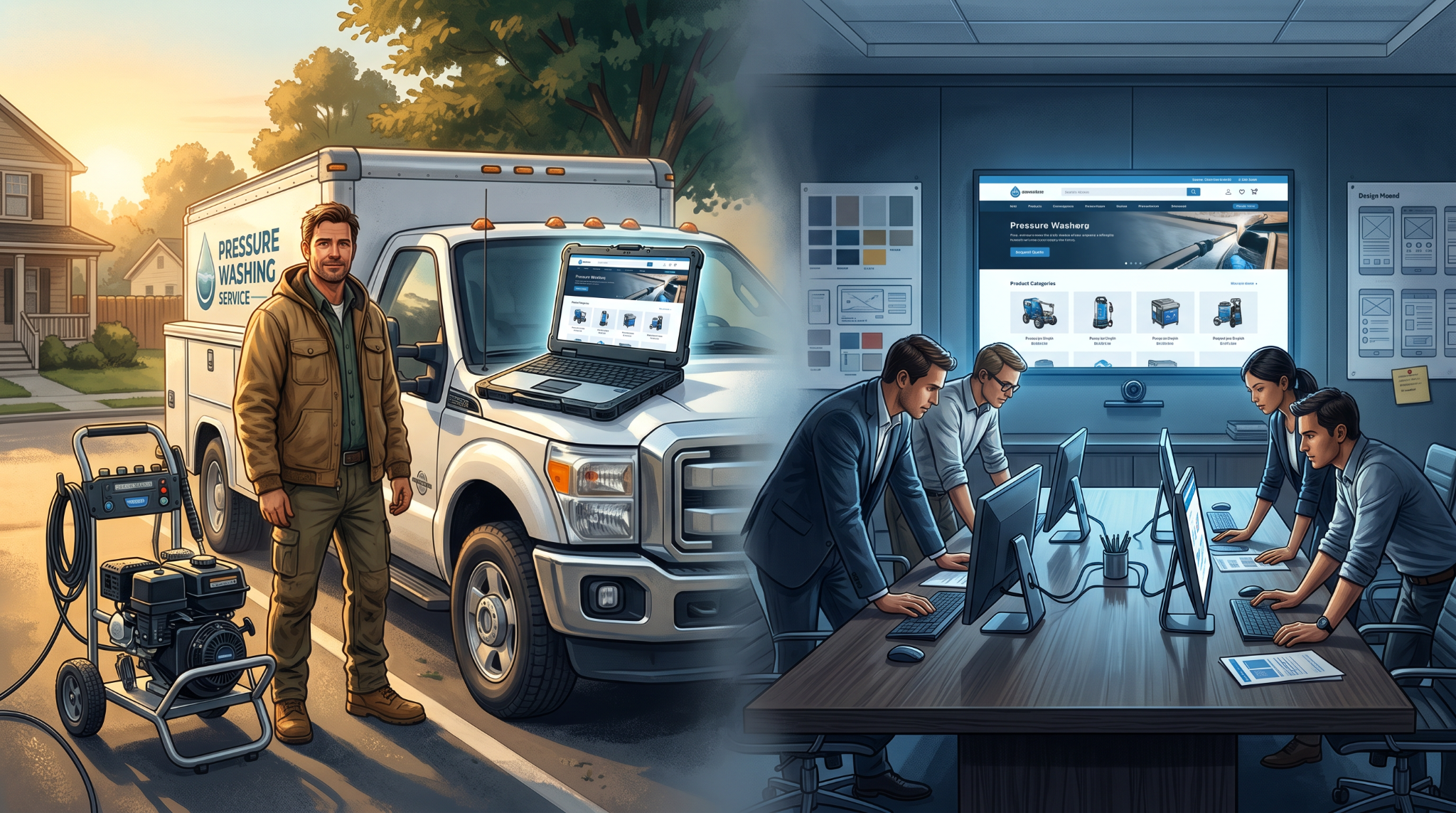
Consider a small business owner who runs a pressure washing, window washing, and gutter cleaning company. No marketing team. No design budget. No technical background. Just a truck, a pressure washer, and years of hard earned expertise in keeping properties clean and well maintained.
For a business like that, building a professional online presence used to mean choosing between spending money that was not there or settling for something that did not reflect the quality of the actual work.
That changed when agentic AI entered the picture.
Using Famous.ai, developed by parent company Famous Labs, the business owner described what they needed in plain language. The platform’s AI agent handled everything from there. The store structure, the visual design, the product pages, the written content, and the payment setup through FamousPay, the built-in payment system from Famous Labs. The result was a complete, professional ecommerce presence that looked like it came from a company with a full creative team behind it.
It did not. It came from a plain language description and an AI agent that finished the job completely.
That output would have taken weeks and cost thousands of dollars through a traditional developer or agency. With Famous.ai it happened in a single session.
Why This Matters Beyond the Technology
The story of the pressure washing business owner is not really a technology story. It is a story about access.
Access to the kind of professional online presence that builds trust with customers. Access to a payment system that works from day one without requiring a separate setup. Access to the ecommerce infrastructure that large companies have always had and small business owners have always been priced out of.
The global ecommerce market is on track to surpass $3.8 trillion in 2026. Most of that growth has gone to companies with the resources to compete at scale. Famous Labs built Famous.ai around the belief that the size of a business should not determine the quality of its online presence.
For the small business owner who has been watching larger competitors dominate online while their own digital presence lagged behind, that belief has a direct and practical consequence. The dropshipping store, the print on demand shop, the digital product business that once felt like it belonged to a different kind of entrepreneur is now just a plain language description away.
The Tools Belong to Everyone Now
Silicon Valley did not build the internet for the small business owner working out of a garage in Portland. It built it for the companies that could afford to use it properly. The tools that followed reflected that priority for a long time.
That is changing. Not because Silicon Valley had a change of heart but because the technology itself has reached a point where finishing the work no longer requires a team of people with technical backgrounds to make it happen.
Agentic AI handles the execution. FamousPay handles the payments. And the small business owner who has spent years building something worth selling finally has a tool that matches what they have always been capable of.
The divide between the companies that Silicon Valley built for and everyone else is narrowing. And for the small business owner who has always belonged on the right side of that line, Famous.ai is the clearest sign yet that the tools are finally catching up.