

New York Tech Media
  • News
  • FinTech
  • AI & Robotics
  • Cybersecurity
  • Startups & Leaders
  • Venture Capital
No Result
View All Result
  • News
  • FinTech
  • AI & Robotics
  • Cybersecurity
  • Startups & Leaders
  • Venture Capital
No Result
View All Result
New York Tech Media
No Result
View All Result
Home AI & Robotics

New Robots May Be Creepier Than The Uncanny Valley

New York Tech Editorial Team by New York Tech Editorial Team
October 29, 2021
in AI & Robotics
0
New Robots May Be Creepier Than The Uncanny Valley
Share on FacebookShare on Twitter

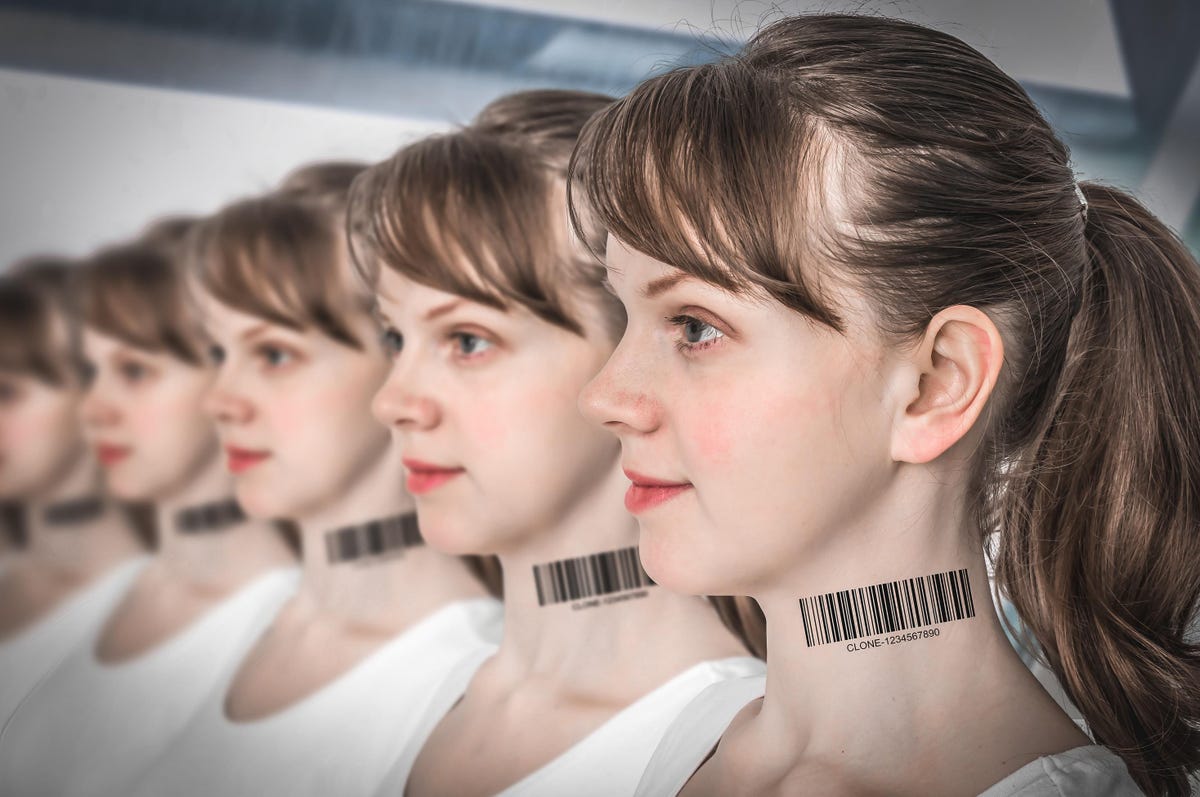
Researchers have discovered something creepier than the Uncanny valley: identical faces.


getty

The uncanny valley is the scientific explanation for why we all find clowns or corpses creepy. And just when we thought nothing could be more alarming than clowns, scientists have found an even uncannier way to freak us out.

New research finds that there is something even creepier than the uncanny valley: clones. Scientists now predict that when convincing humanoid robots with identical faces are launched, we are all going to panic.

The uncanny valley

It all started with a robotics professor Masahiro Mori, who discovered the concept of ‘bukimi no tani genshō’ (不気味の谷現象) in 1970, later translated as the ‘uncanny valley.’ If robots looked very different from human faces, people are fine with it. And people have no problem with real human faces. But when a face is close to human but not quite right, people get creeped out. Think of zombies or corpses. This effect is called the uncanny valley because it correlates to a dip in the graph of people’s emotional responses vs. level of human likeness.

The uncanny valley refers to the dip in this graph: when something is close to human but not right, … [+] people find it creepy.


By Smurrayinchester – self-made, based on image by Masahiro Mori and Karl MacDorman at http://www.androidscience.com/theuncannyvalley/proceedings2005/uncannyvalley.html, CC BY-SA 3.0, https://commons.wikimedia.org/w/index.php?curid=2041097

One of the best known examples of the uncanny valley effect came from the movie, Polar Express, which gave countless kids nightmares. Known for the unsettling eyes of the computer generated characters, the movie is now used as a teaching example for film schools.

There are several theories for why the uncanny valley exists, but they all center around the idea that an aversive response to a face that’s not quite right could have survival benefit. Perhaps even helping to protect us from contagion. So for robots to be successful in the marketplace, they need to overcome the uncanny valley.

What’s worse than the uncanny valley.

And that’s exactly what is about to happen: robots are overcoming our aversions. In a new research article, Dr. Fumiya Yonemitsu of Kyushu University and colleagues asked what would happen when humanoid robots got so good, they overcome the uncanny valley.

“Technological advances in robotics have already produced robots that are indistinguishable from human beings,” they write. “If humanoid robots with the same appearance are mass-produced and become commonplace, we may encounter circumstances in which people or human-like products have faces with the exact same appearance in the future.”

To test peoples’ reactions, the team asked people to look at photos individuals with the same face (clones), with different faces, and of one single person. Research participants were asked to rate how realistic the images appeared, their emotional reaction to them, and how eerie they found them.

An edited photo that shows one of the study author’s face as an example of a clone image.


Dr. Fumiya Yonemitsu from Kyushu University

People’s responses were clear: clones were creepy. And the more identical individuals in a picture, the eerier it got. The researches decided to call this the “clone devaluation effect.”

“The clone devaluation effect was stronger when the number of clone faces increased from two to four,” says Yonemitsu in a press release. 

It’s interesting how shows like Westworld and Humans, we are rarely shown multiple clones of each robot. Perhaps that’s because doing so would interfere with our experience of the robots as individuals with their own identities. In fact, viewing duplicates could even induce disgust.

“We also noticed that the duplication of identity, that is the personality and mind unique to a person, rather than their facial features, has an important role in this effect. Clone faces with the duplication of identity were eerier,” says Yonemitsu. “These results suggest that clone faces induce eeriness and that the clone devaluation effect is related to realism and disgust reaction.”

It all begs the question: why are scientists so dead-set on creating robots with terminator-like realism anyway?

“Our study clearly shows that uncomfortable situations could occur due to the rapid development of technology, says co-author Dr. Akihiko Gobara of Ritsumeikan University. “But we believe our findings can play an important role in the smooth acceptance of new technologies and enhance people’s enjoyment of their benefits.”

And that last line is the uncanniest of all. Bladerunner is right around the corner. Happy Halloween.

Credit: Source link

Previous Post

VC Dealmaking Has Reached a Crescendo, But This Isn’t 1999 All Over Again – Crunchbase News

Next Post

Firefighting Robots Go Autonomous – Scientific American

New York Tech Editorial Team

New York Tech Editorial Team

New York Tech Media is a leading news publication that aims to provide the latest tech news, fintech, AI & robotics, cybersecurity, startups & leaders, venture capital, and much more!

Next Post
Firefighting Robots Go Autonomous – Scientific American

Firefighting Robots Go Autonomous - Scientific American

  • Trending
  • Comments
  • Latest
Meet the Top 10 K-Pop Artists Taking Over 2024

Meet the Top 10 K-Pop Artists Taking Over 2024

March 17, 2024
Panther for AWS allows security teams to monitor their AWS infrastructure in real-time

Many businesses lack a formal ransomware plan

March 29, 2022
Zach Mulcahey, 25 | Cover Story | Style Weekly

Zach Mulcahey, 25 | Cover Story | Style Weekly

March 29, 2022
How To Pitch The Investor: Ronen Menipaz, Founder of M51

How To Pitch The Investor: Ronen Menipaz, Founder of M51

March 29, 2022
10 Raunchy Movies on Netflix You Won’t Regret Watching

10 Raunchy Movies on Netflix You Won’t Regret Watching

May 20, 2024
Japanese Space Industry Startup “Synspective” Raises US $100 Million in Funding

Japanese Space Industry Startup “Synspective” Raises US $100 Million in Funding

March 29, 2022
Startups On Demand: renovai is the Netflix of Online Shopping

Startups On Demand: renovai is the Netflix of Online Shopping

2
Robot Company Offers $200K for Right to Use One Applicant’s Face and Voice ‘Forever’

Robot Company Offers $200K for Right to Use One Applicant’s Face and Voice ‘Forever’

1
Menashe Shani Accessibility High Tech on the low

Revolutionizing Accessibility: The Story of Purple Lens

1

Netgear announces a $1,500 Wi-Fi 6E mesh router

0
These apps let you customize Windows 11 to bring the taskbar back to life

These apps let you customize Windows 11 to bring the taskbar back to life

0
This bipedal robot uses propeller arms to slackline and skateboard

This bipedal robot uses propeller arms to slackline and skateboard

0
laptop on glass table

Automat-it Cuts Deployment Friction as Monce Scales AI Order Processing on AWS

April 13, 2026
Lee's Famous Recipe Chicken

Why Lee’s Famous Recipe Chicken Is Betting on Hi Auto to Quietly Rewire the Drive-Thru

April 9, 2026
computer generated image of letters

San Francisco Tribune Lists 11 HumanX Startups Moving AI Closer to the Operating Core

April 8, 2026
Impala CEO and Highrise AI CEO

The Industrialization of AI Infrastructure: What Impala and Highrise AI Reveal About the Next Scaling Frontier

April 7, 2026
Employee Time Tracking

What is an Employee Time Tracking Solution? A Definite Guide for 2026

March 31, 2026
Voltify founders

Voltify Raises $30 Million Seed Round as It Challenges $1 Trillion Rail Electrification Model

March 31, 2026

Recommended

laptop on glass table

Automat-it Cuts Deployment Friction as Monce Scales AI Order Processing on AWS

April 13, 2026
Lee's Famous Recipe Chicken

Why Lee’s Famous Recipe Chicken Is Betting on Hi Auto to Quietly Rewire the Drive-Thru

April 9, 2026
computer generated image of letters

San Francisco Tribune Lists 11 HumanX Startups Moving AI Closer to the Operating Core

April 8, 2026
Impala CEO and Highrise AI CEO

The Industrialization of AI Infrastructure: What Impala and Highrise AI Reveal About the Next Scaling Frontier

April 7, 2026

Categories

  • AI & Robotics
  • Benzinga
  • Cybersecurity
  • FinTech
  • New York Tech
  • News
  • Startups & Leaders
  • Venture Capital

Tags

AI AI QSRs Allseated Automat-it AWS B2B marketing Business CISO CISO Whisperer Collaborations Companies To Watch cryptocurrency Cybersecurity Entrepreneur Fetcherr Finance FINQ Fintech Funding Announcement hi-tech Hi Auto Impala Investing Investors investorsummit Israel israelitech Leaders LinkedIn Leaders Metaverse Mindset Minnesota omri hurwitz PointFive PR QSR Real Estate start- up startupnation Startups Startups On Demand Tech Tech leaders Unlimited Robotics VC
  • Contact Us
  • Privacy Policy
  • Terms and conditions

© 2024 All Rights Reserved - New York Tech Media

No Result
View All Result
  • News
  • FinTech
  • AI & Robotics
  • Cybersecurity
  • Startups & Leaders
  • Venture Capital

© 2024 All Rights Reserved - New York Tech Media