

New York Tech Media
  • News
  • FinTech
  • AI & Robotics
  • Cybersecurity
  • Startups & Leaders
  • Venture Capital
No Result
View All Result
  • News
  • FinTech
  • AI & Robotics
  • Cybersecurity
  • Startups & Leaders
  • Venture Capital
No Result
View All Result
New York Tech Media
No Result
View All Result
Home AI & Robotics

Self-Healing Materials for Robotics Made from Jelly and Salt

New York Tech Editorial Team by New York Tech Editorial Team
February 22, 2022
in AI & Robotics
0
Self-Healing Materials for Robotics Made from Jelly and Salt
Share on FacebookShare on Twitter
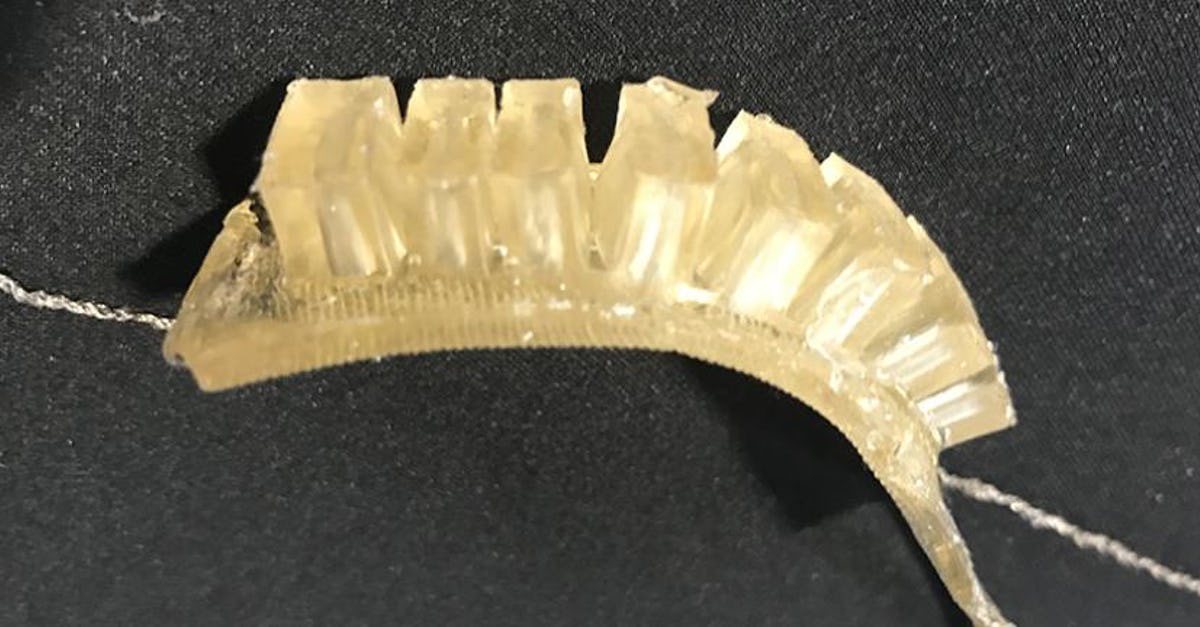
Researchers have developed self-healing, biodegradable, 3D-printed materials that could be used in the development of realistic artificial hands and other soft robotics applications. The low-cost jelly-like materials, developed by researchers at the University of Cambridge, can sense strain, temperature and humidity. And unlike earlier self-healing robots, they can also partially repair themselves at room temperature.


Soft sensing technologies could transform robotics, tactile interfaces and wearable devices, among other applications. However, most soft sensing technologies aren’t durable and consume high amounts of energy. For further information see the IDTechEx report on Self-Healing Materials Markets 2022-2042.


“Incorporating soft sensors into robotics allows us to get a lot more information from them, like how strain on our muscles allows our brains to get information about the state of our bodies,” said David Hardman from Cambridge’s Department of Engineering, the paper’s first author.


As part of the EU-funded SHERO project, Hardman and his colleagues have been working to develop soft sensing, self-healing materials for robotic hands and arms. These materials can detect when they are damaged, take the necessary steps to temporarily heal themselves and then resume work – all without the need for human interaction.


“We’ve been working with self-healing materials for several years, but now we’re looking into faster and cheaper ways to make self-healing robots,” said co-author Dr Thomas George-Thuruthel, also from the Department of Engineering.


Earlier versions of the self-healing robots needed to be heated in order to heal, but the Cambridge researchers are now developing materials that can heal at room temperature, which would make them more useful for real-world applications.


“We started with a stretchy, gelatine-based material which is cheap, biodegradable and biocompatible and carried out different tests on how to incorporate sensors into the material by adding in lots of conductive components,” said Hardman.


The researchers found that printing sensors containing sodium chloride – salt – instead of carbon ink resulted in a material with the properties they were looking for. Since salt is soluble in the water-filled hydrogel, it provides a uniform channel for ionic conduction – the movement of ions.


When measuring the electrical resistance of the printed materials, the researchers found that changes in strain resulted in a highly linear response, which they could use to calculate the deformations of the material. Adding salt also enabled sensing of stretches of more than three times the sensor’s original length, so that the material can be incorporated into flexible and stretchable robotic devices.


The self-healing materials are cheap and easy to make, either by 3D printing or casting. They are preferable to many existing alternatives since they show long-term strength and stability without drying out, and they are made entirely from widely available, food-safe, materials.


“It’s a really good sensor considering how cheap and easy it is to make,” said George-Thuruthel. “We could make a whole robot out of gelatine and print the sensors wherever we need them.”


The self-healing hydrogels bond well with a range of different materials, meaning they can easily be incorporated with other types of robotics. For example, much of the research in the Bio-Inspired Robotics Laboratory, where the researchers are based, is focused on the development of artificial hands. Although this material is a proof-of-concept, if developed further, it could be incorporated into artificial skins and custom-made wearable and biodegradable sensors.


This work was supported by the Self-HEaling soft RObotics (SHERO) project, funded under the Future and Emerging Technologies (FET) programme of the European Commission.


Source and top image: University of Cambridge

Credit: Source link

Previous Post

Chris Zaknun simplifies retail venture investing in equity and tokens by introducing DAO Maker

Next Post

Agritech Startup Krishify Raises $3.5 Million For Business Expansion

New York Tech Editorial Team

New York Tech Editorial Team

New York Tech Media is a leading news publication that aims to provide the latest tech news, fintech, AI & robotics, cybersecurity, startups & leaders, venture capital, and much more!

Next Post
Agritech Startup Krishify Raises $3.5 Million For Business Expansion

Agritech Startup Krishify Raises $3.5 Million For Business Expansion

  • Trending
  • Comments
  • Latest
Meet the Top 10 K-Pop Artists Taking Over 2024

Meet the Top 10 K-Pop Artists Taking Over 2024

March 17, 2024
Panther for AWS allows security teams to monitor their AWS infrastructure in real-time

Many businesses lack a formal ransomware plan

March 29, 2022
Zach Mulcahey, 25 | Cover Story | Style Weekly

Zach Mulcahey, 25 | Cover Story | Style Weekly

March 29, 2022
How To Pitch The Investor: Ronen Menipaz, Founder of M51

How To Pitch The Investor: Ronen Menipaz, Founder of M51

March 29, 2022
10 Raunchy Movies on Netflix You Won’t Regret Watching

10 Raunchy Movies on Netflix You Won’t Regret Watching

May 20, 2024
Japanese Space Industry Startup “Synspective” Raises US $100 Million in Funding

Japanese Space Industry Startup “Synspective” Raises US $100 Million in Funding

March 29, 2022
Startups On Demand: renovai is the Netflix of Online Shopping

Startups On Demand: renovai is the Netflix of Online Shopping

2
Robot Company Offers $200K for Right to Use One Applicant’s Face and Voice ‘Forever’

Robot Company Offers $200K for Right to Use One Applicant’s Face and Voice ‘Forever’

1
Menashe Shani Accessibility High Tech on the low

Revolutionizing Accessibility: The Story of Purple Lens

1

Netgear announces a $1,500 Wi-Fi 6E mesh router

0
These apps let you customize Windows 11 to bring the taskbar back to life

These apps let you customize Windows 11 to bring the taskbar back to life

0
This bipedal robot uses propeller arms to slackline and skateboard

This bipedal robot uses propeller arms to slackline and skateboard

0
laptop on glass table

Automat-it Cuts Deployment Friction as Monce Scales AI Order Processing on AWS

April 13, 2026
Lee's Famous Recipe Chicken

Why Lee’s Famous Recipe Chicken Is Betting on Hi Auto to Quietly Rewire the Drive-Thru

April 9, 2026
computer generated image of letters

San Francisco Tribune Lists 11 HumanX Startups Moving AI Closer to the Operating Core

April 8, 2026
Impala CEO and Highrise AI CEO

The Industrialization of AI Infrastructure: What Impala and Highrise AI Reveal About the Next Scaling Frontier

April 7, 2026
Employee Time Tracking

What is an Employee Time Tracking Solution? A Definite Guide for 2026

March 31, 2026
Voltify founders

Voltify Raises $30 Million Seed Round as It Challenges $1 Trillion Rail Electrification Model

March 31, 2026

Recommended

laptop on glass table

Automat-it Cuts Deployment Friction as Monce Scales AI Order Processing on AWS

April 13, 2026
Lee's Famous Recipe Chicken

Why Lee’s Famous Recipe Chicken Is Betting on Hi Auto to Quietly Rewire the Drive-Thru

April 9, 2026
computer generated image of letters

San Francisco Tribune Lists 11 HumanX Startups Moving AI Closer to the Operating Core

April 8, 2026
Impala CEO and Highrise AI CEO

The Industrialization of AI Infrastructure: What Impala and Highrise AI Reveal About the Next Scaling Frontier

April 7, 2026

Categories

  • AI & Robotics
  • Benzinga
  • Cybersecurity
  • FinTech
  • New York Tech
  • News
  • Startups & Leaders
  • Venture Capital

Tags

AI AI QSRs Allseated Automat-it AWS B2B marketing Business CISO CISO Whisperer Collaborations Companies To Watch cryptocurrency Cybersecurity Entrepreneur Fetcherr Finance FINQ Fintech Funding Announcement hi-tech Hi Auto Impala Investing Investors investorsummit Israel israelitech Leaders LinkedIn Leaders Metaverse Mindset Minnesota omri hurwitz PointFive PR QSR Real Estate start- up startupnation Startups Startups On Demand Tech Tech leaders Unlimited Robotics VC
  • Contact Us
  • Privacy Policy
  • Terms and conditions

© 2024 All Rights Reserved - New York Tech Media

No Result
View All Result
  • News
  • FinTech
  • AI & Robotics
  • Cybersecurity
  • Startups & Leaders
  • Venture Capital

© 2024 All Rights Reserved - New York Tech Media