

New York Tech Media
  • News
  • FinTech
  • AI & Robotics
  • Cybersecurity
  • Startups & Leaders
  • Venture Capital
No Result
View All Result
  • News
  • FinTech
  • AI & Robotics
  • Cybersecurity
  • Startups & Leaders
  • Venture Capital
No Result
View All Result
New York Tech Media
No Result
View All Result
Home AI & Robotics

U.S. Army Carries Out First Exercise Fighting Enemy Robots

New York Tech Editorial Team by New York Tech Editorial Team
October 22, 2021
in AI & Robotics
0
U.S. Army Carries Out First Exercise Fighting Enemy Robots
Share on FacebookShare on Twitter

In what U.S. Army sources are describing as a historic first, soldiers faced simulated “enemy robots” in a training exercise at the Joint Readiness Training Center at Fort Polk, Louisiana, in September. The 1st Battalion (Airborne), 509th Infantry acted as Opposing Force (OPFOR) against the 3rd Brigade Combat Team from the 101st Airborne Division.

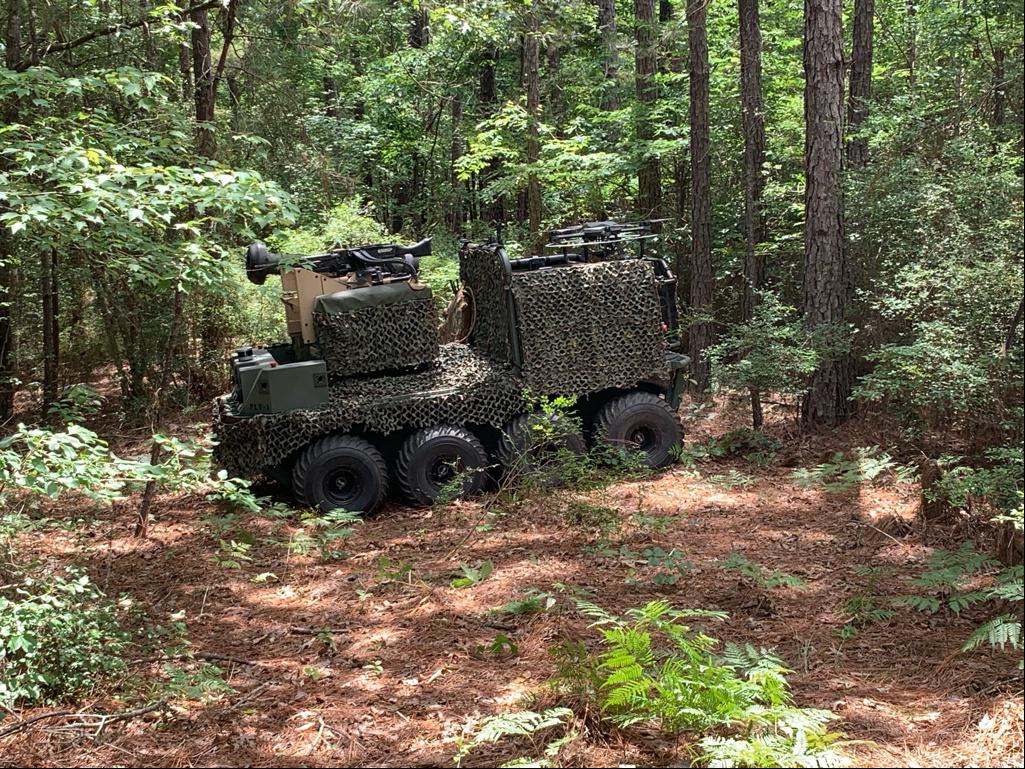
This ‘Project Origin’ vehicle stood in for an enemy robots during a U.S. Army exercise last month


U.S. Army

Combat robot,s or unmanned ground vehicles (UGVs), are already becoming established on the battlefield. While the basic technology has been around since the unsuccessful Soviet Teletanks of the 1930s, the modern version is maturing fast. The Russians experimentally deployed Uran-9 remote-controlled tanks armed with 30mm cannon and missiles in Syria, and plans large-scale testing in 2022 to determine their total requirement for these “fully expendable” vehicles. It is not a matter of if but how many.

Armed UGVs are not confined to near-peer opponents like Russia. Last year Turkey announced that it would mass produce an armed UGV with a number of weapon options including assorted guns and rockets. As with Turkey’s highly successful drone export industry, Turkish-made weaponized robots may soon start turning up on battlefields in North Africa and elsewhere. They may not be as sophisticated as the latest U.S. models – like the agile Ghost Robotics quadruped that packs a sniper rifle which can pick off targets from 1,200 meters away – but they could still be dangerous new opponents requiring new tactics to counter.

The Project Origin vehicle seen through a night vision lens. The uncrewed vehicles are tireless, but … [+] still require relays of human operators.


U.S. Army

The U.S. Army exercise involved two uncrewed vehicles with four remote operators and an NCO.

“This system allowed us to close with and destroy the enemy safely from a distance,” said Sergeant First Class Eugene Lackey in a U.S. Army release. “It [also enabled] us to find the enemy before he could find us. It is a great tool and I wish we could have it for little bit longer to really see how we can change the way wars are fought.”

The robots used in the test were surrogates, meaning they were standard utility machines that were used to stand in for the type of vehicles that might be encountered in action. The type employed seems to have been the Multi-Utility Tactical Transport, a load carrier produced by General Dynamics

GD
and used in several previous U.S. military robotics experiments. The 8×8 wheeled vehicle is almost ten feet long, weighs almost two tons and carries a 1,200 pound payload.

The vehicles in the exercise, known as Project Origin have previously been seen toting M2 .50 heavy machine guns, M249 medium machine guns, Mk 19 grenade launchers and bazooka-type rockets. They are equipped with a variety of sensors for remote targeting, including day and night cameras. It is a basic improvised combat robot, no match for the Army’s fearsome high-speed M5 Ripsaw but still useful for an exercise.

During the exercise – which included an entirely non-simulated tropical storm for added realism and complexity – the Opposing Force used its armed robots to block a key intersection for 36 hours. In ‘silent watch’ mode the vehicles operate silently on battery power with no thermal signature, making them difficult to detect. Unlike humans, the robots can wait indefinitely in ambush positions while their remote operators take meal breaks and work in shifts.

Similarly, the robots were able to prevent the airborne force from accessing helicopter landing zones. They also successfully carried out route reconnaissance, allowing their operators to check out routes before risking exposing troops to fire.

As with drones, the exercise showed that unmanned systems are ideal for long, tedious missions as well as those too hazardous for humans.

“This validated the notion that if we assign the dumb, dirty, dangerous missions to the robots, we can re-assign our Soldiers to the high-priority complex missions and tasks,” said Major Cory Wallace, leading the unmanned vehicle side of the project.

The army plans additional exercises involving troops, which it terms Soldier Touchpoints, throughout 2022. This will guide acquisition plans for armed, uncrewed vehicles. In the near future, these type of ‘killer robots’ are likely to feature on both sides. Figuring out the best ways to use and counter them in future wars will be a matter of life and death for the humans fighting alongside them.

Credit: Source link

Previous Post

Restaurants looking for labor and speed turn to robots

Next Post

Another startup tosses its hat into the eVTOL race

New York Tech Editorial Team

New York Tech Editorial Team

New York Tech Media is a leading news publication that aims to provide the latest tech news, fintech, AI & robotics, cybersecurity, startups & leaders, venture capital, and much more!

Next Post
Another startup tosses its hat into the eVTOL race

Another startup tosses its hat into the eVTOL race

  • Trending
  • Comments
  • Latest
Meet the Top 10 K-Pop Artists Taking Over 2024

Meet the Top 10 K-Pop Artists Taking Over 2024

March 17, 2024
Panther for AWS allows security teams to monitor their AWS infrastructure in real-time

Many businesses lack a formal ransomware plan

March 29, 2022
Zach Mulcahey, 25 | Cover Story | Style Weekly

Zach Mulcahey, 25 | Cover Story | Style Weekly

March 29, 2022
How To Pitch The Investor: Ronen Menipaz, Founder of M51

How To Pitch The Investor: Ronen Menipaz, Founder of M51

March 29, 2022
10 Raunchy Movies on Netflix You Won’t Regret Watching

10 Raunchy Movies on Netflix You Won’t Regret Watching

May 20, 2024
Japanese Space Industry Startup “Synspective” Raises US $100 Million in Funding

Japanese Space Industry Startup “Synspective” Raises US $100 Million in Funding

March 29, 2022
Startups On Demand: renovai is the Netflix of Online Shopping

Startups On Demand: renovai is the Netflix of Online Shopping

2
Robot Company Offers $200K for Right to Use One Applicant’s Face and Voice ‘Forever’

Robot Company Offers $200K for Right to Use One Applicant’s Face and Voice ‘Forever’

1
Menashe Shani Accessibility High Tech on the low

Revolutionizing Accessibility: The Story of Purple Lens

1

Netgear announces a $1,500 Wi-Fi 6E mesh router

0
These apps let you customize Windows 11 to bring the taskbar back to life

These apps let you customize Windows 11 to bring the taskbar back to life

0
This bipedal robot uses propeller arms to slackline and skateboard

This bipedal robot uses propeller arms to slackline and skateboard

0
laptop on glass table

Automat-it Cuts Deployment Friction as Monce Scales AI Order Processing on AWS

April 13, 2026
Lee's Famous Recipe Chicken

Why Lee’s Famous Recipe Chicken Is Betting on Hi Auto to Quietly Rewire the Drive-Thru

April 9, 2026
computer generated image of letters

San Francisco Tribune Lists 11 HumanX Startups Moving AI Closer to the Operating Core

April 8, 2026
Impala CEO and Highrise AI CEO

The Industrialization of AI Infrastructure: What Impala and Highrise AI Reveal About the Next Scaling Frontier

April 7, 2026
Employee Time Tracking

What is an Employee Time Tracking Solution? A Definite Guide for 2026

March 31, 2026
Voltify founders

Voltify Raises $30 Million Seed Round as It Challenges $1 Trillion Rail Electrification Model

March 31, 2026

Recommended

laptop on glass table

Automat-it Cuts Deployment Friction as Monce Scales AI Order Processing on AWS

April 13, 2026
Lee's Famous Recipe Chicken

Why Lee’s Famous Recipe Chicken Is Betting on Hi Auto to Quietly Rewire the Drive-Thru

April 9, 2026
computer generated image of letters

San Francisco Tribune Lists 11 HumanX Startups Moving AI Closer to the Operating Core

April 8, 2026
Impala CEO and Highrise AI CEO

The Industrialization of AI Infrastructure: What Impala and Highrise AI Reveal About the Next Scaling Frontier

April 7, 2026

Categories

  • AI & Robotics
  • Benzinga
  • Cybersecurity
  • FinTech
  • New York Tech
  • News
  • Startups & Leaders
  • Venture Capital

Tags

AI AI QSRs Allseated Automat-it AWS B2B marketing Business CISO CISO Whisperer Collaborations Companies To Watch cryptocurrency Cybersecurity Entrepreneur Fetcherr Finance FINQ Fintech Funding Announcement hi-tech Hi Auto Impala Investing Investors investorsummit Israel israelitech Leaders LinkedIn Leaders Metaverse Mindset Minnesota omri hurwitz PointFive PR QSR Real Estate start- up startupnation Startups Startups On Demand Tech Tech leaders Unlimited Robotics VC
  • Contact Us
  • Privacy Policy
  • Terms and conditions

© 2024 All Rights Reserved - New York Tech Media

No Result
View All Result
  • News
  • FinTech
  • AI & Robotics
  • Cybersecurity
  • Startups & Leaders
  • Venture Capital

© 2024 All Rights Reserved - New York Tech Media