


Venture debt firm Trifecta Capital had a great 2021. The investment firm launched a third venture debt fund and entered into late-stage equity funding with the launch of Trifecta Leaders Fund-I. Trifecta currently has 90 start-ups across sectors in its portfolio, which includes around 20 unicorns.
Its portfolio includes names like BharatPe, MobiKwik, BigBasket, Meesho, PharmEasy, Blackbuck, CarDekho, Cars24, GlobalBees, Dailyhunt, Cure.fit, Infra.Market and Ixigo to name a few.
Launched in May 2021 with a target corpus of $200 million, Trifecta has already deployed $110 million of its equity fund across nine start-ups. Going by strong response form investors, the firm is looking to expand the target corpus to $250 million by March 2022.
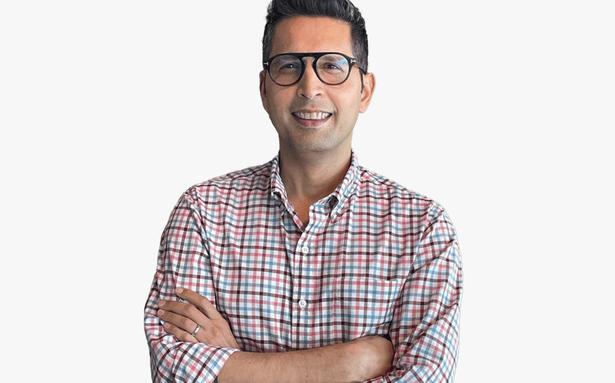
In an interview with BusinessLine, Rahul Khanna, Co-founder and Managing Partner, Trifecta Capital opens up on his investing strategy, plans for 2022 and the ongoing BharatPe debacle.
It’s been over five years since Trifecta Capital started. How has the market and appetite for venture debt evolved for the start-up ecosystem?
I came back to India in 2005 and had set up one of the first venture capital firm Clearstone the same year. The total venture industry for early to growth stage start-ups was around $300-500 million a year in magnitude. Although overall funding was around $40 billion last year, excluding late-stage start-ups, I am assuming that $10 billion of it went into early to growth stage start-ups. The market grew from $300-500 million equity deployed to $10 billion equity deployed in 15 years.
Generally, people calibrate debt market as a percentage of equity market, which has been around 10-20 per cent historically. So, if $10 billion has been invested in equity in early and growth stage start-ups, then venture debt had an opportunity of $1.5-2 billion last year.
In 2015, when we started there was no venture debt fund in the market for start-ups. That year, when we raised around ₹500 crores in our first fund, we were deploying about ₹50 crore per quarter of venture debt investments. We are currently doing about ₹300-400 crore per quarter. So, in about a six-year-period that ₹50 crore allocation has now grown by 6X. If Trifecta this year does about ₹1200-1500 crore of venture debt, other two-three providers like InnoVen Capital and Alteria Capital Advisors would too have a similar number. If we all do a similar number the total would be about ₹4,500 crore, and including the other providers who are doing ₹500-600 crore, the magnitude grows to ₹6,500 crores which is about $750 million for this year.
We now have four banks, 16 insurance companies and about 30 of India’s top 50 large families as investors. Unlike many managers in India who tend to go to HNI money, we took a different approach. We were early in selling the promise of venture debt to institutions. The funds eventually have done well, and people have kept investing.
You recently announced the first close of your third venture debt fund. How do you plan to deploy it? Which sectors will you be looking at?
Venture debt tends to follow venture equity themes with a 12 to 24-month lag. So if you look at where the equity money has gone in the last 12-24 months, there has been a revival of fintech. Funding went into D2C, SaaS, B2B marketplaces and there has been an increasing exposure to agri-tech. Those are the kind of sectors we have seen bubble up and become mature enough for us to allocate meaningful amount of capital.
So if you want to see our portfolio today, you have to look back at the cheques that Sequoia, Lightspeed and Accel did two years ago and those are our target companies that we invest in today.
Trifecta has closed two rounds of fund raise last year. So, will you be looking at writing larger cheques?
Our average cheque size is about ₹25 crore. It’s very company specific and we look for a diversified portfolio. In fund-1 we had about 50 companies, in fund-2 we have about 55 companies and in fund-3 from which wee started investing in November, we have about nine companies.
We typically look to allocate 2-3 per cent of the fund in to one company. But there could be a situation as the company grows bigger we may allocate 5-7 per cent of the fund in one company which may have been a breakout success. Generally, we like to start small and then grow with the company. So ₹25 crore is a typical starting point but we have also done up to ₹225-250 crore in different stages into the same company as well. I think diversifying is important, we can’t get carried away by any one sector. From risk management standpoint, we have caps on how much we can invest into one company, a sector and even one equity sponsor.
This model has been tested over the last seven years since we started. To date, we have written off ₹7 crore while we have lent ₹2,700 crore. As compared to even mainstream financial institutions, this is high quality underwriting. This is not by chance, there is a lot of discipline in our underwriting.
Last year you started an equity fund Trifecta Leaders Fund-1 to invest in late-stage start-ups. How did that play out? What has been the cheque sizes?
We launched a late-stage venture fund wherein we are investing in companies which are one to three years to a liquidity event. This is different from a pre-IPO fund which happens three-six months before the IPO.
As the ecosystem was maturing, a lot of start-ups were approaching that stage where they were 12-36 months away from a liquidity event. We already had relationship with many of these companies in the past like Ixigo, PharmEasy, Cars24, Livspace etc. All of these companies were entering the zone of 36 to 0 months to a liquidity event. Our view is that it is very hard to enter a company at that stage. At that stage, Tiger, Hillhouse, TPG, Naspers are largely the ones investing. It’s actually very hard to invest in a company after series-D and E rounds. Indian investors anyway were not able to get into Sequoia and Accel who had done Series A, B.
People couldn’t invest in a large set of companies which they read about everyday. By the virtue of Trifecta having this equity fund, Indian investors could get allocations to this very high quality late-stage venture opportunities. So different from pre-IPO funds, our approach has still been around portfolio construction. We wanted to identify companies having a certain size, scale, growth prospects and are number one in their categories, and get into those companies. Ideally, we would like them to get liquid in 36 months. We have so far invested $110 million into nine companies and they fall into two buckets. The companies that could list very shortly and other bucket are companies that have enough capital for two years. Despite everything that happens this year, factoring volatility and correction, these companies would have enough capital on balance sheets to sustain without a fund raise in the next two years. Our current eight equity fund portfolio companies are sitting on ₹17,000 crores of liquidity together today.
We had looked at 72 companies, which came down to 35 and we invested in nine finally shortlisted. About 70 per cent of the companies were from within the portfolio.
Some of the fintech start-ups in your portfolio are going big on BNPL. What are your thoughts on this new emerging segment?
In the fintech space, the more mature segment is payments but that now going through its own cycle. I was on the board of BillDesk for five years from 2005, I have seen how that story play out. Payments is mature but a lot of activity is constantly happening there and so the investors remain interested.
The second category is credit—within that there is consumer credit and small business credit. Buy now pay later (BNPL) was first done for consumers but we are also seeing business-focussed BNPL like Rupifi. We have a relationship with Rupifi and also with Zest. So we are involved with BNPL on both B2B and B2C sides. Equity appetite there is also strong because investors have seen many of these companies go through tough cycles and a few like Zest and Kissht have emerged achieving significant scale, have shown good discipline in collection, good credit quality and have created some high-quality moats around it. In credit, you will see those people getting access to capital.
One of your portfolio companies BharatPe has recently been under attack on allegations of toxic work culture and governance issues. As an investor how do you navigate through such scenarios before investing in a company?
We are not an equity investor in BharatPe, we are one of many lenders to the company. When we got involved with the company, the business was already at a substantial scale. We were looking at how was the business doing, were they going to make good use of the money. We have known Ashneer from his time at Grofers. Personally, I had met Ashneer during his American Express days as well. He has grown a lot over the last few years.
Our relationship with the company tends to be a degree removed from the equity investors. We are not on the board. We are not privy to the day-to-day happenings within the company. In terms of whether they made a good use of our capital, Ashneer and BharatPe falls in that number one or two category. It’s a disturbing thing to see some of these news about the company, and we will wait to see what the board decides.
We also had prior relationship with Suhail Sameer who is the current CEO there. I think directionally bringing him was the right thing to do.
It’s an amazing business. We should separate ownership and management for this company. In India, historically this has been coupled. But this is not the case outside India. In the US founders step back and get new management after a few years.
Many of your start-ups are trailblazers in their fields like Meesho and Ninjakart. They are becoming big now. How do you see Trifecta’s business shaping up in the next 3-5 years? Are there set targets to achieve?
Raise enough capital and do what it needs to be a thought leader. Second is to selectively see white spaces in the form of capital which makes sense for investors to allocate. Selectively adding new strategies that are complementary to our current products but have a different risk-reward profile and doesn’t make sense to be included into any of our current funds. Thirdly, ensuring that as our companies grow, we grow with them.
Credit: Source link