


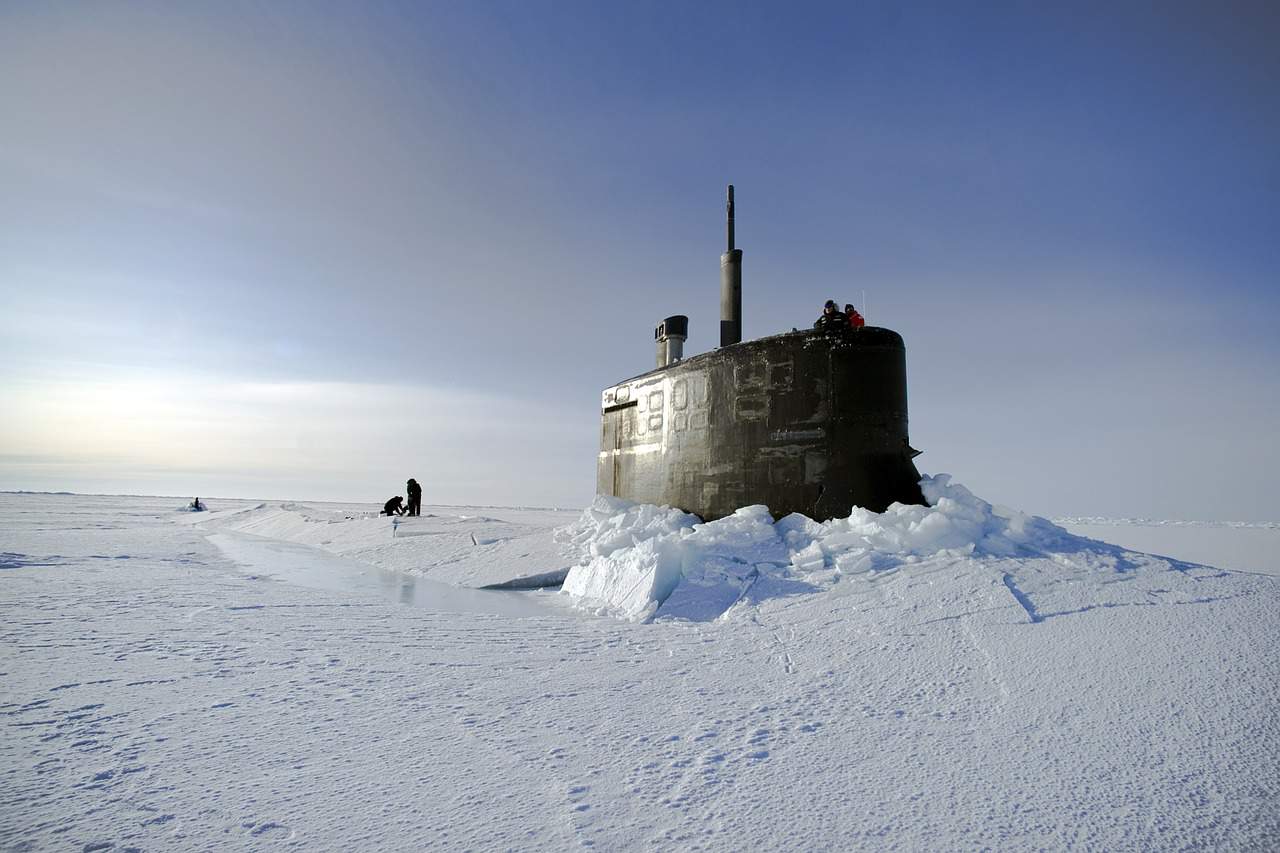
Advanced machines conduct conventional labor tasks, minimizing injuries and increasing efficiency.
Photo: Pixabay/12019
As eco-consciousness rises globally, environmental engineers and scientists are developing sustainability-enhancing technologies. The devices reduce pollution either directly or through expanding climate research. Professionals use this ecological data to implement regulations conserving natural resources and ecosystems.
Society may identify the most significant climate change impacts through research in the Arctic. Researchers can utilize environmental robotics and artificial intelligence (AI) to explore the ongoing changes. They can use their findings to prevent additional ice loss, protecting Arctic species and natural resources.
Advanced robots are autonomously operated devices that minimize human effort. These machines conduct conventional labor tasks, minimizing injuries and increasing efficiency. Robots perform physical tasks, and AI is the computing power within them. AI mimics human functions, and they learn from experience.
Environmentalists use the technology to monitor climate change effects and reduce pollution.
Scientists are implementing the technology in Arctic research to evaluate human-induced environmental changes. The professionals are concerned with greenhouse gas emissions’ effects on cold climate conditions. When society releases emissions into the environment, they limit the atmosphere’s temperature regulation abilities.
Naturally, the atmosphere attracts infrared radiation and produces heat, warming Earth’s surface. Then, it collects extra energy and sends it to space, reducing overheating. Greenhouse gases alter the process by holding excess energy in the environment. Over time, emissions raise the global temperature, creating adverse effects.
As Earth becomes warmer, glaciers shrink and sea levels rise. The climate change effect causes coastal erosion, increasing biodiversity loss. When glaciers degrade, Arctic animals also suffer habitat and natural resource depletion.
Ice loss additionally causes ocean acidification and an increase in wildfires. Ecological researchers are using robotics and AI to study changes in the Arctic and improve conservation efforts.
NASA and Saildrone’s Arctic Project
Researchers at NASA are using uncrewed aerial vehicles (UAVs) to explore surface-level Arctic conditions. They teamed up with Saildrone, a UAV manufacturing company, to conduct an exploration project. Saildrones are small, sailboat-like devices powered by solar and wind energy.
The Arctic has been warming twice as fast as surrounding environments over the last few decades. Researchers are using UAVs to examine the impacts of excessive heating on glaciers and Arctic ecosystems. Saildrones gather data on sea surface temperatures, water salinity levels, ocean stratification, and currents.
It is challenging for humans to collect this information because of freezing temperatures and minimal resources. The devices use a satellite connection to relay data to remote researchers. Saildrones protect workers and the environment.
Another technology-driven project predicts ice loss with AI. A team of British researchers created the IceNET system to track melting patterns. After assessing current glacier depletion levels, the technology can determine future amounts of ice loss.
IceNET is more accurate and produces predictions faster than previous technologies. Professionals found the system is 95% most accurate when predicting ice loss two months out. Researchers can utilize the technology to determine society’s future impacts on Arctic conditions.
ROVs for Internal Ice Research
Researchers also use remote operating vehicles (ROVs) to examine internal and base glacier consistencies. Professionals at the University of Texas in Austin are utilizing the DTG3 ROV to study changes to the northern Alaskan Arctic coast. Field researchers drill into the ice and place the DTG3 into the hole.
The technology assesses how conventional climate systems interact with coastal ecosystems. They also gather data on permafrost loss, precipitation patterns, and glacier depletion, exploring their effects on local environmental cycles. DTG3 helps researchers access essential information in the winter when the ice is thicker and harder to penetrate.
UK environmentalists started examining the base of melting glaciers using an autonomous device called ecoSUB. The system uses autonomous underwater vehicle (AUV) technology to track subsurface conditions. EcoSUBs will assess the cause of glacier breakage.
The device can descend to deep regions of the ocean, tracking salinity levels and temperature changes along the way. Researchers may utilize the data to explore potential solutions to improve conservation.
Learning through technologies
Environmental researchers learned Arctic ice is thinning at high speeds by using robotics and AI technology. Glacier depletion is an indicator of the ecosystem’s health and stability, displaying a need for sustainability-enhancing changes in society.
They also discovered polar bears are just one of many species faced with endangerment from adverse ecological effects.
We cal all do our part to minimize adverse climate change effects in the Arctic by shrinking our society’s overall carbon footprint. We can reduce greenhouse gas emissions by engaging in alternate forms of transportation. Biking, walking, and driving electric vehicles charged with renewable energy can all help reduce pollution.
Consuming less or no meat also minimizes emissions, decreasing atmospheric methane. Over time, small lifestyle changes can have a significant impact, preserving the Arctic ecosystem.
Credit: Source link